



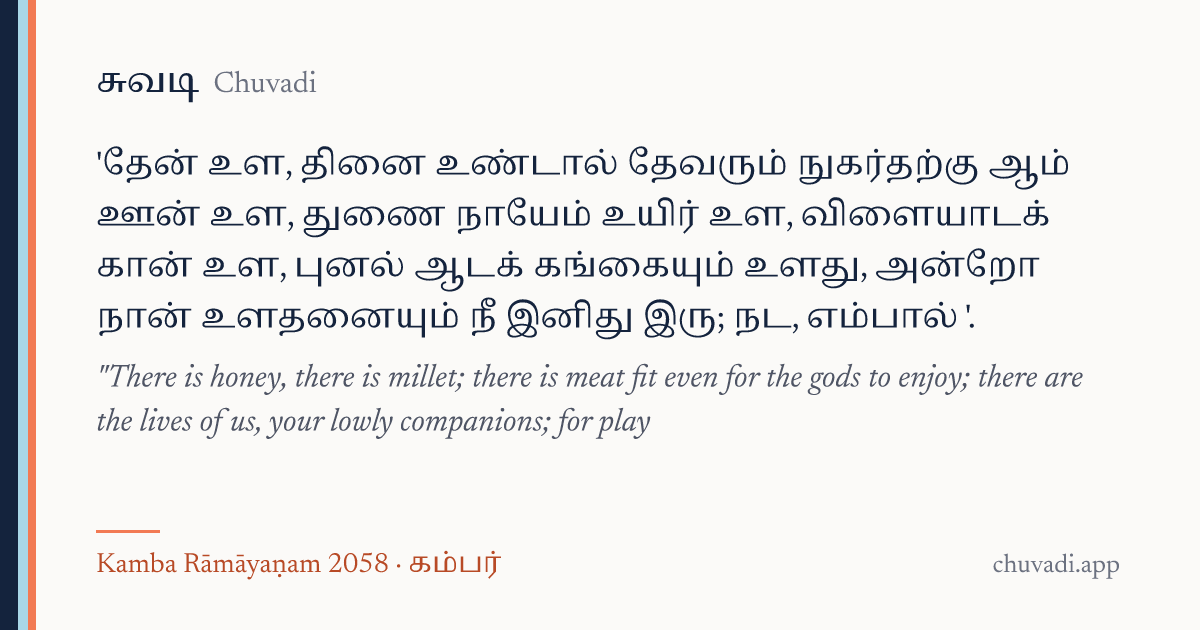
கம்பராமாயணம் 2058 · அயோத்தியா 6.55
பாடல் · The poem
Tap a word to see its gloss in the commentary and where else it occurs.
பாட வேறுபாடு · Project Madurai reads
பொருள் · Meaning in Tamil
தேன் உள; தினை உண்டு - தேவர்களும் தூயது எனக் கருதி உண்ணுதற்குப் பொருத்தமான தேனும், தினையும் எம்மிடம் உண்டு; தேவரும் நுகர்தற்கு ஆம் ஊன் உள - தேவர்களும் அவியிற் கொள்ளும் புலால் உண்டு; துணை நாயேம் உயிர் உள - அடியேங்களுடைய உயிர் உங்களுக்குத் தொண்டு செய்ய உள்ளவையே; விளையாடக் கான் உள - தேவியோடு விளையாடிப் பொழுது போக்க இனிய காடுகள் உள்ளன; புனல் ஆடக் கங்கையும் உளது - நீரிலே முழுகி விளையாடக் கங்கையாறும் இருக்கிறது; நான் உளதனையும் - நான் உடன் உள்ளவரையும்; நீ எம்பால் நட இனிது இரு - நீ எம்மிடத்துக்கு நடப்பாயாக, இனிது இருப்பாயாக.
தேன் உள தினை உண்டால் என்பதனைத் தனியே பிரித்து, தேவரும் நுகர்தற்கு ஆம் ஊன் உள என்று உரைப்பதும் உண்டு. வேள்வியில் அவியாகச் சொரியப்படுதலின் தேவரும் உண்ணுதற்குரிய ஊன் எனக் கூறியதாகக் கொள்ளலாம். முன்பு “தேனும் மீனும் அமுதினுக் கமைவதாகத் திருத்தினன்; திருவுளம் என்கொல்” (1966.) என்று குகன் வினாவிய பொழுது, இராமன் விருத்த மாதவரை நோக்கி, முறுவலனாய் 'பரிவினில் தழீஇய என்னில் பவித்திரம்' என்று தர்மசங்கடத்தைத் தவிர்க்கும் நிலையில் கூறியமைந்ததையும் அதனை உண்ணாது உளத்தால் ஏற்றுக்கொண்டதையும் அறிந்த குகன் மீண்டும் அதே பொருள்களைக் கூறுவதாக அமையாமல் மீனைத் தள்ளி, இராமன் முதலியவர்கள் உண்ணுதற்கேற்ற தேனும், தினையும் மட்டுமே கூறினான் என்க. குகனது பண்பு முதிர்ச்சியைக் காட்டிக் கம்பருக்கும் ஏற்றம் தருவது உணரத் தக்கது. பின்னரும் “கனி காயும் நறவு இவை தரவல்லேன்” என்று குகன் கூறுதல் (1990.) காண்க. உயிர் இராமனது உடைமையாயினும் உடம்பு உள்ளவரைதான் பணி செய்ய இயலுமாதலின் “ஊன் உள துணை நாயேன் உயிர் உள” எனக் குகன் கூறியதாகக் கொள்வதும் பொருந்துவதே.
ஆங்கிலம் · English translationAI
Translation
- "There is honey, there is millet; there is meat fit even for the gods
- to enjoy; there are the lives of us, your lowly companions; for play
- there are forests; for bathing there is the Gaṅgai; so,
- as long as I live, stay happily with us; come along to us."
What the poem says
Kukaṉ lists what his people can offer: honey and millet, food pure enough for the gods, meat such as is offered to the gods in sacrifice, their own lives in his service, forests for Irāmaṉ and Cītai to roam, and the Ganges to bathe in.
The commentary notes his tact. Having seen that Irāmaṉ, now an ascetic, accepted the honey and fish only in spirit, he now mentions honey and millet, foods Irāmaṉ can actually eat, and leaves out the fish. Some read the meat phrase differently, as his body with its life, offered in service as long as he lives.