



கம்பராமாயணம் 2066 · அயோத்தியா 6.63
பாடல் · The poem
Tap a word to see its gloss in the commentary and where else it occurs.
பாட வேறுபாடு · Project Madurai reads
பொருள் · Meaning in Tamil
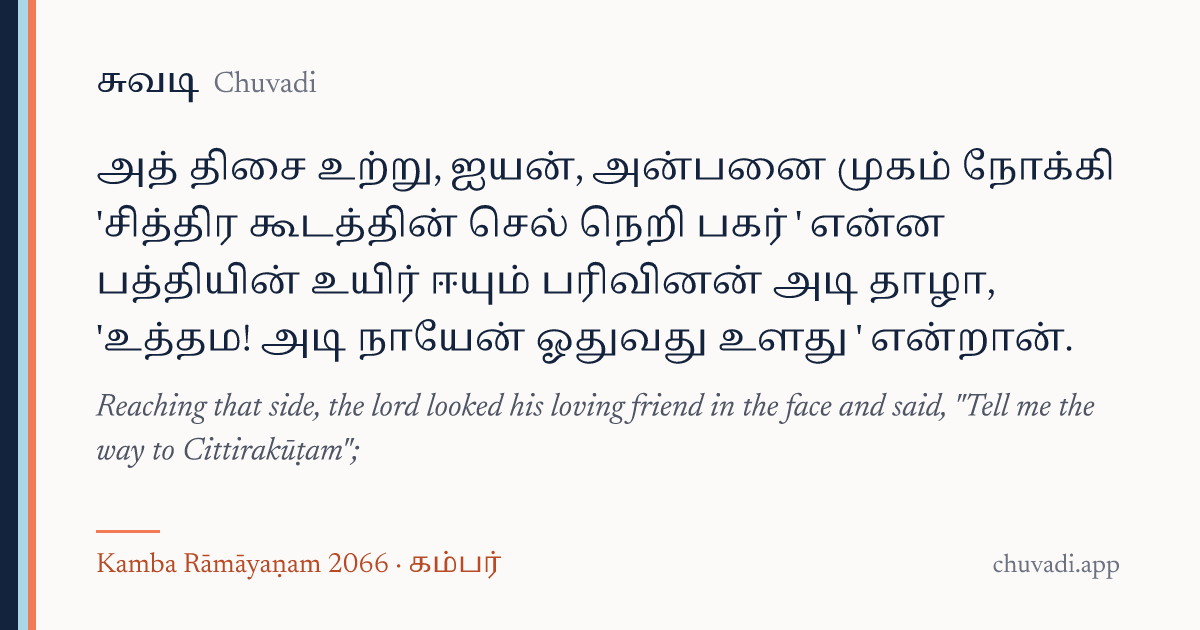
ஐயன் - இராமன்; அத்திசை உற்று - கங்கையின் அக்கரையை அடைந்து; அன்பனை முகம் நோக்கி - குகனைப் பார்த்து; “சித்திர கூடத்தின் செல் நெறி பகர்” என்ன - சித்திரகூடத்திற்குச் செல்லும் வழியைக் கூறுக என்று கேட்க; (குகனும்) பத்தியின் உயிர் ஈயும் பரிவினன் - இராம பக்தியால் தன்னுயிரையும் இராமனுக்கு ஈந்துவிடும் அன்புடையனாகி, அடி தாழா - இராமன் திருவடிகளில் வீழ்ந்து வணங்கி, “உத்தம! அடிநாயேன் ஓதுவது உளது” என்றான் - எல்லோரிலும் மேம்பட்டவனே! நாய்போல் கடைப்பட்ட அடிமையாகிய யான் சொல்லுவது உளது என்று சொன்னான்.
“ஆணல்லன் பெண்ணல்லன்” என்னும் திருவாய்மொழியில் “இவன் உலகத்துக் காணும் ஆண்களுள் ஒருவன் அல்லன்; புருஷோத்தமன் என்பதாயிற்று” என்னும் ஈட்டுரையை இங்குக் கருதுக. (திவ்ய. 3062) தன்னைத் தாழ நினைத்துக் கூறுவார் நாயை உவமையாகக் கோடல் வழக்கு. குகன் பல இடங்களிலும் தன்னை 'நாய்' எனக் கூறல் காண்க.
ஆங்கிலம் · English translationAI
Translation
- Reaching that side, the lord looked his loving friend in the face
- and said, "Tell me the way to Cittirakūṭam";
- the devoted one, ready to give his life out of love, bowed at his feet
- and said, "Best of men! I, your lowly servant, have something to say."
What the poem says
On the far bank Irāmaṉ asks Kukaṉ the way to Cittirakūṭam (Citrakūṭa), the hill where he plans to stay. Kukaṉ, devoted enough to give his life for him, falls at his feet and asks permission to speak.
He addresses Irāmaṉ as the best of men, a title the commentary links to Puruṣottama, the supreme person, a name of Viṣṇu. He calls himself a dog, the usual image for one who wishes to speak of himself as utterly lowly, and does so repeatedly.