



கம்பராமாயணம் 2070 · அயோத்தியா 6.67
பாடல் · The poem
Tap a word to see its gloss in the commentary and where else it occurs.
பாட வேறுபாடு · Project Madurai reads
பொருள் · Meaning in Tamil
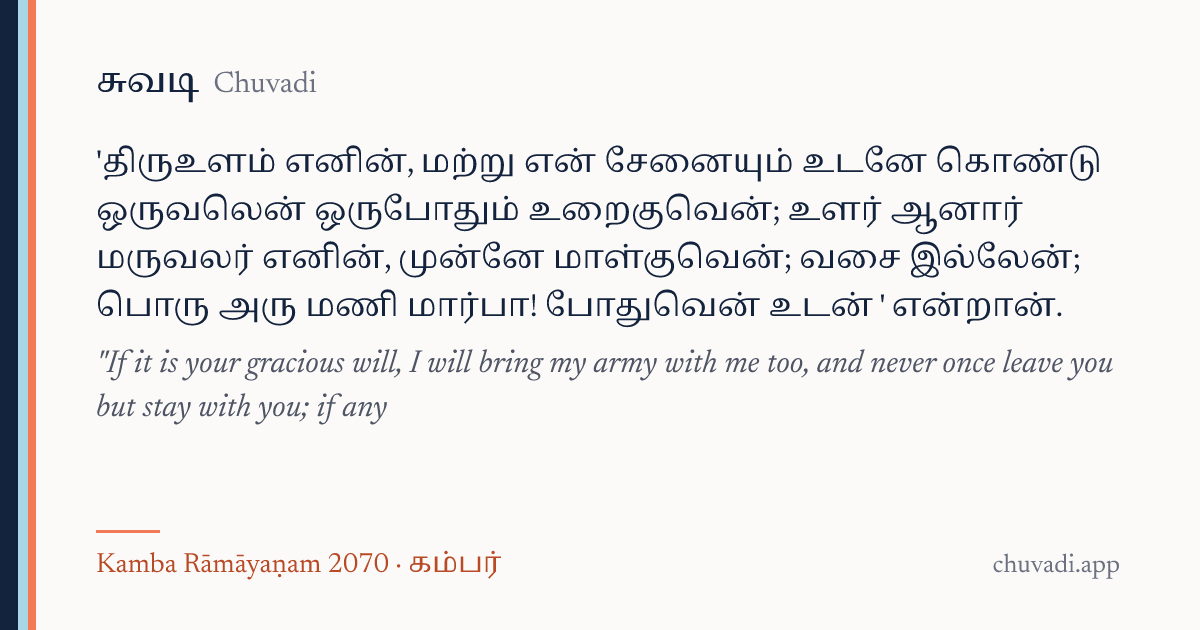
“பொரு அரு மணி மார்பா! - ஒப்பற்ற அழகிய மார்பினை உடையவனே!; திரு உளம் எனின் - உன் மனத்திற்கு உடன்பாடாக இருக்குமானால்; மற்று என் சேனையும் உடனே கொண்டு - நான் வருவதோடு அல்லாமல் என்னுடைய சேனைகளையும் கூட அழைத்துக் கொண்டு; ஒருபோதும் - எல்லாக் காலத்தும்; ஒருவலென் - நீங்காதவனாய்; உறைகுவென் - உன்னுடனே தங்குவேன்; மருவலர் உளர் ஆனார் எனின் - தீங்கு செய்யும் பகைவர்கள் யாரேனும் வருவார்கள் ஆயின்; முன்னே மாள்குவென் - உனக்கு முன்னே அவர்களுடன் போர்செய்து (அவர்களை அழித்து) நானும் இறந்துபடுவேன்; வசை இல்லேன் - (அடைக்கலம் புகுந்தவரை மாற்றானிடம் காட்டிக் கொடுத்தான் என்ற) பழிச் சொல்லுக்கு ஆளாகமாட்டேன்; உடன் போதுவென் என்றான் - உன்னுடனேயே வருவேன் என்று கூறினான்.
“மற்று” வினைமாற்று. நான் வருதல் அன்றிச் சேனையும் உடன் கொண்டு வருவேன் எனப் பொருள் படுதலின். மருவலரை அழித்து மாள்தலும் அழியாது முன்னே மாளுதலும் வசைக்கு இடனாகாமை உணர்க.
ஆங்கிலம் · English translationAI
Translation
- "If it is your gracious will, I will bring my army with me too,
- and never once leave you but stay with you; if any
- enemies appear, I will die before you do; I will bear no reproach;
- you of the peerless jewelled chest! I will come with you," he said.
What the poem says
Kukaṉ ends his plea. If Irāmaṉ agrees, he will bring not only himself but his whole army and stay with him always. Should enemies come, he would fight them and die first, before any harm could reach Irāmaṉ.
That way he could never be blamed for failing those who had placed themselves under his protection. Whether he destroyed the enemy or died in the attempt, his honour would be safe.