



கம்பராமாயணம் 2071 · அயோத்தியா 6.68
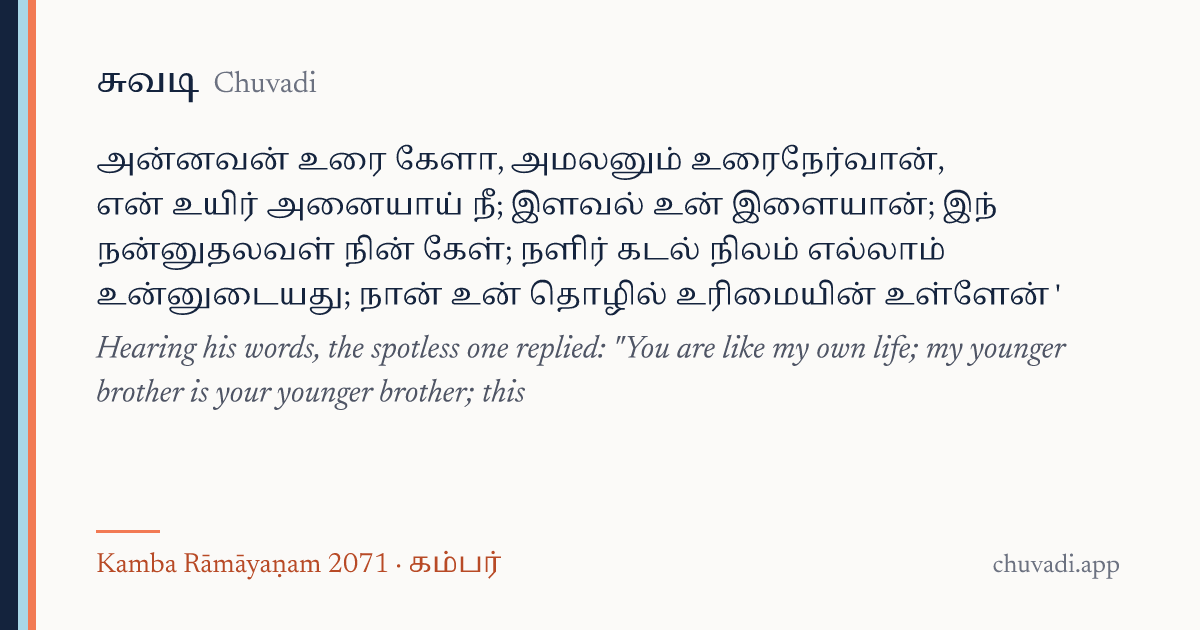
பாடல் · The poem
Tap a word to see its gloss in the commentary and where else it occurs.
பொருள் · Meaning in Tamil
அமலனும் - குற்றமற்றவனாகிய இராமனும்; அன்னவன் உரை கேளா - அந்தக் குகனது வார்த்தையைக் கேட்டு; உரை நேர்வான் - பதில் கூறுவானாகி; “நீ என் உயிர் அனையாய் - (குகனே!) நீ என் உயிரைப் போலச் சிறந்தவன்; இளவல் உன் இளையான் - தம்பி இலக்குவன் உன் தம்பியாவான்; இந் நன்னுதலவள் நின் கேள் - இவ் அழகிய நெற்றியை உடையாளாகிய சீதை உன் கொழுந்தியாவாள்; நளிர் கடல் நிலம் எல்லாம் - குளிர்ந்த கடலாற் சூழப்பெற்ற இவ் உலகம் எல்லாம்; உன்னுடையது - உனதே யாகும்; நான் உன் தொழில் உரிமையின் உள்ளேன் - நான் உன்னுடைய ஏவல் தொழிலுக்குக் கட்டுப்படும் உரிமையில் இருக்கின்றவனாவேன்.
குகனைத் தனது சகோதரன் என்ற இராமன் அவ் உறவை மேலும் இக் கூற்றால் பலப்படுத்தினான் எனலாம். “ஏழை ஏதலன் கீழ்மகன் என்னாது இரங்கி மற்றவற்கு இன்னருள் சுரந்து, மாழைமான் மடநோக்கி உன் தோழி உம்பி எம்பி என்று ஒழிந்திலை உகந்து, தோழன் நீ எனக்கு இங்கொழி என்ற சொற்கள் வந்து அடியேன் மனத்து இருந்தி” என்று இந்நிகழ்ச்சியைத் திருமங்கையாழ்வார் கூறிய பாசுரம் கொண்டு (திவ்ய. 1418) அறிக. இதனையே பின்னர்ச் சீதை அசோகவனத்தில் “ஏழை வேடனுக்கு எம்பி நின் தம்பி, நீ தோழன்; மங்கை கொழுந்தி, எனச் சொன்ன வாழி நண்பினை உன்னி மயங்குவாள் ஆயினள்” (5091.) என்று கம்பர் கூறியதும் காண்க. தானாளும் உலகம் எல்லாம் தன் சகோதரனுக்கும் அப்படியே உரியது என்று கருதுபவன் அண்ணல் இராமன் ஆதலின் இப்போது நான் வனவாசம் செய்யவேண்டியிருத்தலின் நீயே உலகம் ஆள்பவனாகவும் நின் ஏவல் தொழில் உரிமையில் நான் உள்ளேனாகவும் ஆயிற்று என்றானாம். பகவான் - பாகவதரிடையே சாதி ஏற்றத் தாழ்வுகள் பாராட்டப்படுவன அல்ல. குகனைக் குகப்பெருமாள் எனப்போற்றும் வைணவ மரபு நினைக.
ஆங்கிலம் · English translationAI
Translation
- Hearing his words, the spotless one replied:
- "You are like my own life; my younger brother is your younger brother; this
- lady with the lovely forehead is your kinswoman; all the land within the cool sea
- is yours; and I am bound to do your bidding."
What the poem says
Irāmaṉ answers Kukaṉ with one of the most celebrated declarations in the epic. He takes the hunter chief as his own brother: Kukaṉ is as dear as his life, Ilakkuvaṉ is Kukaṉ's younger brother, Cītai is his sister-in-law. The whole earth belongs to Kukaṉ, and Irāmaṉ himself is at his service.
The moment was famous long before this poem: the Vaiṣṇava saint Tirumaṅkai Āḻvār praises Irāmaṉ for embracing a lowly hunter as a brother, and later, in the Aśoka grove, Cītai will remember it. The commentary adds that before God caste distinctions count for nothing, and Vaiṣṇava tradition honours Kukaṉ as Kukapperumāḷ.