



கம்பராமாயணம் 2072 · அயோத்தியா 6.69
பாடல் · The poem
Tap a word to see its gloss in the commentary and where else it occurs.
பொருள் · Meaning in Tamil
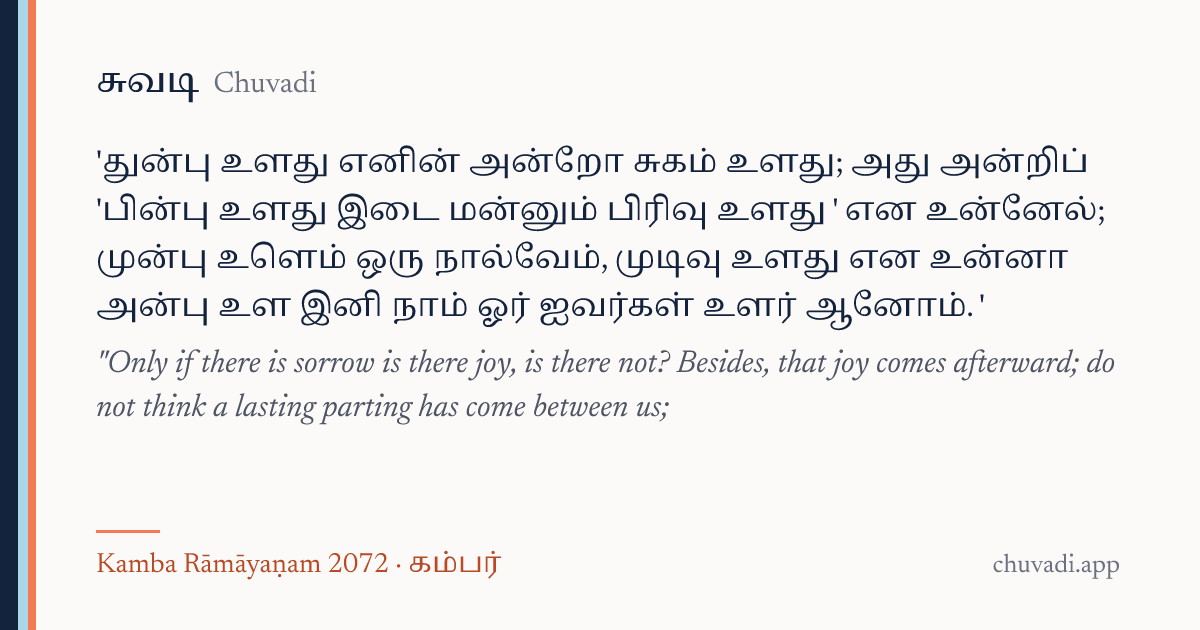
“துன்பு உளது எனின் அன்றோ சுகம் உளது? - துன்பம் உளதானால் அல்லவா சுகம் உண்டாகும்; அது அன்றிப் பின்பு உளது - அச்சுகம் இப்பிரிவாகிய துன்பத்துக்குப் பின்பு உறுதியாக உளது; “இடை மன்னும் பிரிவு உளது” என உன்னேல் - இடையே இப்படி நிலையான ஒரு பிரிவு உண்டாகியுள்ளது என்று மனத்தில் கருதாதே; ஒரு நால்வேம் முன்பு உளெம் - இராம இலக்குவ பரத சத்துருக்கனன் என்று ஒரு நான்கு சகோதரர்கள் முன்பிருந்தோம்; முடிவு உளது என உன்னா அன்பு உள நாம் - கடைபோயிற்று என்று கருதமுடியாது வளர்ந்து கொண்டே செல்லும் அன்பினை மிகவும் உடைய நாம்; இனி ஓர் ஐவர்கள் உளரானோம் - இனிமேல் (உன்னோடு) ஐந்து சகோதரர்கள் ஆக; ஆனோம் -.
தன்னோடும் தம்பியோடும் சீதையோடும் குகனைப் பிணித்ததோடன்றிப் பரத சத்துருக்கனர்களோடும் குகனைப் பிணித்த தோழமை அறிந்து இன்புறத்தக்கது. துன்பத்திற்குப் பின்னர் இன்பம்; இப்பிரிவின் பின் ஓர் இன்பம் உண்டு ஆதலின் அவ் இன்பத்தைத் தருவதாக இதனை நினைய வேண்டுமே அன்றித் துன்பமாக நினைத்தல் ஆகாது என்றானாம். அன்பிற்கு முடிவு இல்லை. அது மேலும் வளர்ந்து கொண்டே போகும்; எனவே, இச் சகோதரத்துவத்துக்கும் முடிவில்லை என்றானாம். 'ஓர்' உரை அசை.
ஆங்கிலம் · English translationAI
Translation
- "Only if there is sorrow is there joy, is there not? Besides,
- that joy comes afterward; do not think a lasting parting has come between us;
- before, we were four; and now we, whose love
- knows no end, have become five."
What the poem says
Irāmaṉ comforts Kukaṉ: joy can only come after sorrow, so this parting will lead to the happiness of reunion. Kukaṉ should not think of it as a permanent separation.
Then he makes Kukaṉ a brother not only to himself and Ilakkuvaṉ but to Paratan and Catturukkaṉaṉ as well. We were four brothers, he says; now, bound by a love that only grows, we are five.