



கம்பராமாயணம் 2074 · அயோத்தியா 6.71
பாடல் · The poem
Tap a word to see its gloss in the commentary and where else it occurs.
பொருள் · Meaning in Tamil
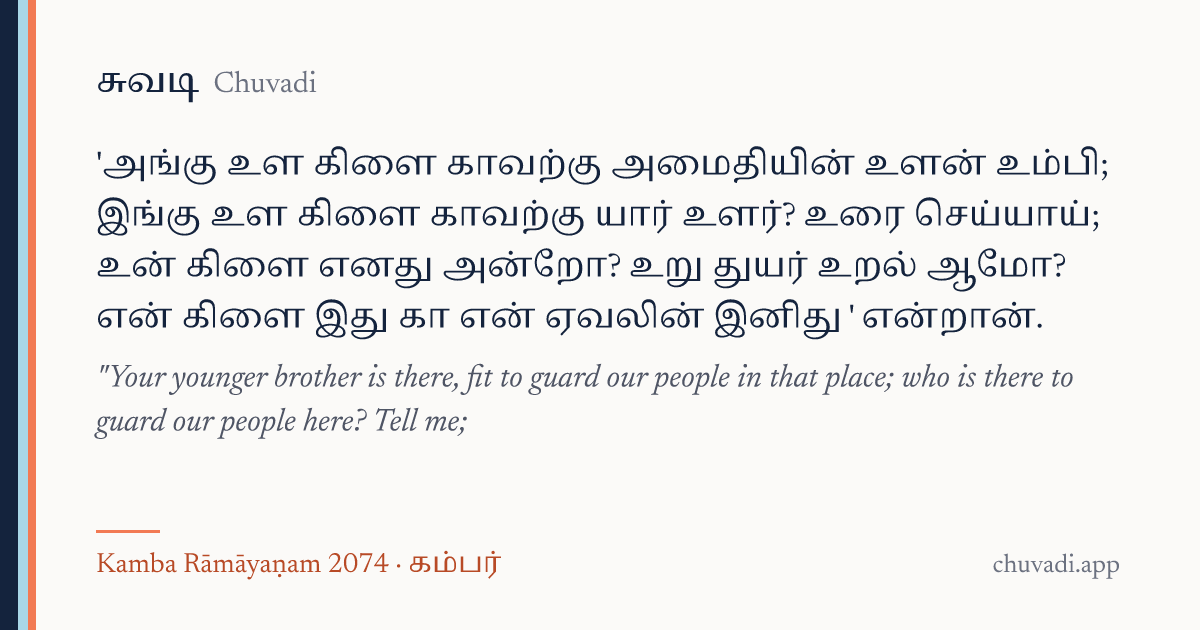
“உம்பி - உன் தம்பியாகிய பரதன்; அங்கு உள கிளை காவற்கு அமைதியின் உளன் - அயோத்தியில் உள்ள குடிமக்களையும் சுற்றத்தையும் காப்பாற்ற வேண்டி அதற்குரிய ஆட்சிக் குணங்களோடு இருக்கின்றான்; (நீ என்னுடன் வந்துவிட்டால்) இங்கு உள கிளை காவற்கு யார் உளர்? உரை செய்யாய் - சிருங்கிபேரத்தில் உள்ள சுற்றத்தையும் குடிகளையும் காப்பாற்ற யார் இருக்கின்றார்கள், சொல்வாயாக; (நீயும் நானும் ஒன்றான பிறகு) உன் கிளை எனது அன்றோ - உன்னுடைய சுற்றம் என் சுற்றம் அல்லவா?; உறு துயர் உறல் ஆமோ? - மிக்க துன்பத்தை என் பிரிவால் எய்தலாமோ; என் கிளை இது என் ஏவலின் இனிது கா” - என்னுடைய சுற்றமாகிய இவ்வேடுவர்களை என் கட்டளையால் இனிது காப்பாயாக, என்றான் -.
உன் ஏவலின் நான் இருக்கின்றேன் என்று கூறிய இராமன் அதனையும் மனம் கொள்ளாது குகன்படும் அவதி கண்டு, “நானே தலைவன் நீ என் ஏவல் வழி என் சுற்றமாகிய இவ்வேடுவர்களைக் காப்பாற்றி ஆட்சி செய்து இங்கே தங்குவாயாக” என்றான்; அவன் மறுக்கமாட்டாமைக்கு எடுத்துக்காட்டாகப் பரதனைக் கூறினான்.
ஆங்கிலம் · English translationAI
Translation
- "Your younger brother is there, fit to guard our people in that place;
- who is there to guard our people here? Tell me;
- are not your people mine? Should they suffer great sorrow?
- These are my people; guard them well at my command," he said.
What the poem says
Seeing that Kukaṉ is still distressed, Irāmaṉ now speaks as his lord rather than his servant. Paratan, Kukaṉ's brother too, is in Ayōttī looking after the people there. If Kukaṉ leaves, who will protect his own people at Ciruṅkipēram?
Since Kukaṉ and Irāmaṉ are now one, Kukaṉ's people are Irāmaṉ's people, and they must not be left in distress. Irāmaṉ orders him to stay and care for them. Paratan's example is offered so that Kukaṉ cannot refuse.