



கம்பராமாயணம் 2078 · அயோத்தியா 7.3
பாடல் · The poem
Tap a word to see its gloss in the commentary and where else it occurs.
பாட வேறுபாடு · Project Madurai reads
பொருள் · Meaning in Tamil
மன்றலின் மலி கோதாய்! - மணத்தால் நிரம்பிய மாலை அணிந்தவளே!; மயில் இயல் மட மானே! - மயில் போன்ற சாயலை உடைய இளைய மான் அனையாளே!; இன் துயில் வதி கோபத்து இனம் விரவின எங்கும் - இனிய தூக்கத்தில் உள்ள இந்திரகோபப் பூச்சிகளின் கூட்டங்கள் பரந்து கிடக்கும் எல்லா இடத்தும்; கொன்றைகள் சொரி போதின் குப்பைகள் - கொன்றை மரங்கள் சொரிந்த மலர்த் தொகுதிகள்; குல மாலைப் பொன் திணி மணி மானப் பொலிவன பல - சிறந்த மாலைகளின் பொன்னில் பதிக்கப்பட்ட மணிகளைப்போல் அழகுடையனவாகிய; காட்சிகள் பலவற்றையும்; காணாய் - பார்ப்பாயாக.
இந்திரகோபப் பூச்சி செந்நிறம் உடையது. இரத்தின மணிபோலும்; அடுத்துக் கொன்றைமலர் மஞ்சள் நிறம் உடையது ஆதலின் பொன்பெறும். இரண்டும் விரவி இருக்கின்ற வழிகள் இரத்தினக் கற்கள் அழுத்திய பொன் மாலை கிடப்பதுபோல உள்ளன என்றார். குப்பை என்பது குவியல்; இங்கு மலர்க் குவியல்.
ஆங்கிலம் · English translationAI
Translation
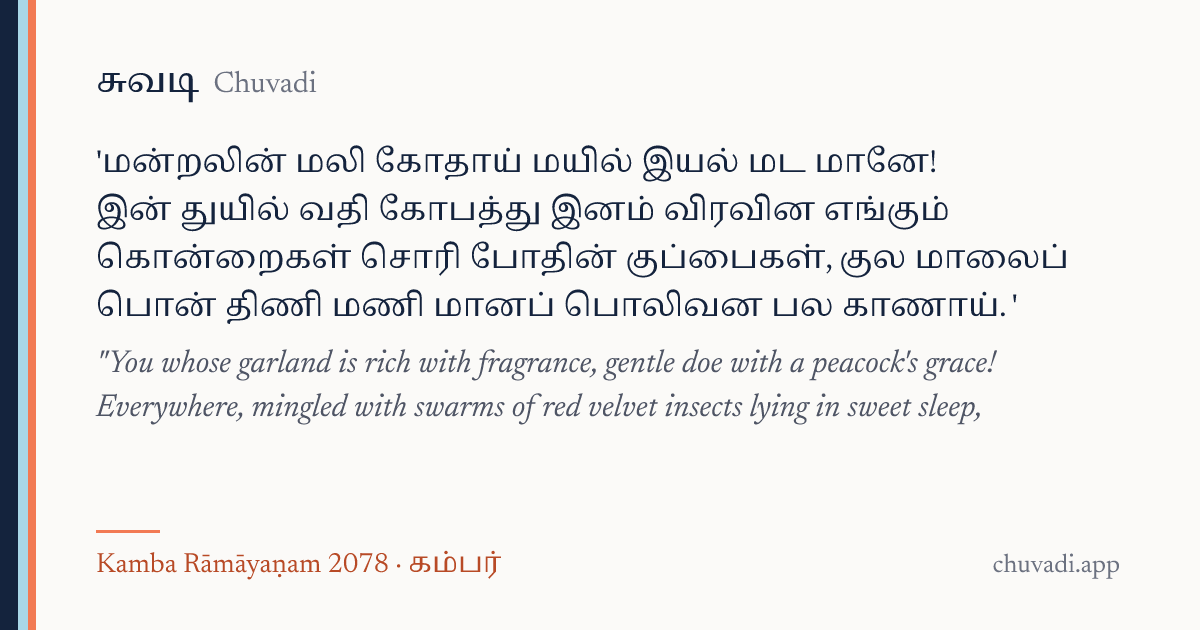
- "You whose garland is rich with fragrance, gentle doe with a peacock's grace!
- Everywhere, mingled with swarms of red velvet insects lying in sweet sleep,
- are heaps of blossoms shed by the koṉṟai trees, shining like gems
- set in the gold of a noble necklace; look at all these!"
What the poem says
Irāmaṉ begins pointing out the beauties of the forest to Cītai. The ground is dotted with the bright red insects called intirakōpam, red velvet mites that appear after rain, lying among fallen koṉṟai blossoms, which are golden yellow.
The red specks among the yellow flowers look like rubies set in a gold necklace laid along the path.