



கம்பராமாயணம் 2081 · அயோத்தியா 7.6
பாடல் · The poem
Tap a word to see its gloss in the commentary and where else it occurs.
பாட வேறுபாடு · Project Madurai reads
பொருள் · Meaning in Tamil
நெய்ஞ்ஞிறை நெடு வேலின் நிறம் உறு திறம் முற்றி - நெய் பூசப்பெற்று நிரம்பிய நீண்ட வேற்படையின் தன்மை நிரம்பிய ஆற்றல் பொருந்தி; கைஞ்ஞிறை நிமிர் கண்ணாய்! - கை அளவில் அடங்காது மேற்பட்டுச் செல்கின்ற கண்ணை உடையவளே; மஞ்ஞையும் மடமானும் - மயிலும் இளைய மானும்; மெய்ஞ்ஞிறை விரிசாயல் கண்டும் - உன் மேனியில் நிரம்பியுள்ள விரிந்த மென்மைத் தன்மையைப் பார்த்தும்; நின் விழி கண்டும் - உன் கண்களைப் பார்த்தும்; இனம் என்று கருதின - உன்னைத் தம் இனம் என்று கருதினவாய்; வருவன பல - வருகின்றனவாகிய பலவற்றை, காணாய் -.
நிறை - ஞிறை. போலி; தம் சாயல் சீதையிடம் இருத்தலால் மயில்கள் இனம் என்று வந்தன. விழியைக் கண்டு தன் இனமான மான் என்று கருதி மான்கள் வந்தன. நிறம் உறு திறம் - மார்பை ஊடுருவிச் செல்லும் பேராற்றல் எனலும் ஆம். இங்கு ஆடவர்தம் நெஞ்சத்தை ஊடுருவிச் செல்லும் ஆற்றலாம். என்றே - ஏகாரம் தேற்றம்.
ஆங்கிலம் · English translationAI
Translation
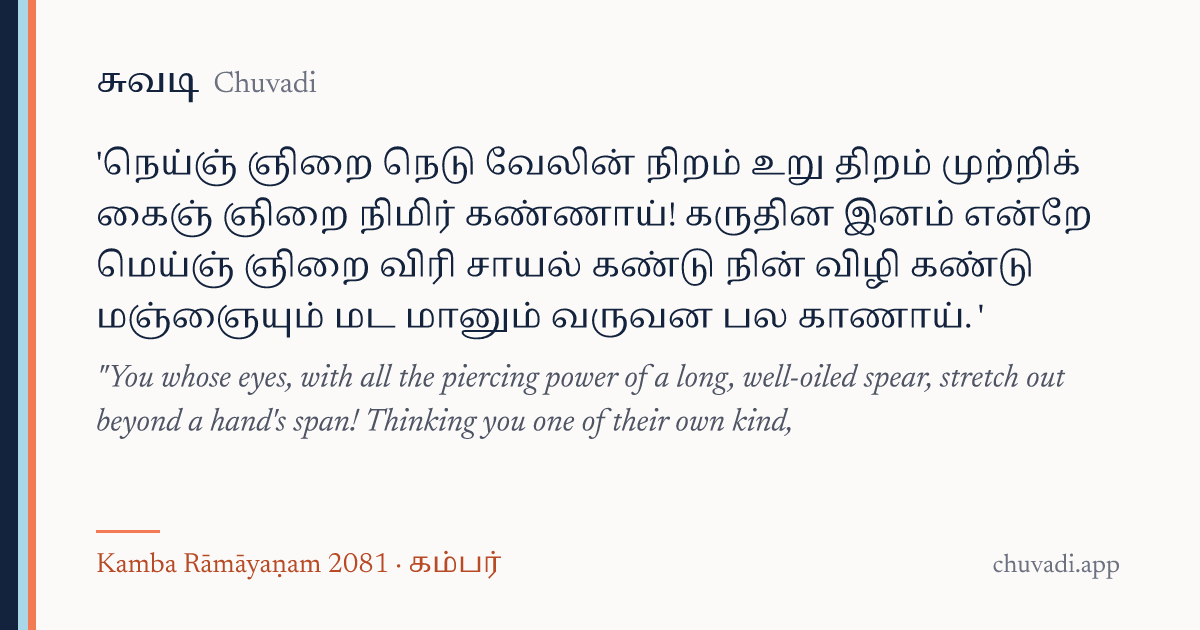
- "You whose eyes, with all the piercing power of a long, well-oiled spear,
- stretch out beyond a hand's span! Thinking you one of their own kind,
- seeing the grace that fills your whole body and seeing your eyes,
- peacocks and gentle deer come toward you, many of them; look!"
What the poem says
Cītai's eyes are long, reaching beyond the width of a hand, and as piercing as an oiled spear that can go through a man's chest, here meaning they go straight to a man's heart.
Peacocks and young deer come up to her, taking her for one of their own: the peacocks because her grace is like theirs, the deer because her eyes are like a doe's.