



கம்பராமாயணம் 2086 · அயோத்தியா 7.11
பாடல் · The poem
Tap a word to see its gloss in the commentary and where else it occurs.
பாட வேறுபாடு · Project Madurai reads
பொருள் · Meaning in Tamil
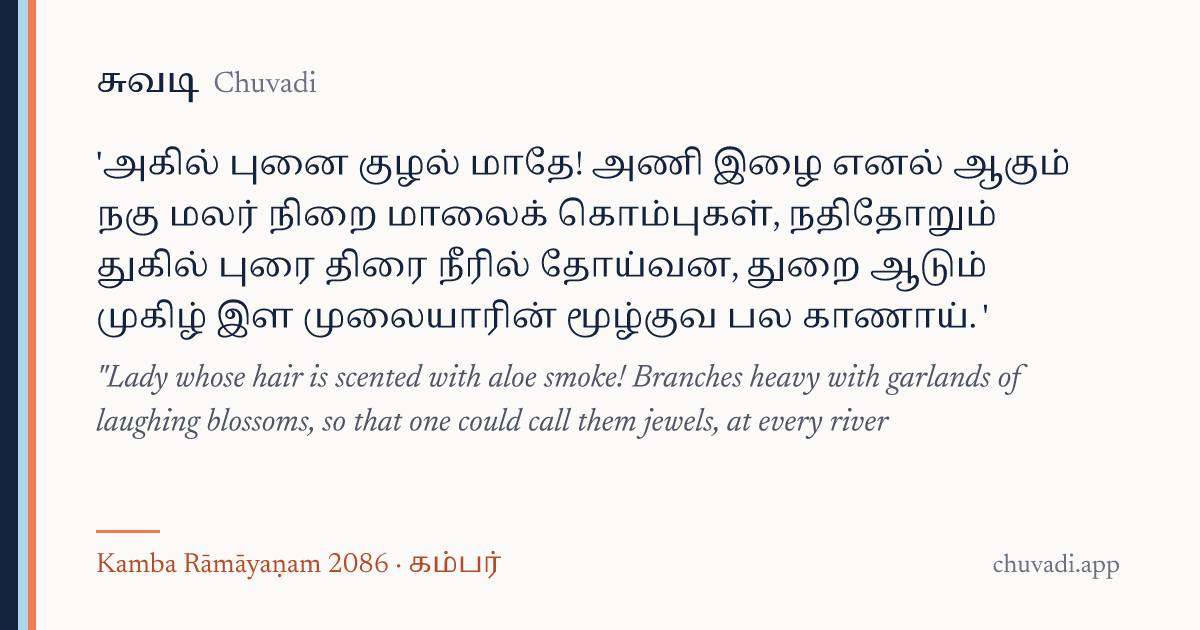
அகில் புனை குழல் மாதே! - அகிற் புகையால் மணம் ஊட்டிப் புலர்த்தப்பெற்ற கூந்தலையுடைய பெண்ணே!; அணி இழை எனல் ஆகும் - அலங்காரமாகிய அணிகலன் என்று சொல்லும்படி பொருந்திய; நகு மலர் - பூத்த மலர்கள்; நிறை - நிறைந்த; மாலை - மலர்த் தொகுதியை உடைய; கொம்புகள் பல - பூங்கொம்புகள் பல; துறை ஆடும் முகிழ் இள முலையாரின் - நீர்த்துறையில் நீராடுகின்ற அரும்பிய இளமுலை உடைய மகளிர் போல; நதிதோறும் - ஆற்றிடங்களில் எல்லாம்; துகில் புரை திரை நீரில் தோய்வன - (வெண்) பட்டாடையை ஒத்த அலைகளை உடைய நீரில் படிந்து மூழ்குவனவற்றை, காணாய் -.
பூத்த மலர்த் தொகுதியுடைய கொம்புகள் அணி அணிந்த மகளிர் போல உள்ளன. இவற்றை மாலைகள் என்றும் பொன் அணிகலன் என்றும் கூறல் கவிமரபு. “கோங்கு அலரும் பொழில் மாலிருஞ்சோலையின் கொன்றைகள் மேல், தூங்கு பொன் மாலைகளோடு உடனாய் நின்று தூங்குகின்றேன்” (திவ்ய. 594.) என்பது காண்க.
ஆங்கிலம் · English translationAI
Translation
- "Lady whose hair is scented with aloe smoke! Branches heavy with garlands
- of laughing blossoms, so that one could call them jewels, at every river
- dip into water whose waves are like fine cloth, plunging in
- like young girls with budding breasts bathing at the ford; look at them!"
What the poem says
Irāmaṉ points out flowering branches that bend down to touch the water along every stream. Laden with blossoms that look like jewellery, they resemble young women in their ornaments going down to bathe at a river ford, with the white-crested waves like silk cloth around them.
Calling flower clusters garlands or gold ornaments is a convention of poetry; an Āḻvār hymn similarly speaks of koṉṟai blossoms hanging like gold garlands.