



கம்பராமாயணம் 2088 · அயோத்தியா 7.13
பாடல் · The poem
Tap a word to see its gloss in the commentary and where else it occurs.
பாட வேறுபாடு · Project Madurai reads
பொருள் · Meaning in Tamil
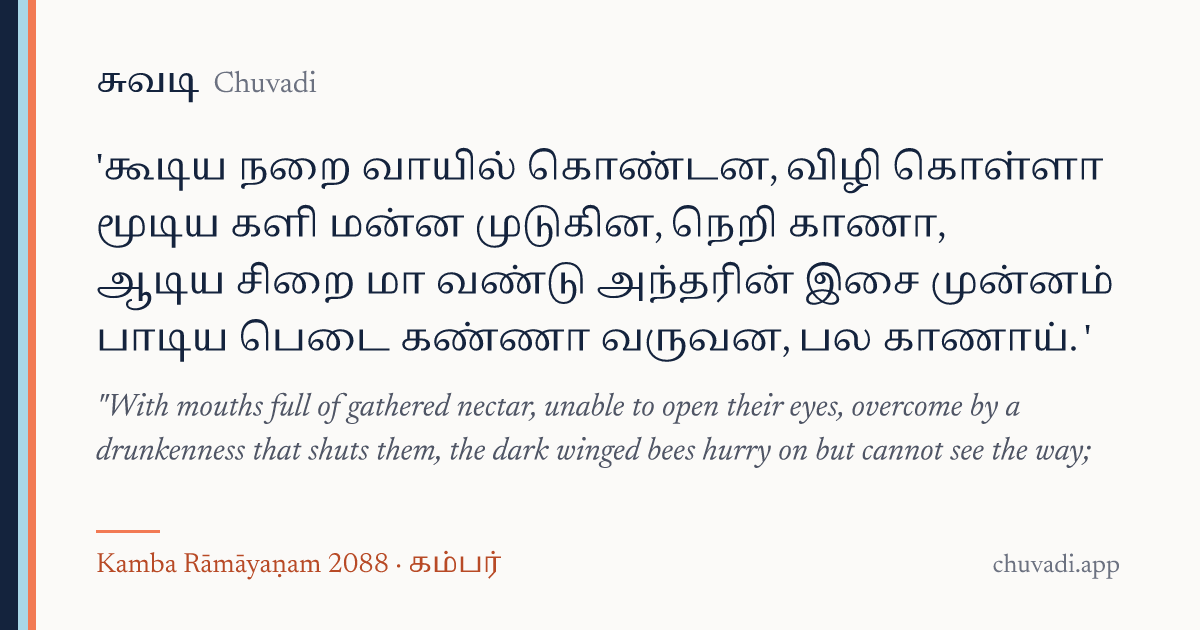
சிறை மா வண்டு - சிறகுகளை உடைய கரிய (ஆண்) வண்டு; கூடிய நறை வாயில் கொண்டன - மிக்க தேனை வாயிற் கொண்டனவாய்; விழி கொள்ளா - (அம்மயக்கத்தால்) விழி திறந்து பார்க்க மாட்டாதவையாய், மூடிய களி மன்ன - கண்ணை மூடிக்கொள்ளுமாறு போதை பொருந்த; முடுகின நெறி காணா - விரைந்து (பறந்து) செல்லுதற்குரிய வழியைக் காணமாட்டாதனவாய்; அந்தரின் - குருடரைப்போல; முன்னம் இசை பாடிய பெடை கண்ணா வருவன பல - முன்னால் இசைபாடிச் செல்கின்ற பெண் வண்டைக் கண்ணாகக் கொண்டு வருவன பலவற்றை; காணாய்.
குருடர் ஒலியின் மூலம் வழி அறிந்து சேறல் போல, முன்னால் பெண் வண்டுகள் பாடும் ஒலிகேட்டுத் தேன் குடித்து மயங்கிக் கண்திறவா ஆண் வண்டுகள் வழி அறிந்து சென்றனவாதலின் 'பெடை கண்ணா' என்றார்.
ஆங்கிலம் · English translationAI
Translation
- "With mouths full of gathered nectar, unable to open their eyes,
- overcome by a drunkenness that shuts them, the dark winged bees hurry on but cannot see the way;
- like blind men, they follow the females who sing ahead of them,
- using them as their eyes; look at the many that come so!"
What the poem says
Male bees, so drunk on nectar that they cannot open their eyes, blunder along unable to see their way.
Like blind men who find their path by following a sound, they fly after the humming of their mates ahead of them, using the females as their eyes.