



கம்பராமாயணம் 2089 · அயோத்தியா 7.14
பாடல் · The poem
Tap a word to see its gloss in the commentary and where else it occurs.
பாட வேறுபாடு · Project Madurai reads
பொருள் · Meaning in Tamil
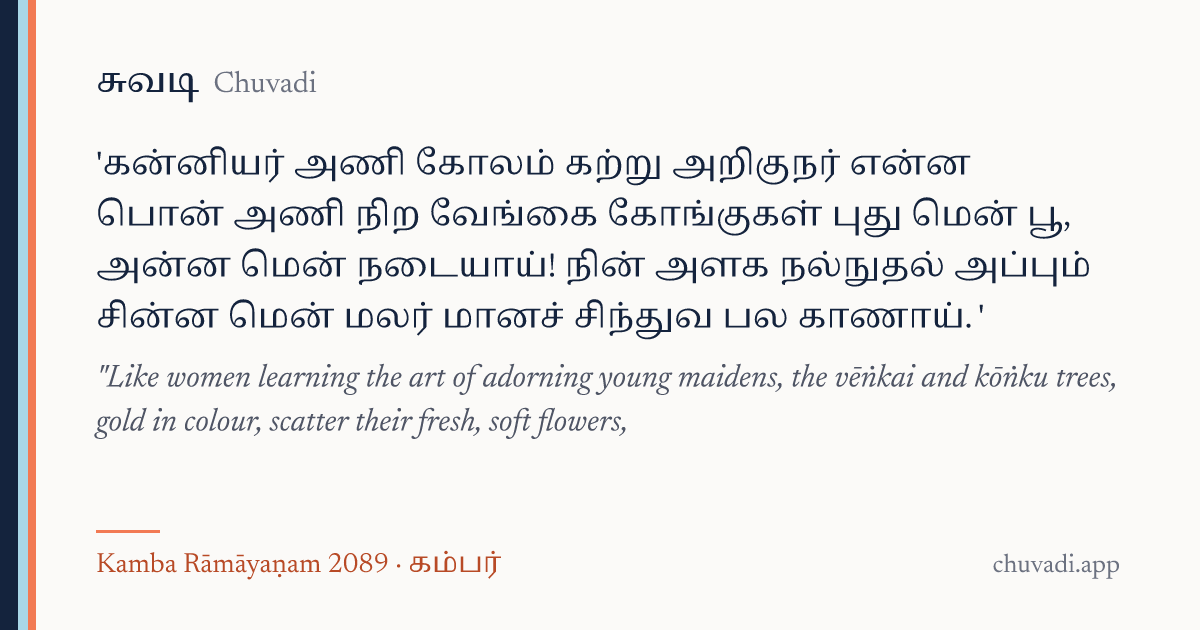
அன்னம் மென் நடையாய்! - அன்னப் பறவை போன்ற மெல்லிய நடையை உடையவளே!; பொன் அணி நிற வேங்கை, கோங்குகள் - பொன் போன்ற அழகிய நிறம் படைத்த வேங்கைமரமும் கோங்க மரமும்; கன்னியர் அணிகோலம் கற்று அறிகுநர் என்ன - கன்னிப்பெண்கள் அணிகின்ற அழகுக் கலையைக் கற்றுப் பழகுபவர்களைப் போல; புது மென் பூ - புதிய மென்மையான பூக்களை; நின் அளக நல் நுதல் அப்பும் - உன்னுடைய கூந்தலோடு கூடிய நல்ல நெற்றியிலே அப்புகின்ற; சின்னம் மென் மலர் மான - விடு பூக்களாகிய மெல்லிய மலரை ஒப்ப; சிந்துவ பல - சிதறுகின்ற பலவற்றையும், காணாய் -.
கோலம் செய்வார் நெற்றியில் மலர் அப்புதல் வழக்கு. சின்னம் - விடு பூ, (உதிரிப் பூக்கள்.) கோங்கு, வேங்கை இரண்டும் பொன்னிறம் வாய்ந்த மலர்களை உடையவை. குழலில் வேங்கையும் கோங்கும் அணிவர் என்பதை, “நின் குழல் வேங்கையம்போதொடு கோங்கம் விராய்” என்பதனுள் (திருக்கோவையார். 205) காண்க.
ஆங்கிலம் · English translationAI
Translation
- "Like women learning the art of adorning young maidens,
- the vēṅkai and kōṅku trees, gold in colour, scatter their fresh, soft flowers,
- you who walk gently like a swan! like the loose soft blossoms pressed
- on your fine forehead below your hair; look at all of them!"
What the poem says
The vēṅkai and kōṅku trees, both bearing golden flowers, scatter their fresh blossoms on the path. They seem to be practising the art of dressing a young bride, since it was the custom to press loose flowers onto a woman's forehead at the hairline as decoration.
The scattered petals look like the flowers that adorn Cītai's own brow. Women also wore these two flowers in their hair, as a verse in the Tirukkōvaiyār shows.