



கம்பராமாயணம் 2091 · அயோத்தியா 7.16
பாடல் · The poem
Tap a word to see its gloss in the commentary and where else it occurs.
பாட வேறுபாடு · Project Madurai reads
பொருள் · Meaning in Tamil
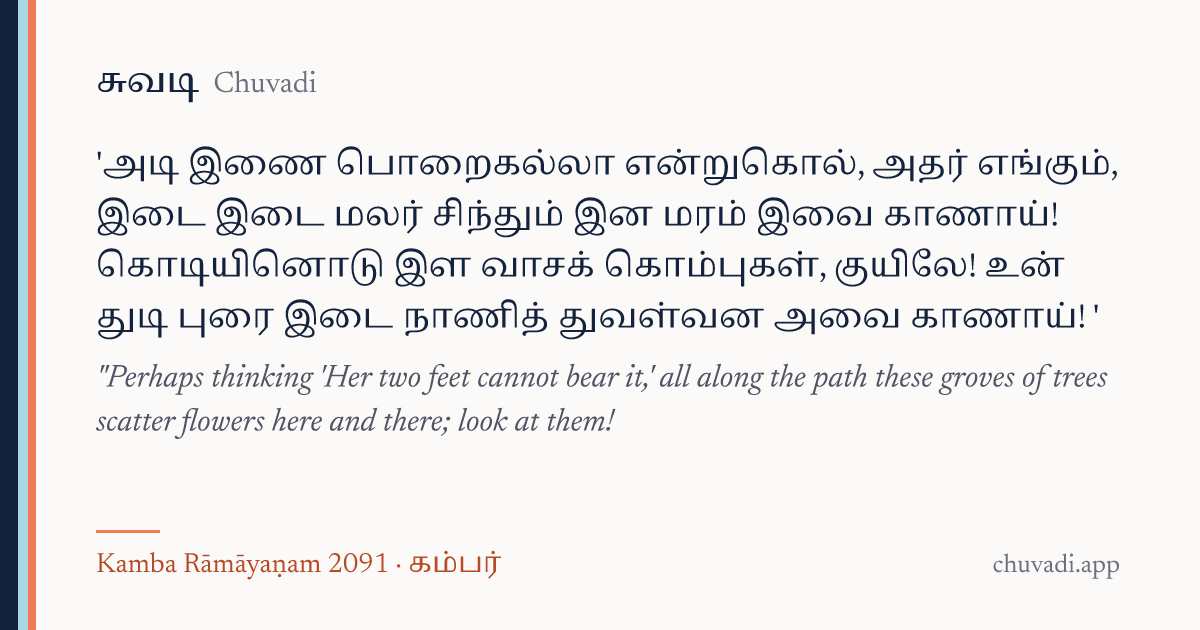
குயிலே! - குயில் போன்ற குரல் உடையாளே!; இனமரம் - கூட்டமான மரங்கள்; “அடி இணை பொறைகல்லா” என்று கொல் - (உன்) கால்கள் காட்டு வழியில் நடத்தலைப் பொறுக்கமாட்டா என்று கருதிப் போலும்; அதர் எங்கும் இடை இடை - வழியிடைகளில் எல்லாம்; மலர்களைச் சிதறும்; இவை காணாய் -; கொடியினொடு இள வாசக் கொம்புகள் - கொடிகளோடு இளைய மலர் மணம் வீசும் பூங்கொம்புகள்; உன் துடி புரை இடை நாணி - உன்னுடைய துடிநடுவை ஒத்த இடையைக் கண்டு வெட்கம் உற்று; துவள்வன - ஒசிந்து அசைவன; அவை காணாய் -.
சீதையின் பாதங்கள் கல்லுறுத்தலினால் தாங்கமாட்டா என்று மரங்கள் வழியிடை மலர்சிந்துவதாகவும் - சீதையின் இடை கண்டு நாணிக் கொடிக் கொம்பு துவள்வதாகவும் கூறியது தற்குறிப்பேற்றம். இவையிரண்டும் இயல்பாகக் காட்டில் நிகழும் நிகழ்ச்சிகளாம். கொடி, பூங்கொம்பு தனித்தனி இடைக்கு உவமையாம். துடி - உடுக்கை.
ஆங்கிலம் · English translationAI
Translation
- "Perhaps thinking 'Her two feet cannot bear it,' all along the path
- these groves of trees scatter flowers here and there; look at them!
- The creepers and young fragrant branches, my cuckoo, are ashamed
- before your waist, slender as a drum's, and droop; look at them!"
What the poem says
Irāmaṉ calls Cītai his cuckoo for her sweet voice. The trees shedding flowers all along the path seem to be carpeting it because they know her tender feet cannot bear the stony forest ground.
The slender creepers and flowering twigs droop and sway as if ashamed to be outdone by her waist, which is narrow like the middle of a tuṭi drum. Both are ordinary forest sights to which the poet gives an imagined motive.