



கம்பராமாயணம் 2093 · அயோத்தியா 7.18
பாடல் · The poem
Tap a word to see its gloss in the commentary and where else it occurs.
பொருள் · Meaning in Tamil
மான் இனம் - மான் கூட்டங்கள்; மயில் மாலை - மயில் வரிசைகள்; குயில் இனம் - குயில் தொகுதிகள்; வதி - சஞ்சரிக்கின்ற; கானம் - இந்தக் காடானது; பூ நனை சினை துன்றி - பூவும் அரும்பும் உடைய கிளைகள் நெருங்கப்பெற்று; நால் நிற நளிர் வல்லிக் கொடி - பலவகை நிறமுள்ள குளிர்ந்த வல்லியென்னும் கொடிகள்; நவை இல பல்கி - குற்றம் இல்லாதன நிரம்பப் பெற்று; தீ நிகர் - நெருப்பை ஒத்த; தொழில் - சித்திரத் தொழில் செய்யப் பெற்ற; ஆடைத் திரை - திரைச் சீலையை; பொருவன - ஒத்திருப்பனவற்றை; பாராய் -.
பூங்கொடி, பறவை, பன்னிறக் கொடிகள் நிரம்பியிருத்தலின் காடு வண்ண வேலைப்பாடமைந்த திரைச் சீலையை ஒத்தது என்க. “வித்தகர் இயற்றிய விளங்கிய கைவினைச் சித்திரச்செய்கைப் படாஅம் போர்த்ததுவே, ஒப்பத் தோன்றிய உவவனம்” (மணி. 3:167 -169) என்ற வரிகளை இதனோடு ஒப்புநோக்குக. “தீ” என்பது புத்தி என்னும் பொருள்படும் வடசொல்லாகக் கொண்டு கூறுவார் உளர். அது 'நிகர்' என்னும் உவமைச் சொல்லோடு ஏலாமை அறிக. பெரிதும் செந்நிறம் படைத்த கானம் “தீ” நிகர்ந்தது எனலே பொருந்துவதாம்.
ஆங்கிலம் · English translationAI
Translation
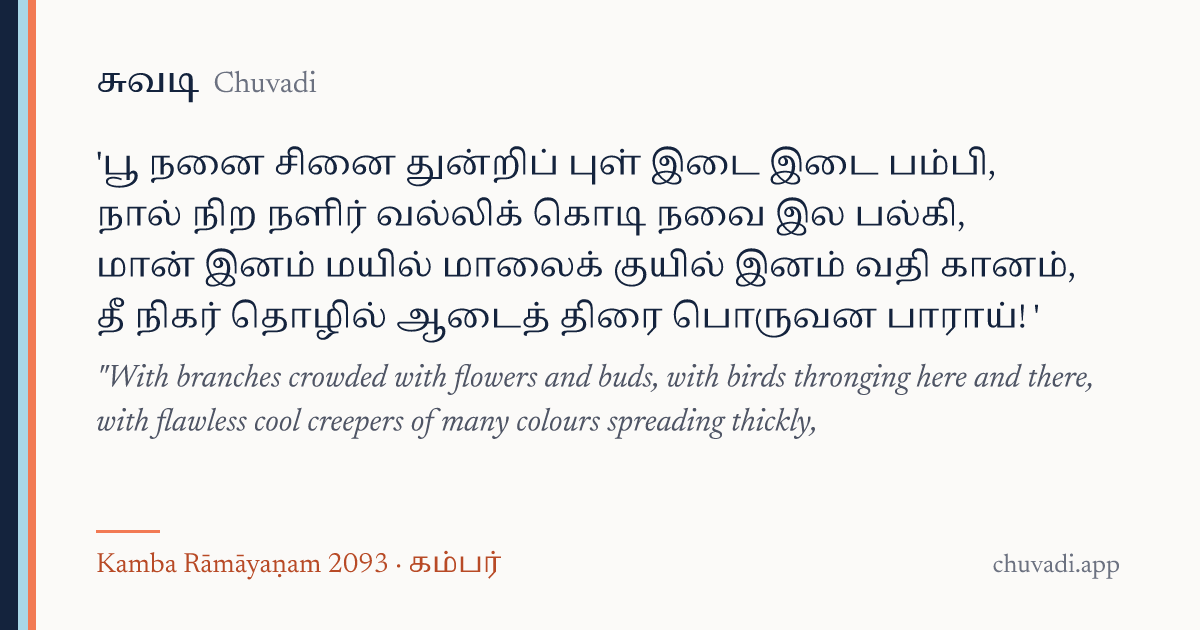
- "With branches crowded with flowers and buds, with birds thronging here and there,
- with flawless cool creepers of many colours spreading thickly,
- this forest, where herds of deer, rows of peacocks and flocks of cuckoos dwell,
- is like a cloth curtain worked with fire-bright designs; look!"
What the poem says
The whole forest, with its blossoming branches, birds of every kind, creepers of many colours, and deer, peacocks and cuckoos, looks like a curtain embroidered with brilliant pictures. A similar image appears in the Maṇimēkalai, where a garden looks as if draped with a painted cloth.
The commentary rejects a reading that takes fire-bright as a Sanskrit word for intellect, since that would not fit the comparison. The forest, ablaze with red, is like fire.