



கம்பராமாயணம் 2094 · அயோத்தியா 7.19
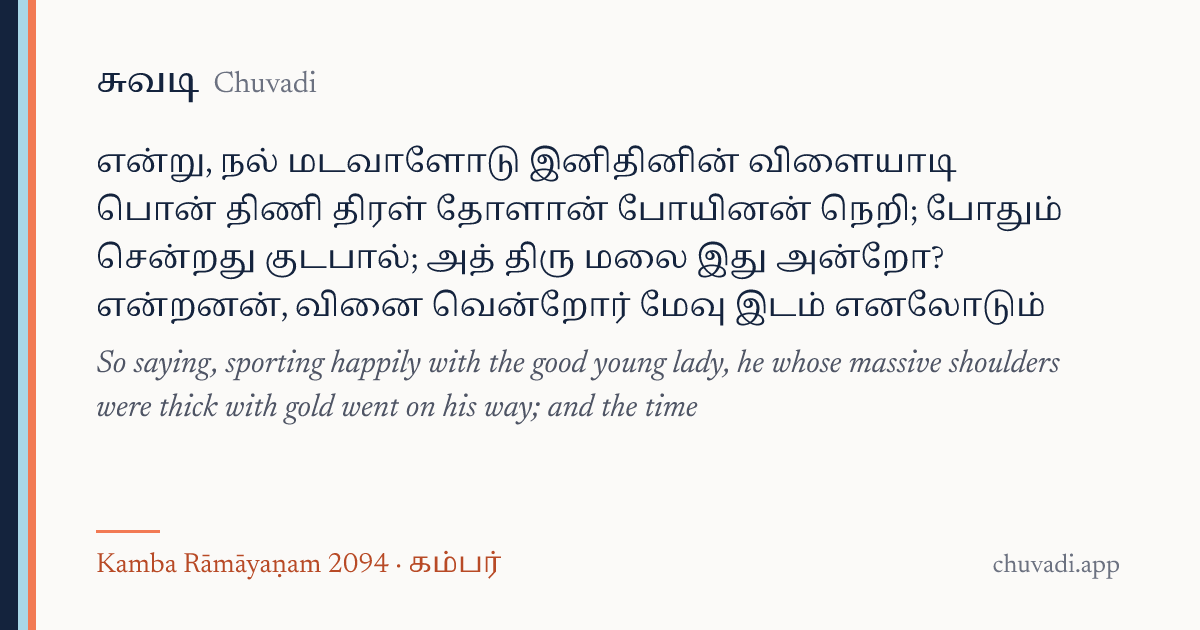
பாடல் · The poem
Tap a word to see its gloss in the commentary and where else it occurs.
பொருள் · Meaning in Tamil
பொன் திணி திரள் தோளான் - பொன் அணிகள் நெருங்கியுள்ள திரண்ட தோளினை உடையவனாகிய இராமன்; என்று - இவ்வாறு கூறி; நல் மடவாளோடு - நல்ல சீதையோடு; இனிதினின் விளையாடி - இனிமையாக விளையாடி; நெறி போயினன் - காட்டு வழியில் சென்றான்; (அந் நிலையில்) போதும் - சூரியனும்; குடபால் சென்றது - மேற்குத் திசையை அடைந்தது (மாலை நேரம் வந்தது); “வினை வென்றோர் மேவு இடம்” - வினைகளை வென்ற முனிவர்கள் தங்கியுள்ள இடமாகிய; “அத் திருமலை இது அன்றோ” - அந்தச் சித்திரகூட மலை இதுவல்லவா; என்றனன் - என்று (சீதையைப் பார்த்துக்) கூறினான்; எனலோடும் - அப்படிக் கூறிக்கொண்டிருந்த அளவில்...
“போது” என்பது காலம் என்னும் பொருள் உடையது ஆயினும் இங்கே “குடபால் சென்றது” என வருவதனை நோக்கிக் காலக் கடவுளாகிய சூரியனைக் குறித்ததாகக் கொள்க. மாலை நேரம் வரவும் சித்திரகூடமலை கண்ணுக்குத் தோன்றியது. அதைக் கண்டு காட்டிக் கூறிக்கொண்டிருந்தபோது பரத்துவாச முனி எதிர்ப்பட்டான் என மேல் முடியும்.
ஆங்கிலம் · English translationAI
Translation
- So saying, sporting happily with the good young lady,
- he whose massive shoulders were thick with gold went on his way; and the time
- had gone to the west; "Is not this that holy mountain,
- the place where those who have conquered karma dwell?" he said, and as he spoke,
What the poem says
Talking and playing with Cītai, Irāmaṉ walks on until the sun sets in the west. Then a mountain comes into view, and he asks Cītai whether this is not the holy hill where sages who have overcome their karma live, meaning Cittirakūṭam.
The verse ends mid-sentence: as he is speaking, the sage Paratuvācaṉ (Bharadvāja) arrives to meet him, as the next verse tells. The word translated time here refers to the sun, the lord of time, since it is said to go west.