



கம்பராமாயணம் 2096 · அயோத்தியா 7.21
பாடல் · The poem
Tap a word to see its gloss in the commentary and where else it occurs.
பாட வேறுபாடு · Project Madurai reads
பொருள் · Meaning in Tamil
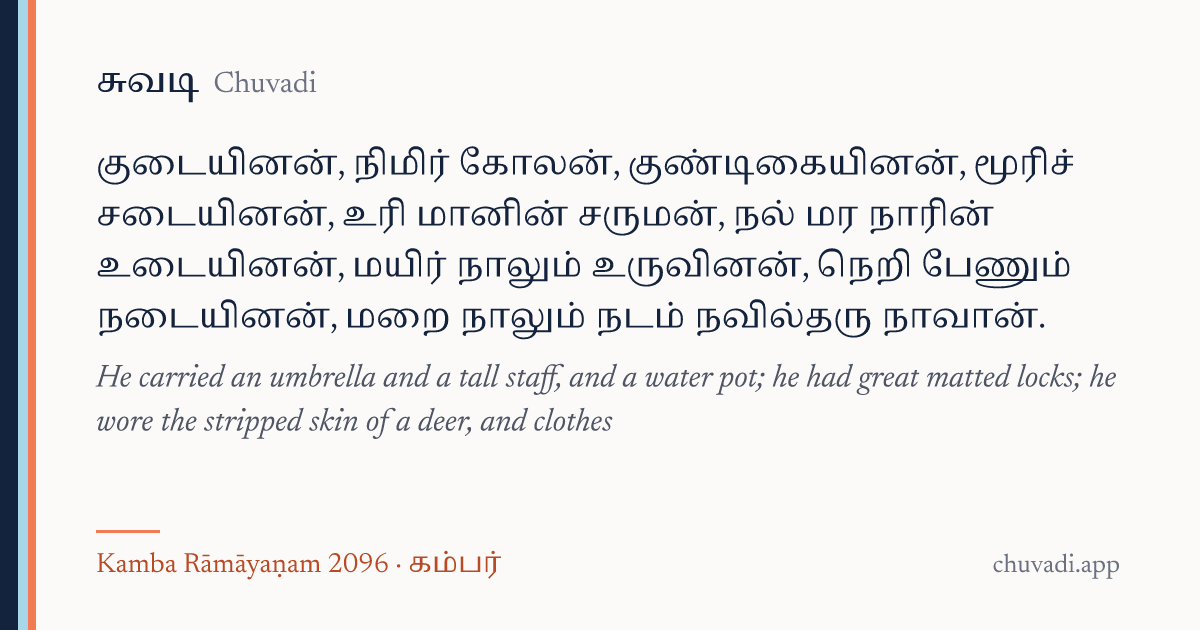
குடையினன் - குடை உடையவன்; நிமிர் கோலன் - உயர்ந்த தண்டத்தை ஏந்தி இருப்பவன்; குண்டிகையினன் - கமண்டலம் உடையவன்; மூரிச் சடையினன் - மிகுந்த சடைமுடியை உடையவன்; உரிமானின் சருமன் - உரிக்கப்பெற்ற மான்தோலைப் போர்த்திருப்பவன்; நல் மர நாரின் உடையினன் - அழகிய மரவுரி ஆடையை உடையவன்; மயிர் நாலும் உருவினன் - மயிர் தொங்குகின்ற வடிவத்தை உடையவன்; நெறி பேணும் நடையினன் - நன்னெறியைப் பாதுகாக்கும் ஒழுக்கத்தை உடையவன்; மறை நாலும் நடம் நவில்தரு நாவான் - நான்கு வேதங்களும் எப்போதும் நடனம் இடுகின்ற நாக்கினை உடையவன்.
பரத்துவாச முனிவன் முந்நூறு வருஷ காலம் பிரமசரிய விரதம் பூண்டு வசித்தான் என்று வேதங்கூறுதற்கேற்ப இங்ஙனம் கூறினார். 'நூலே கரகம் முக்கோல் மணையே, ஆயுங்காலை அந்தணர்க்குரிய' என்னும் தொல்காப்பியத்தின் படி (தொல். பொருள், மரபு. 71) அந்தண முனிவனாகிய பரத்துவாசனை வருணித்தாராம். உடம்பெல்லாம் மயிர் நிறைந்திருத்தலை “மயிர் நாலும் உருவினன்” என்றார். வேதத்தில் நிறைந்த பாண்டித்யமும், எப்போது எங்கே எதைக் கேட்டாலும் சொல்லத்தகும் ஆற்றலும் உடையான் என்பது தோன்ற, “மறைநாலும் நடம் நவில்தரு நாவான்” என்றார்.
ஆங்கிலம் · English translationAI
Translation
- He carried an umbrella and a tall staff, and a water pot; he had great
- matted locks; he wore the stripped skin of a deer, and clothes
- of good tree bark; his body was hung with hair; his conduct guarded the right path;
- and on his tongue the four Vedas danced.
What the poem says
The poet describes Paratuvācaṉ. He carries the things that, according to the Tolkāppiyam, belong to a Brahmin ascetic: an umbrella, a staff and a water pot. He has massive matted hair, wears a deerskin and garments of bark, and his body is covered with long hair, a sign of his great age and long austerity; the commentary recalls a tradition that he lived as a celibate student for three hundred years.
He keeps strictly to the righteous path, and the four Vedas are always on his tongue, so learned is he that he can recite any passage at any moment.