



கம்பராமாயணம் 2098 · அயோத்தியா 7.23
பாடல் · The poem
Tap a word to see its gloss in the commentary and where else it occurs.
பாட வேறுபாடு · Project Madurai reads
பொருள் · Meaning in Tamil
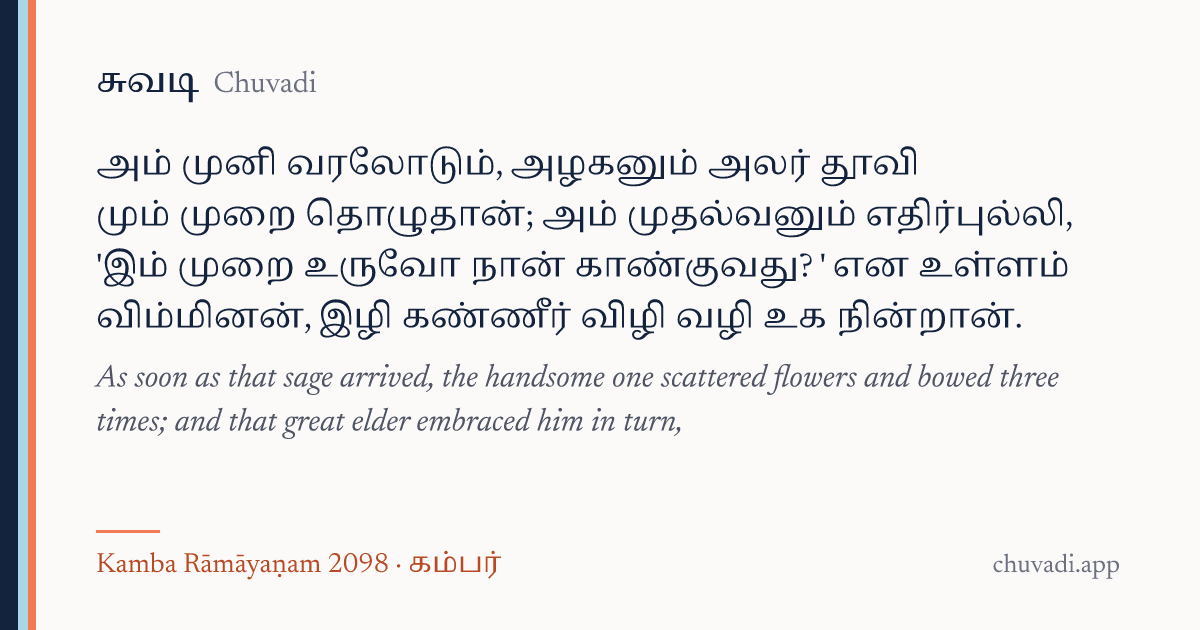
அம் முனி வரலோடும் - அத்தகைய பரத்துவாச முனிவன் வந்த அளவில்; அழகனும் - இராமனும்; அலர் தூவி - மலர்களைத் தூவி; மும்முறை தொழுதான் - மூன்று முறை வணங்கினான்; அம் முதல்வனும் - அந்தப் பெரியோனாகிய பரத்துவாசனும்; எதிர் புல்லி - எதிரே தழுவி; இம்முறை உருவோ நான் காண்குவது என - இப்படிப்பட்ட வேடத்தொடு கூடிய வடிவத்தையோ என் கண்ணால் காணும்படியானது என்று; உள்ளம் விம்மினன் - மனம் பொருமினனாய்; இழி கண்ணீர் விழி வழி உக நின்றான் - கீழ்நோக்கி இறங்கும் கண்ணீர் கண்களின் வழிவந்து கீழே சிந்தும்படி நின்றான்.
அரச குமாரனின் தவக் கோலத்தைக் கண்டானாதலின் “இம்முறை உருவோ நான் காண்பது” என்று இரங்கினான்.
ஆங்கிலம் · English translationAI
Translation
- As soon as that sage arrived, the handsome one scattered flowers
- and bowed three times; and that great elder embraced him in turn,
- and with his heart swelling, "Is it in such a form that I must see you?"
- he stood, while tears ran down from his eyes.
What the poem says
Irāmaṉ honours the sage by scattering flowers before him and bowing three times. Paratuvācaṉ embraces him.
Seeing the prince who should be on the throne dressed in an ascetic's bark and matted hair, the old sage is overcome and weeps, asking whether he must really see him in this form.