



கம்பராமாயணம் 2099 · அயோத்தியா 7.24
பாடல் · The poem
Tap a word to see its gloss in the commentary and where else it occurs.
பொருள் · Meaning in Tamil
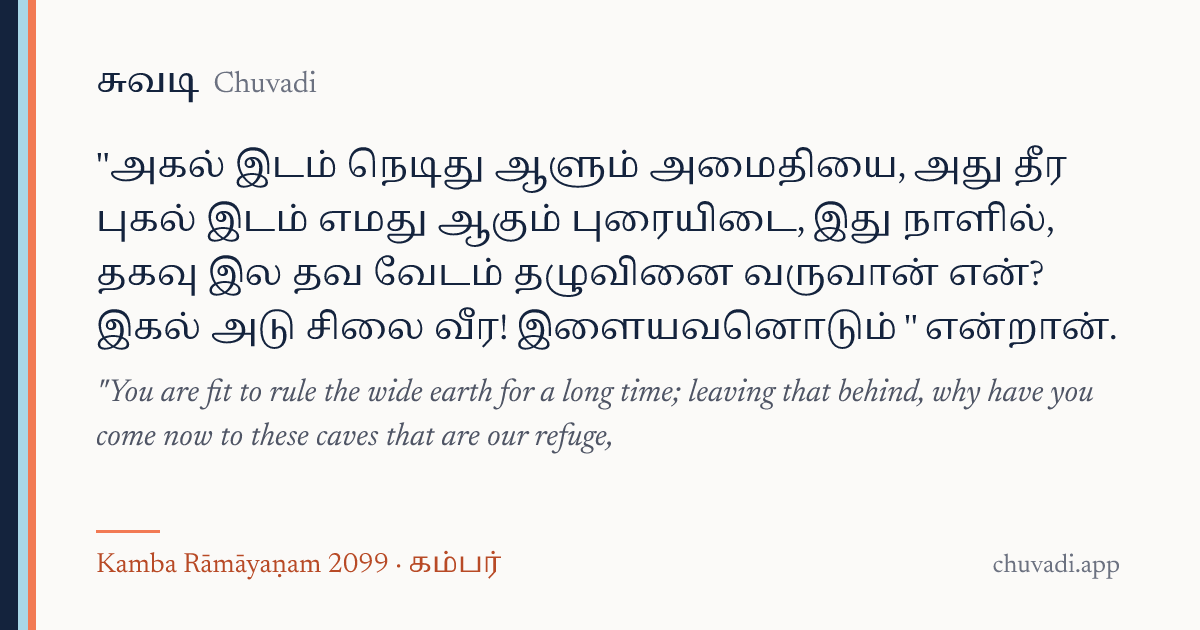
“இகல் அடு சிலை வீர! - பகையை அழிக்கின்ற வில்லை ஏந்திய வீரனாகிய இராமனே!; அகல் இடம் நெடிது ஆளும் அமைதியை - பரந்த இவ்வுலகம் முழுமையும் நீண்ட காலம் ஆளக்கூடிய தகுதியை உடையாய், அது தீர - அத்தன்மை நீங்க; இது நாளில் - இப்போது; புகல் இடம் எமது ஆகும் புரை இடை - எம்போன்ற தவமுனிவர்கள் தங்கிவாழும் இடமாகிய குகைகள் உள்ள வனத்திடத்து; தகவு இல தவ வேடம் - உன் தன்மைக்குப் பொருந்தாத தவத்தோர் வேடத்தை; இளையவனொடும் - இலக்குவனோடும்; தழுவினை - மேற்கொண்டவனாய், வருவான் என்?” என்றான் - வருவதற்கு என்ன காரணம் என்று வினவினான்.
அரச குமாரனாகிய இராமனுக்கு மரவுரியும் சடைமுடியும் ஆகிய தவக்கோலம் பொருந்தாது என்று கருதி “தகவு இல தவ வேடம்” என்றார் என்பதாம். புரை - குகை. முனிவர்கள் குகைகளில் தங்கிவாழ்தல் பழக்கம். அவை உள்ள இடம் காடு ஆகும்.
ஆங்கிலம் · English translationAI
Translation
- "You are fit to rule the wide earth for a long time; leaving that behind,
- why have you come now to these caves that are our refuge,
- wearing an ascetic's dress that does not suit you,
- hero with the bow that crushes enemies, and with your younger brother?" he asked.
What the poem says
Paratuvācaṉ asks why Irāmaṉ, who by every right should be ruling the world, has come with Ilakkuvaṉ to the forest caves where ascetics take refuge, dressed in hermit's clothing that is unfitting for a prince.
The sage does not yet know about Kaikēyi's boons or Irāmaṉ's exile.