



கம்பராமாயணம் 2100 · அயோத்தியா 7.25
பாடல் · The poem
Tap a word to see its gloss in the commentary and where else it occurs.
பாட வேறுபாடு · Project Madurai reads
பொருள் · Meaning in Tamil
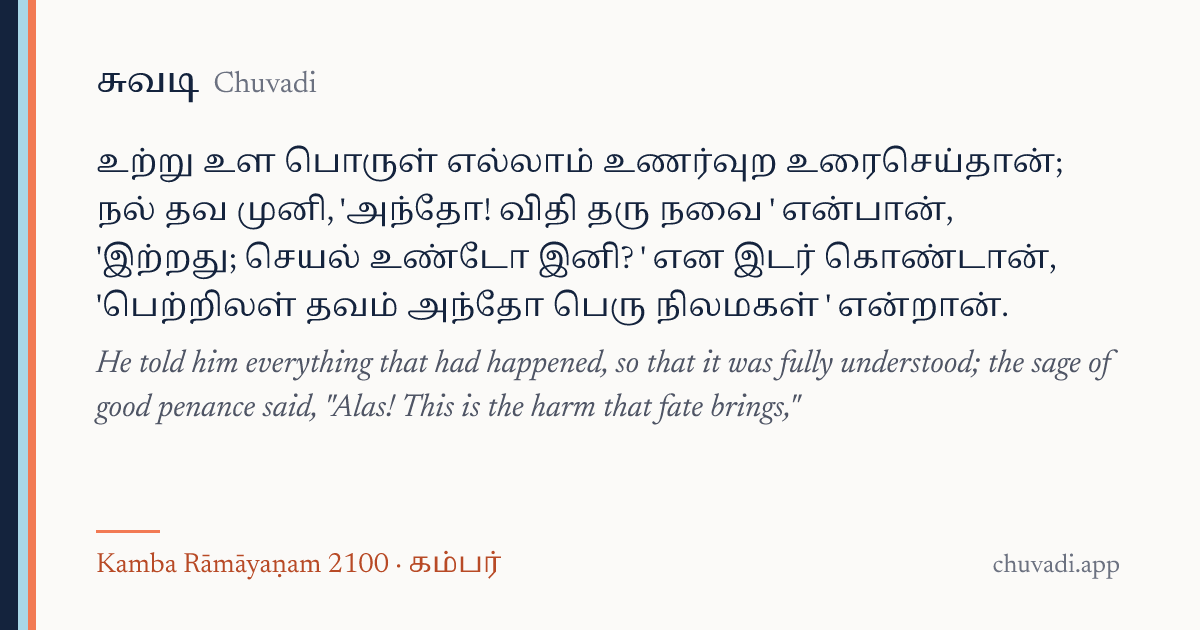
உற்று உள பொருள் எல்லாம் உணர்வுற உரை செய்தான் - நடந்து முடிந்த செய்திகள் எல்லாவற்றையும் நன்கு புரிந்துகொள்ளும்படி முனிவனுக்கு இராமன் பதில் கூறினான்; (அது கேட்ட) நல்தவ முனி - நல்ல தவசியாகிய பரத்துவாசனும்; “அந்தோ! விதிதரு நவை” என்பான் - ஐயகோ! விதி தந்த துன்பம் என்பானாய்; “இனி - இக்காலத்திலும்; இற்றது செயல் உண்டோ” - இப்படிப்பட்ட செயல் நிகழுமா; என - என்று; இடர்கொண்டான் - மிக்க துன்பம் கொண்டு; “பெரு நிலமகள் - பெரிய பூதேவியானவள்; தவம் பெற்றிலள் அந்தோ!” என்றான் - உன்னைப் பெறுதற்குத் தவம் செய்து இருந்தும் உன்னால் ஆளப்படுதற்கு அத்தவம் இல்லாதவள் ஆனாள் ஐயோ! என்றான்.
“விதி தரு நவை” என்றது நடந்த நிகழ்ச்சிகளின் தவறு தசரதன், கைகேயி மாட்டு அன்று. விதியால் விளைந்தது என்றவாறாம். முன்னர் “மைந்த! விதியின் பிழை” என்று இலக்குவனுக்கு இராமன் கூறியதனை (1734) இங்குக் கருதுக. அரசுச் செல்வத்தை நீத்துத் தவக்கோலம் கொண்டு வனம் புகுந்த இராமன் செயலில் வியப்பினைத் தெரிவித்தது “இற்றது செயல் உண்டோ?” என்பது. இராமன் வனம் புகுந்ததால் உலகுக்கு ஏற்பட்ட இழப்பைக் குறித்தது. 'பெற்றிலள் தவம் பெருநிலமகள்' என்பது, “பெற்றிலள்” என்பதை ஒரு சொல்லாகக் கொண்டு “தவம் செய்தாள் இல்லை” என்று உரைப்பினும் அமையும்.
ஆங்கிலம் · English translationAI
Translation
- He told him everything that had happened, so that it was fully understood;
- the sage of good penance said, "Alas! This is the harm that fate brings,"
- and grieving, "Can there be, even now, such a deed as this?"
- he said, "Alas, the great Earth goddess has not won the fruit of her penance!"
What the poem says
Irāmaṉ explains all that has happened. Paratuvācaṉ blames fate rather than Tacarataṉ or Kaikēyi, echoing Irāmaṉ's own words to Ilakkuvaṉ earlier that the fault lies with destiny.
He marvels that anyone, in this age, could give up a kingdom and take on an ascetic's life as Irāmaṉ has done. He laments that the Earth goddess, who had earned through her penance the right to be ruled by Irāmaṉ, has lost that good fortune, the same lament Kukaṉ made.