



கம்பராமாயணம் 2101 · அயோத்தியா 7.26
பாடல் · The poem
Tap a word to see its gloss in the commentary and where else it occurs.
பாட வேறுபாடு · Project Madurai reads
பொருள் · Meaning in Tamil
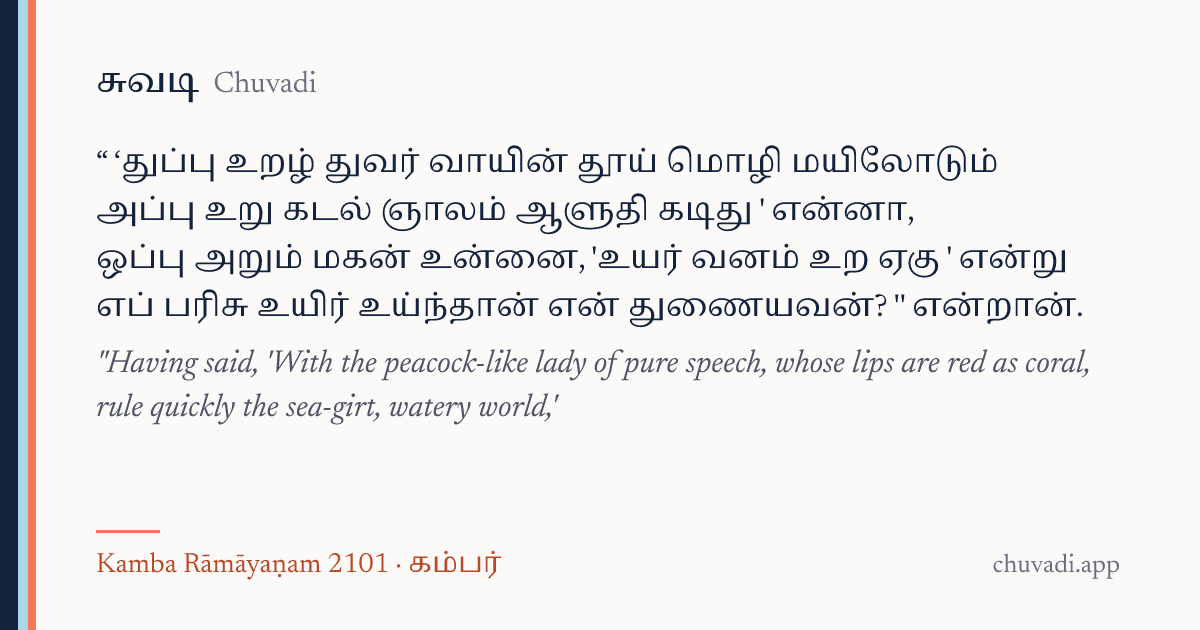
“என் துணையவன் - என் நண்பனாகிய தயரதன்; ஒப்பு அறும் மகன் உன்னை - உவமை சொல்ல முடியாத மகனாகிய உன்னை; துப்பு உறழ் துவர் வாயின் தூய்மொழி மயிலோடும் - பவளத்தை ஒத்த செந்நிறமான வாயினை உடைய தூய மொழிகளைப் பேசும் மயிலனைய சாயலை உடைய சீதையோடும்; அப்பு உறு கடல் ஞாலம் - நீர் பொருந்திய கடலாற் சூழப்பெற்ற உலகத்தை; கடிது ஆளுதி - விரைவாக ஆள்வாயாக; என்னா - என்று கூறி; “உயர் வனம் உற ஏகு” என்று - (உடனே) மரங்கள் உயர்ந்துள்ள காட்டுக்குச் சேரச் செல் என்று கூறி; எப் பரிசு - எவ்வாறு; உயிர் உய்ந்தான் - உயிருடன் வாழ்பவன் ஆனான்;” என்றான்.
நாளையே பட்டாபிஷேகம் என்று கூறி, உடனே கான் ஏகு என்றதை நினைத்து இவ்வாறு கூறப்பட்டது. இவ்வாறு உன்னை வனம் அனுப்பிய பிறகும் தயரதனால் எவ்வாறு உயிர் வாழமுடிந்தது? என்றானாம். தயரதன் இறந்த செய்தி இராமன் அறியாததாதலின் பரத்துவாசன் அதனை அறிந்திலன் ஆயினும் தன் துணையவனைப் பற்றிய பரத்துவாசனது அனுமானம் பொய்யாகாமை 'எப் பரிசு உயிர் உய்ந்தான்' என்னும் கூற்றில் புலனாதல் காண்க.
ஆங்கிலம் · English translationAI
Translation
- "Having said, 'With the peacock-like lady of pure speech, whose lips are red as coral,
- rule quickly the sea-girt, watery world,'
- and then telling you, his matchless son, 'Go off to the tall forest,'
- how did my friend manage to stay alive?" he said.
What the poem says
Paratuvācaṉ, an old friend of Tacarataṉ, cannot understand how the king could first tell his peerless son to rule the world with Cītai and then, all at once, order him into the forest, and still go on living.
Neither Irāmaṉ nor the sage knows that Tacarataṉ has in fact already died of grief. The sage's question unknowingly guesses the truth.