



கம்பராமாயணம் 2102 · அயோத்தியா 7.27
பாடல் · The poem
Tap a word to see its gloss in the commentary and where else it occurs.
பாட வேறுபாடு · Project Madurai reads
பொருள் · Meaning in Tamil
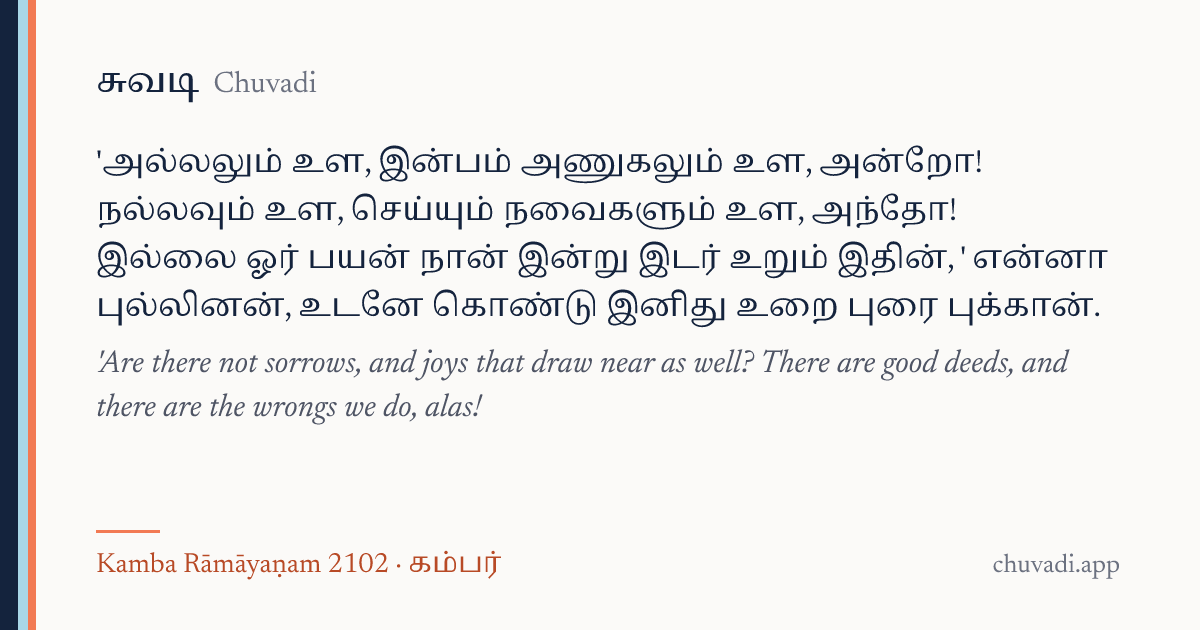
“அல்லலும் உள இன்பம் அணுகலும் உள அன்றோ? - துன்பமும் இன்பமும் வாழ்க்கையில் மாறி மாறி வந்து சேருதல் உண்டு அல்லவா?; நல்லவும் உள செய்யும் நவைகளும் உள; அந்தோ! - நாம் செய்யும் நல்வினைகளும் உள்ளன; தீவினைகளும் உள்ளன. ஐயோ! (அவற்றின் பயனே இன்ப துன்பங்கள்) ஆகவே, நான் இன்று இடர் உறும் இதின் ஓர் பயன் இல்லை - நான் இன்று துன்பப்படுகின்ற இதனால் ஒரு பயனும் இல்லை; ' என்னா - என்று முனிவன் கூறி; புல்லினன் - இராமனைத் தழுவியவனாய்; உடனே கொண்டு - சேர அழைத்துக் கொண்டு; இனிது உறை புரை புக்கான் - தான் இனிதாகத் தங்கியுள்ளதாகிய தவச்சாலையிற் புகுந்தான்.
அவரவர் செய்யும் நல்வினை தீவினைகளுக்கேற்ப விதிவழி இன்ப துன்பங்கள் விளையும். ஆதலின், இராமா! நீ வனம் புகுந்தது கருதி நான் வருந்துவதில் பயன் ஏதும் இல்லை என்று பரத்துவாசன் கூறினான்.
ஆங்கிலம் · English translationAI
Translation
- 'Are there not sorrows, and joys that draw near as well?
- There are good deeds, and there are the wrongs we do, alas!
- There is no profit in my grieving today over this,' he said,
- and embraced him, and at once led him into the hermitage where he dwelt in peace.
What the poem says
The sage Paratvājaṉ (Bharadvāja), on seeing Irāmaṉ arrive in exile, first feels sorrow, then checks himself. Joy and sorrow come to every life in turn, he reflects, as the fruit of the good and bad deeds people do; so there is no use in grieving that Irāmaṉ has had to enter the forest.
Having said this, he embraces Irāmaṉ and brings him into his hermitage.