



கம்பராமாயணம் 2103 · அயோத்தியா 7.28
பாடல் · The poem
Tap a word to see its gloss in the commentary and where else it occurs.
பொருள் · Meaning in Tamil
புக்கு - தவச்சாலையில் புகுந்து; உறைவிடம் நல்கி - அவர்கள் தங்குதற்குரிய இடத்தைத் தந்து உபசரித்து; தக்கன கனி காயும் தந்து - உண்ணத்தக்கனவாகிய காய் கனிகளையும் கொடுத்து; உரைதரும் அன்பால் - பாராட்டத்தகுந்த அன்போடு; தொக்க நல் முறை கூறி - கூடிய நல்ல உபசாரவார்த்தைகளைச் சொல்லி; தூயவன் - தயரதனது; உயிர் போலும் - உயிர்போலச் சிறந்த; மக்களின் - பிள்ளைகளினிடத்து; அருள் உற்றான் - அருளைச்செய்தான்; மைந்தரும் மகிழ்வு உற்றார் - முனிவனது உபசரிப்பில் இராமலக்குவர்களும் மகிழ்ச்சி அடைந்தார்கள்.
சீதை இராமனுள் அடங்கியவள் ஆதலின் மைந்தர் என்றார். தூயவன் பரத்துவாசனும் ஆம்.
ஆங்கிலம் · English translationAI
Translation
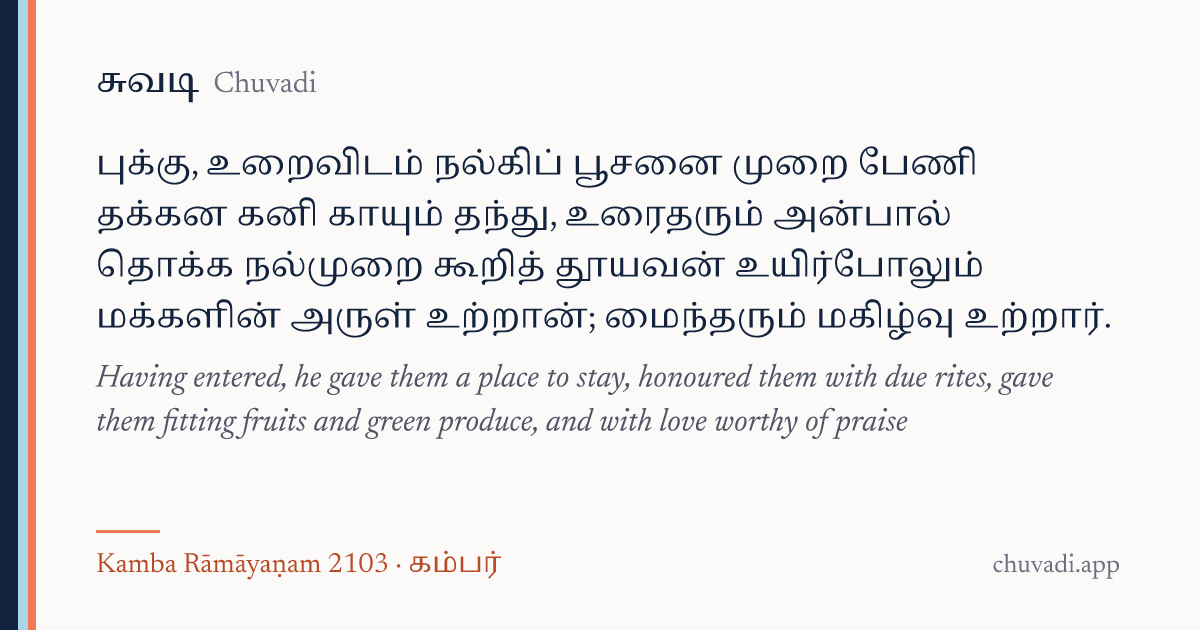
- Having entered, he gave them a place to stay, honoured them with due rites,
- gave them fitting fruits and green produce, and with love worthy of praise
- spoke all the good words of welcome; to the sons, dear as the pure one's life,
- he showed his grace, and the young men rejoiced.
What the poem says
Inside the hermitage the sage receives his guests with full hospitality: a place to rest, fruits and vegetables to eat, and warm words of welcome.
"The pure one" is most naturally King Tacarataṉ, whose sons are dear to him as his own life; it can also be read as the sage himself. Only the princes are named as rejoicing, since Cītai is counted as included with Irāmaṉ.