



கம்பராமாயணம் 2117 · அயோத்தியா 7.42
பாடல் · The poem
Tap a word to see its gloss in the commentary and where else it occurs.
பொருள் · Meaning in Tamil
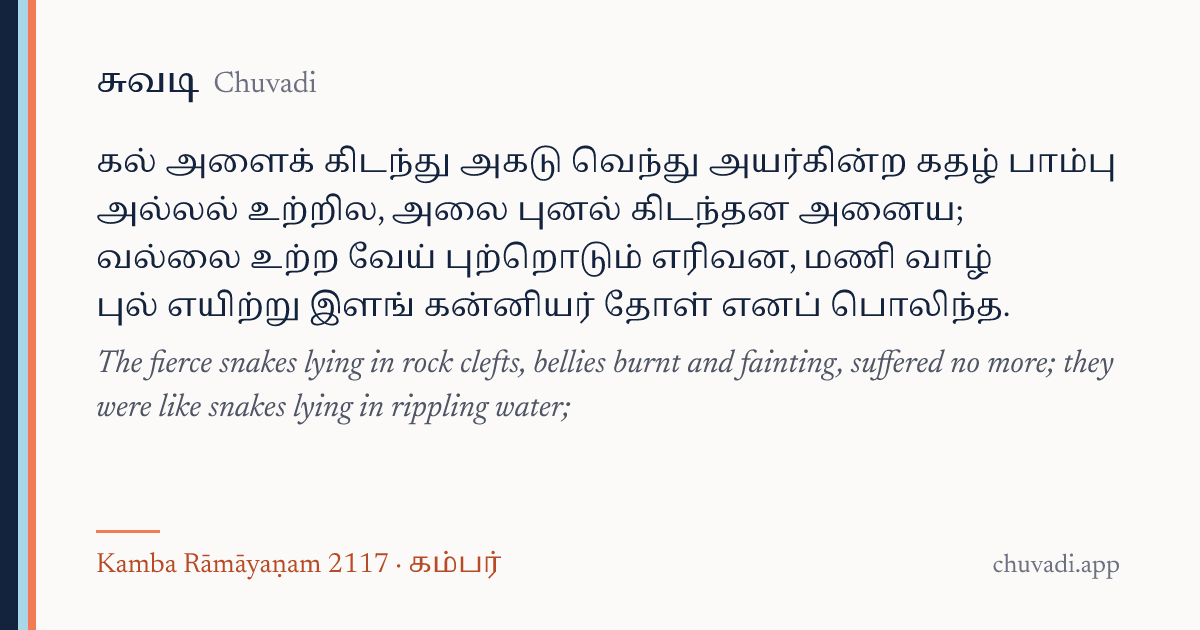
கல் அளைக்கிடந்து - மலைக்குகையிலே தங்கி; அகடு வெந்து - வயிறு தீய்ந்து; அயர்கின்ற - சோர்கின்ற; கதழ் பாம்பு - சீற்றம் உடைய பாம்பு; அல்லல் உற்றில - (இப்பொழுது) துன்பம் அடையவில்லை; அலை புனல் கிடந்தன அனைய - அலை வீசும் தண்ணீரில் கிடப்பதைப் போல உள்ளனவாயின; வல்லை உற்ற வேய் - பெருங்காட்டில் முளைத்த மூங்கில்; புற்றொடும் எரிவன - தாம் இருந்த புற்றோடும் எரிந்து போயின (இப்போது); மணி வாழ் புல் எயிற்று இளம் கன்னியர் - முத்துமணி வாழ்கின்ற சிறிய பற்களை உடைய வேட்டுவப் பெண்களின்; தோள் எனப் பொலிந்த - தோள்களைப் போலச் செழிப்புடையவாயின.
வல்லை - காடு. மணி என்பது இங்கு முத்து. முத்துப் போல் தங்கியுள்ள பற்களை உடைய என உரைக்க.
ஆங்கிலம் · English translationAI
Translation
- The fierce snakes lying in rock clefts, bellies burnt and fainting,
- suffered no more; they were like snakes lying in rippling water;
- the bamboos of the great forest, which had been burning along with the anthills,
- now shone like the shoulders of young maidens whose small teeth are pearls.
What the poem says
The cooling of the desert reaches every creature. Snakes that had lain baking in rock crevices now feel as if they were lying in rippling water.
The bamboo, once burning down to the anthills it grew among, now grows smooth and lush. The poet compares it to the shoulders of young forest women whose small, even teeth are like pearls, a common comparison in Tamil love poetry.