



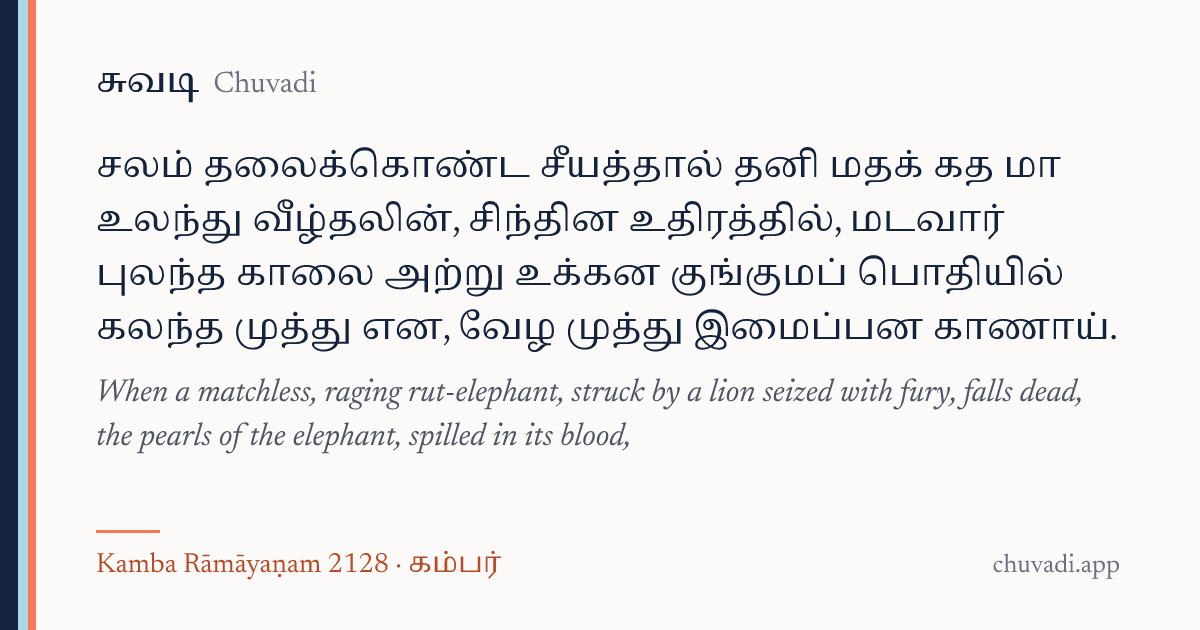
கம்பராமாயணம் 2128 · அயோத்தியா 8.6
பாடல் · The poem
Tap a word to see its gloss in the commentary and where else it occurs.
பாட வேறுபாடு · Project Madurai reads
பொருள் · Meaning in Tamil
சலம் தலைக் கொண்ட சீயத்தால் - கோபத்தைத் தன்னிடத்தே கொண்ட சிங்கத்தால் (தாக்குண்டு); தனி மதக் கத மா - ஒப்பற்ற மதநீர்ப்பெருக்கையும் கோபத்தையும் உடைய யானை; உலந்து வீழ்தலின் - உயிரற்றுக் கீழே விழுகின்ற போது; உதிரத்தில் சிந்தின - அவ் யானையின் இரத்தத்தில் சிந்தினவாகிய; வேழ முத்து - யானையின் முத்துக்கள்; மடவார் புலந்த காலை - மகளிர் தம் காதலரோடு ஊடல்கொண்ட காலத்து; அற்று - அறுபட்டு; உக்கன - கீழே சிதறியனவாய்; குங்குமப் பொதியில் - (அம் மகளிரின்) குங்குமக் குழம்பில்; கலந்த - தோய்ந்த; முத்து என - முத்துப் போல; இமைப்பன - ஒளிவிடுவனவற்றை; காணாய் - பார்ப்பாயாக.
வேழம் என்பதனை மலைக்கண் உள்ள மூங்கில் என்று கொண்டு மூங்கிலிற் பிறந்த முத்துகள் எனவும், கரும்பு என்று கொண்டு கரும்பிற் பிறந்த முத்துக்கள் எனவும் கூறுதல் ஆமாயினும், சிங்கத்தால் தாக்குண்ட யானை விழும் போது உதிரத்தில் சிந்திய அவ்யானை முத்துகளே எனல் இவ்விடத்துக்குப் பெரிதும் பொருந்துமாறு அறிக. அல்லாக்கால், சிங்கத்தால் இறந்த யானை என்று கூறுதலால் பெரும்பயன் இன்று ஆதலின், முத்துப் பிறக்கும் இடங்கள், மூங்கில், கரும்பு, யானை ட அத்து வருமாறு திருச்செந்தூர்ப் பிள்ளைத்தமிழிற் கூறுமாற்றான் உணர்க.
ஆங்கிலம் · English translationAI
Translation
- When a matchless, raging rut-elephant, struck by a lion seized with fury,
- falls dead, the pearls of the elephant, spilled in its blood,
- glitter like pearls that broke from their strings when women quarrelled with their lovers
- and fell into a heap of kuṅkumam: see!
What the poem says
Indian poetic lore held that pearls form in certain places besides oysters, among them bamboo, sugarcane and the heads of elephants. The commentary takes "elephant pearls" here in that last sense: a lion has killed a rut-maddened elephant, and the pearls from its head lie scattered in its blood.
Irāmaṉ compares them to the pearl necklaces that snap when women quarrel with their lovers, the pearls falling into the red kuṅkumam (saffron paste) the women wear. The commentary points to the Tiruccentūr Piḷḷaittamiḻ, which lists where pearls are born.