



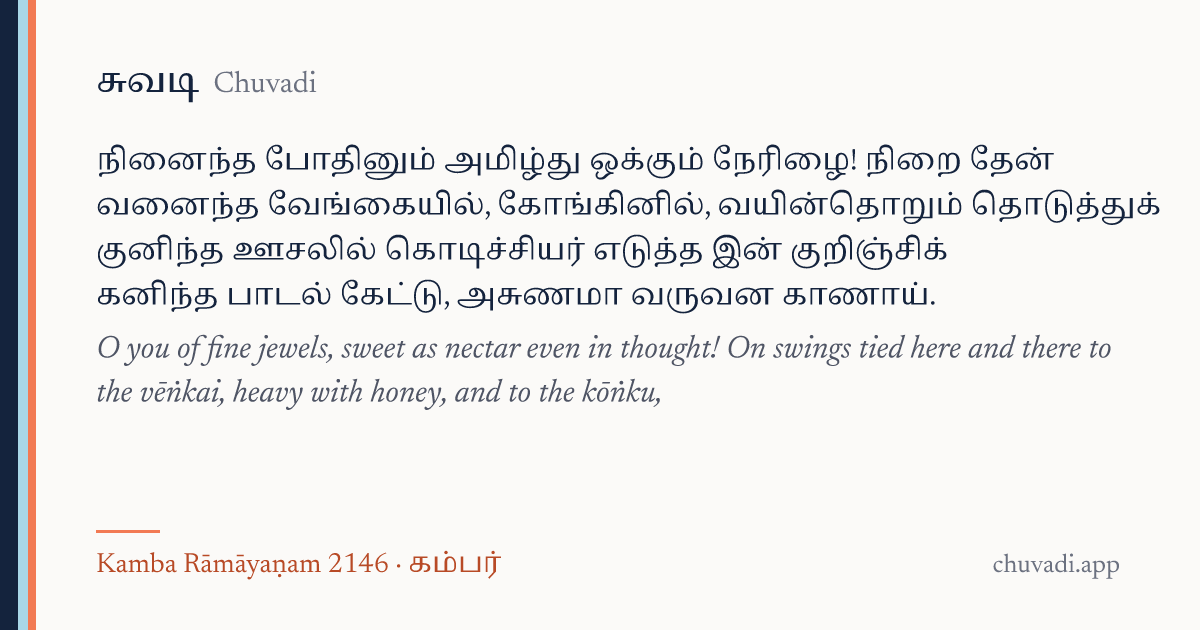
கம்பராமாயணம் 2146 · அயோத்தியா 8.24
பாடல் · The poem
Tap a word to see its gloss in the commentary and where else it occurs.
பொருள் · Meaning in Tamil
நினைந்த போதினும் அமிழ்து ஒக்கும் நேர் இழை! - (மனத்தால்) நினைக்கும்போதும் அமுதத்தை உண்டாற்போல மகிழ்ச்சியூட்டுகின்ற நேரிய அணிகளை அணிந்தவளே! நிறைதேன் வனைந்த வேங்கையில் - மிகுந்த தேனால் நிறைந்த வேங்கை மரத்தினிலும்; கோங்கினில் - கோங்க மரத்தினிலும்; வயின் தொறும் தொடுத்துக் குனிந்த ஊசலில் - பக்கங்கள் தோறும் கட்டி வளைத்து ஆடுகின்ற ஊஞ்சலில்; கொடிச்சியர் எடுத்த இன்குறிஞ்சி கனிந்த பாடல் கேட்டு - குறமகளிர் பாடிய இனிய குறிஞ்சிப் பண்ணால் பதம் நிறைந்த பாடல் ஓசை கேட்டு; அசுண மா - (இசை விரும்பும்) அசுண மாக்கள்; வருவன - ஓடி வருவனவற்றை; காணாய் -.
“நினைந்த போதினும் அமிழ்து ஒக்கும்' - “உள்ளக் களித்தலும்' என்ற குறள் (1281) ஒப்புநோக்குக. அசுணம் - இனிய இசையை நுகர வரும் விலங்கு. ஒருவகைப் பறவை என்பாரும் உளர் (பிங்கலந்தை); இன்னோசையை முதற்கண் எழுப்பி இவ்விலங்கினை வரவழைத்து, அது இனிய இசையில் சொக்கித் தன்னை மறந்து நின்றவழி வலிய ஓசையை எழுப்பி அதனை இறந்துபடச் செய்து பிடிப்பது குன்றவர் வழக்கம். பறை பட வாழா அசுணமா (நான்மணி. 2.) என்பது காண்க.
அசுணம் ஒருவகை மான் என்பர். அது இவ்வியல்பினது என்பதனை “மறையின் தன் யாழ்கேட்டமானை அருளாது அறைகொன்று மற்றதன் ஆர் உயிர் எஞ்ச, பறை அறைந்தாங்கு (கலித். 143: 10-12) என்ற பாடற் பகுதியால் அறிக.
ஆங்கிலம் · English translationAI
Translation
- O you of fine jewels, sweet as nectar even in thought! On swings
- tied here and there to the vēṅkai, heavy with honey, and to the kōṅku,
- swaying low, the hill-women raise the sweet, ripe kuṟiñci song;
- hearing it, the acuṇam creatures come running: see!
What the poem says
Irāmaṉ calls Cītai a joy like nectar even to think of, which the commentary compares with a couplet of the Kuṟaḷ (1281). Hill women on swings hung from flowering trees sing songs in kuṟiñci, the melody of the mountain country.
Drawn by the music come the acuṇam, legendary creatures (a deer, or by some accounts a bird) said to be so enchanted by sweet music that they forget themselves. Hunters were said to lure them with sweet sounds and then kill them with a harsh drumbeat, as older poems such as the Kalittokai and Nāṉmaṇikkaṭikai describe.