



கம்பராமாயணம் 2151a · அயோத்தியா 8.30a
பாடல் · The poem
Tap a word to see its gloss in the commentary and where else it occurs.
பொருள் · Meaning in Tamil
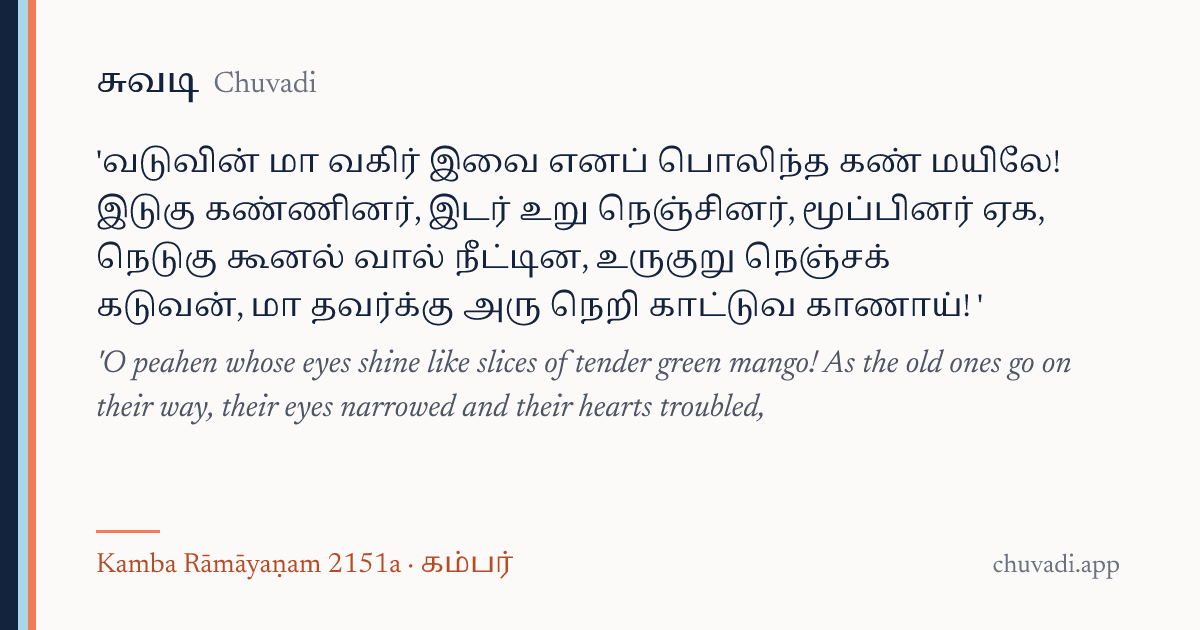
இவை மா வடுவின் வகிர் எனப் பொலிந்த கண் மயிலே! - இவை மாம் பிஞ்சுகளின் பிளப்பு என்று சொல்லும்படியாகப் பொலிந்த கண்களை உடைய மயில் போல்பவளே!; இடுகு கண்ணினர் - இடுங்கிப் போன கண்களை உடையவரும்; இடர் உறு நெஞ்சினர் - துன்பம் உறுகின்ற நெஞ்சத்தை உடையவரும் ஆகிய முனிவர்கள்; ஏக - செல்ல; மாதவர்க்கு - அம்முனிவர்களுக்கு; நெடுகு கூனல் வால் நீட்டின - நீண்டு வளைந்த வாலை நீட்டியவையாய், உருகு உறு நெஞ்சக் கடுவன் - உருகுகின்ற மனம் உடைய ஆண்குரங்கு; அரு நெறி காட்டுவ - மலையிடத்து அரிய வழியினைக் காட்டுகின்றவற்றை; காணாய் -.
மூப்படைந்து, கண் இடுக, வழியறிந்து செல்ல இயலாது வருந்துகிற மாதவர்களுக்கு மலையில் உள்ள ஆண் குரங்குகள் இரங்கி அன்பு கொண்டு வழிகாட்டிச் செல்கின்றன என்பது சித்திரகூட மலையில் உள்ள உயிரினங்களின் கருணை இயல்பினைக் கூறியவாறாகும்.
ஆங்கிலம் · English translationAI
Translation
- 'O peahen whose eyes shine like slices of tender green mango!
- As the old ones go on their way, their eyes narrowed and their hearts troubled,
- the male monkeys, hearts melting, hold out their long curled tails
- and show the great ascetics the hard path: see!'
What the poem says
Another scene of the animals caring for the hermits. Cītai's eyes are compared to the almond shape of sliced green mango.
The aged sages, half-blind and anxious, cannot find their way along the difficult mountain paths. Male monkeys, moved with pity, hold out their long curved tails for the sages to follow and lead them along the way.