



கம்பராமாயணம் 2158 · அயோத்தியா 8.37
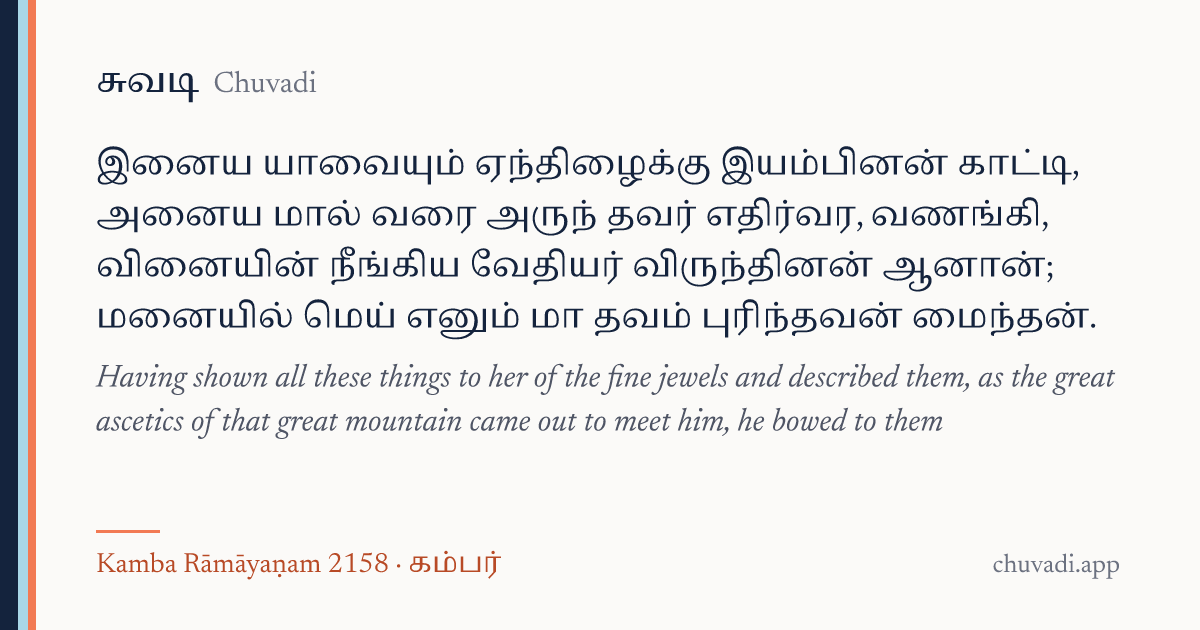
பாடல் · The poem
Tap a word to see its gloss in the commentary and where else it occurs.
பொருள் · Meaning in Tamil
மனையில் - அரண்மனையில், மெய் எனும் மாதவம் புரிந்தவன் மைந்தன் - சத்தியம் என்னும் பெரிய தவத்தைச் செய்தவனாகிய தயரதனுடைய மகனாகிய இராமன்; இனைய யாவையும் - இப்படிப்பட்ட சித்திரகூட மலையின் பண்பு நலங்களை யெல்லாம்; ஏந்து இழைக்கு - உயர்ந்த அணிகலன்களை உடையாளாய சீதைக்கு; இயம்பினன் காட்டி - சொல்லிக் காண்பித்து; அனைய மால் வரை - அந்தப் பெரிய சித்திரகூட மலையின்; அருந்தவர் - அரிய முனிவர்கள்; எதிர்வர - (தன்னை) எதிர்வந்து வரவேற்க; வணங்கி - (அவர்களை) வழிபட்டு; வினையின் நீங்கிய - தவத்தால் இரு வினையில் இருந்து நீங்கியவர்களாகிய; வேதியர் - அந்த வேதியர்களுக்கு; விருந்தினன் ஆனான் -.
வனம் சென்று தவம் செய்வாரினும் தயரதன் மேம்பட்டவன் என்பது காட்ட “மனையின் மெய் எனும் மாதவம் புரிந்தவன்” என்றார்.
ஆங்கிலம் · English translationAI
Translation
- Having shown all these things to her of the fine jewels and described them,
- as the great ascetics of that great mountain came out to meet him, he bowed to them
- and became the guest of those Vedic sages freed from the bonds of deeds:
- he, the son of the one who, in his own house, practised the great penance called truth.
What the poem says
Irāmaṉ finishes showing Cītai the wonders of the mountain. The sages who live there come out to welcome him, he bows to them, and he becomes their guest.
He is called the son of the man whose great penance was truth, practised at home: Tacarataṉ, who kept his word to Kaikēyi even at the cost of his son and his life. The phrase suggests that the king's faithfulness to truth was greater than the austerities of forest hermits.