



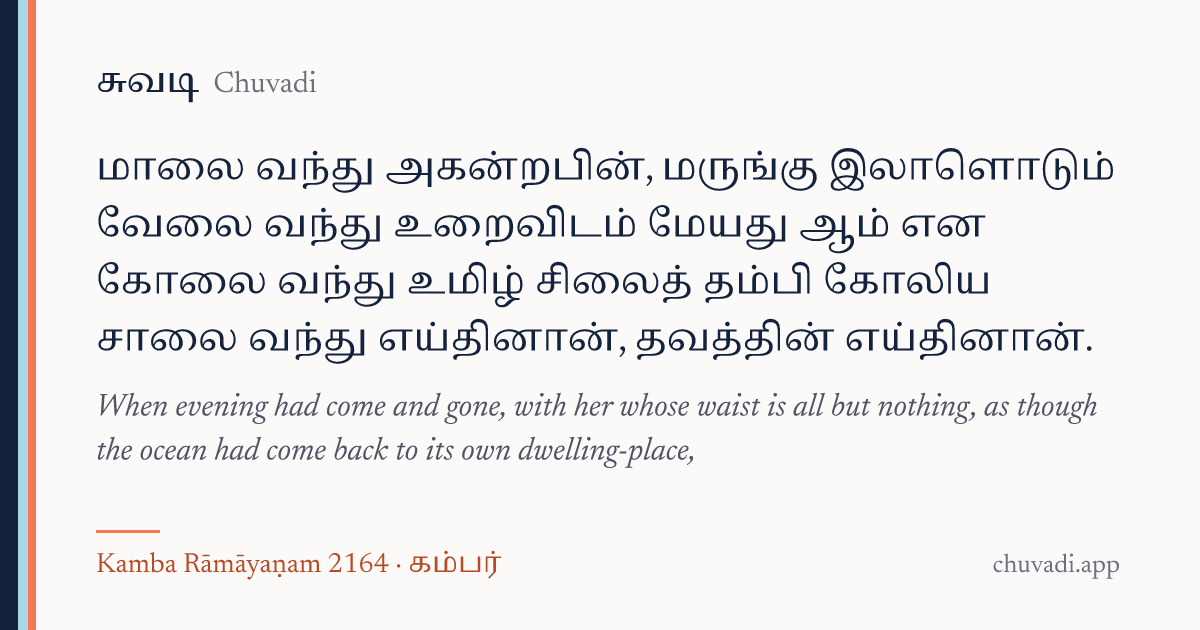
கம்பராமாயணம் 2164 · அயோத்தியா 8.43
பாடல் · The poem
Tap a word to see its gloss in the commentary and where else it occurs.
பாட வேறுபாடு · Project Madurai reads
பொருள் · Meaning in Tamil
தவத்தின் எய்தினான் - தவம் காரணமாகக் காடு நோக்கி வந்த இராமன்; மாலை வந்து அகன்றபின் - மாலைப் பொழுது வந்து சென்ற பிறகு (இரவில்); வேலை உறைவிடம் வந்து மேயது ஆம் என - கடலானது தான் தங்கும் இடத்தை வந்து சேர்ந்தது என்று சொல்லும்படியாக; மருங்கலாளொடும் - இடையில்லாத சீதையோடும்; கோலை வந்து உமிழ் சிலைத் தம்பி - அம்பை உமிழுகின்ற வில்லை உடைய தம்பியாகிய இலக்குவன்; கோலிய - செய்தமைத்த; சாலை வந்து எய்தினான் - சாலை இருக்கும் இடத்தை வந்தடைந்தான்.
நீலக்கடல் போன்ற நிறம் உடையவன் இராமன் ஆதலின், கடல் தன் உறைவிடம் போனதுபோல என்று உவமைப்படுத்தினார்.
ஆங்கிலம் · English translationAI
Translation
- When evening had come and gone, with her whose waist is all but nothing,
- as though the ocean had come back to its own dwelling-place,
- he came to the hut built by his brother, whose bow spits arrows:
- he who had come to the forest for penance.
What the poem says
After the evening rites, Irāmaṉ and Cītai go to the hut that Ilakkuvaṉ has built for them. Cītai's waist is so slender it seems not to exist, a common poetic compliment.
Irāmaṉ is dark blue like the sea, so his going into the hut is likened to the ocean returning to its own home.