



கம்பராமாயணம் 2176 · அயோத்தியா 8.55
பாடல் · The poem
Tap a word to see its gloss in the commentary and where else it occurs.
பாட வேறுபாடு · Project Madurai reads
பொருள் · Meaning in Tamil
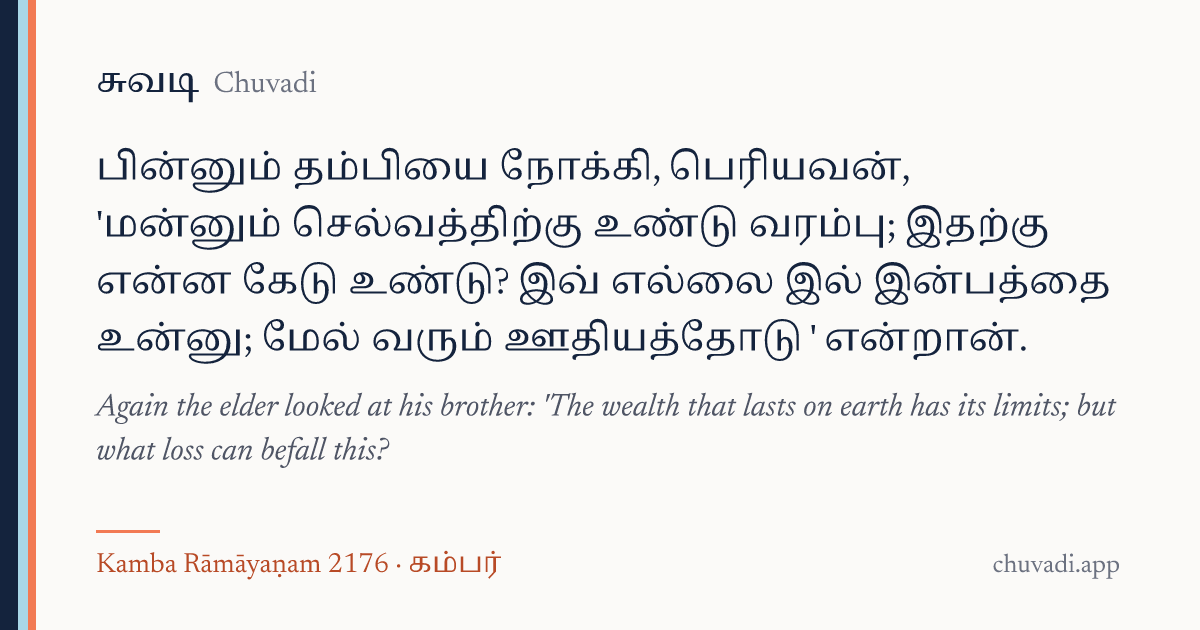
பெரியவன் - இராமன்; பின்னும் - மறுபடியும்; தம்பியை நோக்கி - இலக்குவனைப் பார்த்து; “மன்னும் செல்வத்திற்கு - (உலகில்) பெறும் பொருட்செல்வத்திற்கு; வரம்பு உண்டு - இவ் வளவு என்று ஒரு எல்லை உண்டு; இதற்கு - இந்த வனவாசத் தவம் ஆகிய செல்வத்துக்கு; என்ன கேடு உண்டு? - என்ன அழிவு உண்டு; இவ் எல்லை இல் இன்பத்தை மேல் வரும் ஊதியத்தோடு உன்னு” - இந்த அளவுபடாத அழிவுபடாத இன்பவாழ்க்கையை மறுமையில் இத்தவத்தால் பெறும் நற்கதியாகிய இலாபத்தோடு சேர்த்து நினைப்பாயாக, ' என்றான்.
அரசச் செல்வம் அழிவுடையது; அளவு உடையது. ஆனால், தவச் செல்வமோ அழிவற்றது; அளவற்றது; மறுமைக்கும் பயன் தரவல்லது. ஆகவே அரச போகத்தைவிட, வனவாசமே எனக்கு மகிழ்ச்சி தருவது ஆதலின், எனக்குத் துன்பம் விளைந்ததாகவே நான் கருதவில்லை; அதனை நினைத்து நீ துன்புறுவானேன்' என்றானாம் - இது “இடரினுக்கு அங்குரம் முந்தி வந்து முளைத்தது அன்றோ' என்று இலக்குவன் கூறிய து படல பதில் போல் அமைந்து ஆறுதல் தருவதாயிற்று.
ஆங்கிலம் · English translationAI
Translation
- Again the elder looked at his brother: 'The wealth that lasts on earth
- has its limits; but what loss can befall this?
- Think of this boundless joy,
- together with the gain that is yet to come,' he said.
What the poem says
Irāmaṉ answers his brother's point. A king's wealth, however great, is limited and can be lost. The wealth of a forest life of austerity cannot be lost; its joy is boundless now and will bring further reward in the life to come.
So he does not count the exile a hardship at all, and Ilakkuvaṉ need not grieve over it. This answers Ilakkuvaṉ's remark that the sorrow had fallen on Irāmaṉ.