



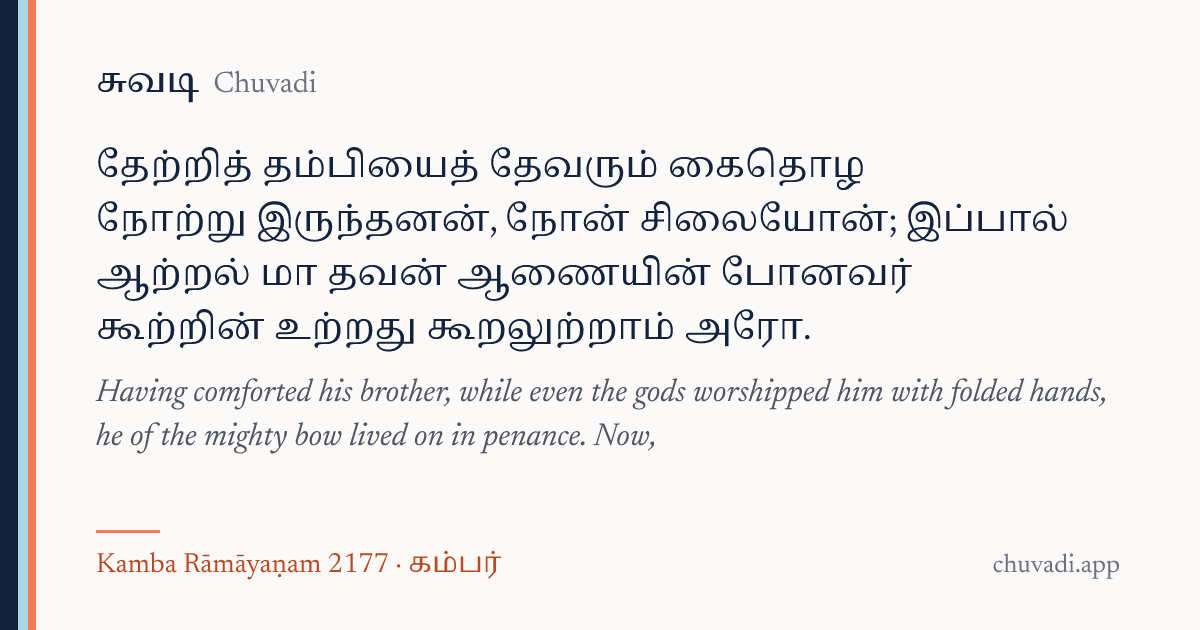
கம்பராமாயணம் 2177 · அயோத்தியா 8.56
பாடல் · The poem
Tap a word to see its gloss in the commentary and where else it occurs.
பாட வேறுபாடு · Project Madurai reads
பொருள் · Meaning in Tamil
நோன் சிலையோன் - வலிய வில்லை உடைய இராமபிரான் (இவ்வாறு கூறி); தம்பியைத் தேற்றி-; தேவரும் கைதொழ - தேவர்களும் வணங்கும்படியாக; நோற்று இருந்தனன் - தவம் செய்து இருந்தான்; இப்பால் - இனி; ஆற்றல் மாதவன் ஆணையின் போனவர் கூற்றின் - வலிமைமிக்க முனிவராய வசிட்டருடைய கட்டளையை மேற்கொண்டு சென்ற தூதுவர் செய்தியில்; உற்றது - நடந்த செய்தியை; கூறல் உற்றாம் - சொல்லத் தொடங்கினோம்.
வசிட்டன் அனுப்பப் பரதன்பால் கேகய நாட்டுக்குச் சென்ற தூதுவர் செய்தி இனி வருவதாம் - அரோ” அசை.
ஆங்கிலம் · English translationAI
Translation
- Having comforted his brother, while even the gods worshipped him with folded hands,
- he of the mighty bow lived on in penance. Now,
- of the men who went at the bidding of the great and powerful sage,
- we begin to tell what befell, as their tidings ran.
What the poem says
Irāmaṉ consoles his brother and settles at Cittirakūṭam into a life of austerity honoured even by the gods. This closes the canto of Cittirakūṭam.
The poet turns the story elsewhere. Earlier the sage Vaciṭṭaṉ had sent messengers to fetch Paratan, who was away at his grandfather's court in Kēkayam, and the narrative now follows them.