



கம்பராமாயணம் 2191 · அயோத்தியா 9.14
பாடல் · The poem
Tap a word to see its gloss in the commentary and where else it occurs.
பாட வேறுபாடு · Project Madurai reads
பொருள் · Meaning in Tamil
எறி - ஒன்றை ஒன்று எறிகின்ற; பகட்டினம் - எருதுகளின் கூட்டம், ஆடுகள்-; ஏற்றை மா - ஆண் விலங்குகள்; குறிகொள் கோழி - (தம்மை ஏவுவாரது) குறிப்பினைக் கொண்டு பொருதல் செய்யும் கோழிகள்; சிவல் -; குறும்பூழ் -; பொறி நெடுமயிர்க் கவுதாரிகள் - (உடலிற்) புள்ளியுடைய நீண்ட மயிர் உடையதாகிய கவுதாரிப் பறவையும் (என இவற்றைப்), போற்றுறு - பாதுகாத்து வைத்துப் போரிடச் செய்யும்; நெறியின் - துறையில் சிறந்த; மாக்களும் - மக்களும்; முந்தி நெருங்கினர் -.
47,48 இப்பாடல்களை இங்கு ஒப்பு நோக்குக. பறவையும், விலங்கும் ஆகியவற்றைப் போரிடவிட்டுக் காண்டல் அக்கால அரசர்க்குரிய பொழுது போக்குகளுள் ஒன்றாதலின் அத்துறை வல்லவர் உடன் சென்றனர். “நெறி இல் மாக்கள்' விலங்கையும் பறவையையும் தம்முள் மோதவிடுவார் நன்னெறியில்லாத அறிவற்றவர் ஆதலின் மாக்கள் எனப்பெற்றார் என்பதும் பொருள். ஈண்டு மக்களை “மாக்கள்” என்று கூறியது செய்யுள் ஓசை நிறைத்தற் பொருட்டு.
ஆங்கிலம் · English translationAI
Translation
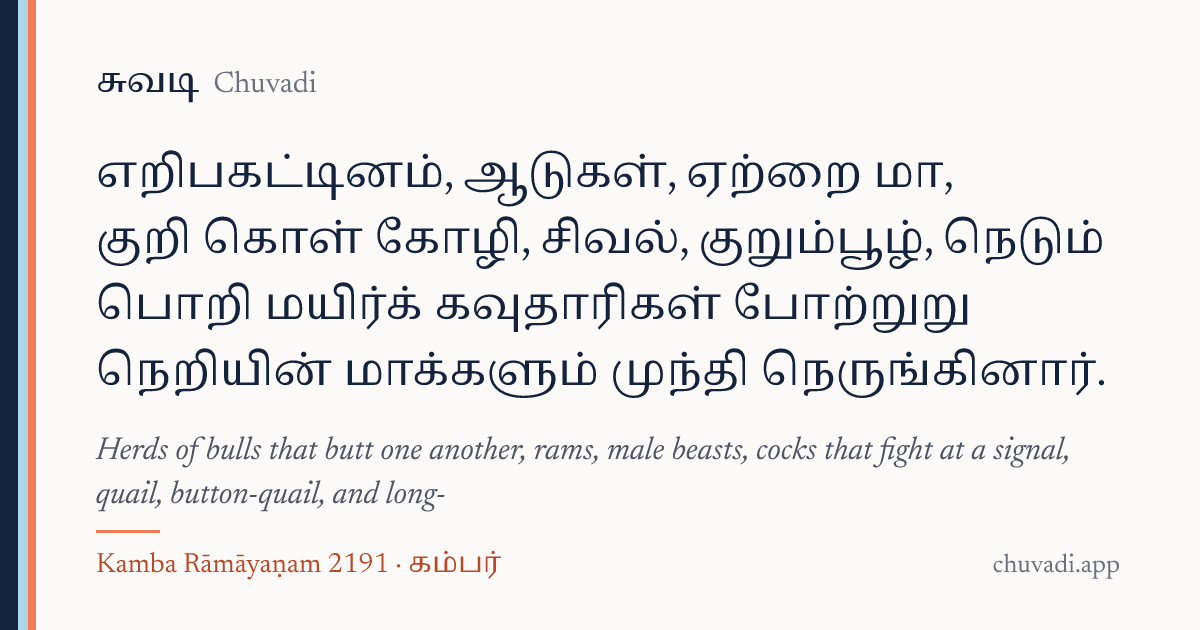
- Herds of bulls that butt one another, rams, male beasts,
- cocks that fight at a signal, quail, button-quail, and long-
- feathered spotted partridges: the men who keep them
- and are practised in that art pressed forward close.
What the poem says
The procession also includes the keepers of fighting animals and birds: bulls, rams, gamecocks, quail and partridges trained to fight.
Watching such contests was a pastime of kings in those days, so the experts went along. The commentary notes another reading, "men without right conduct", which would censure those who set animals against each other.