



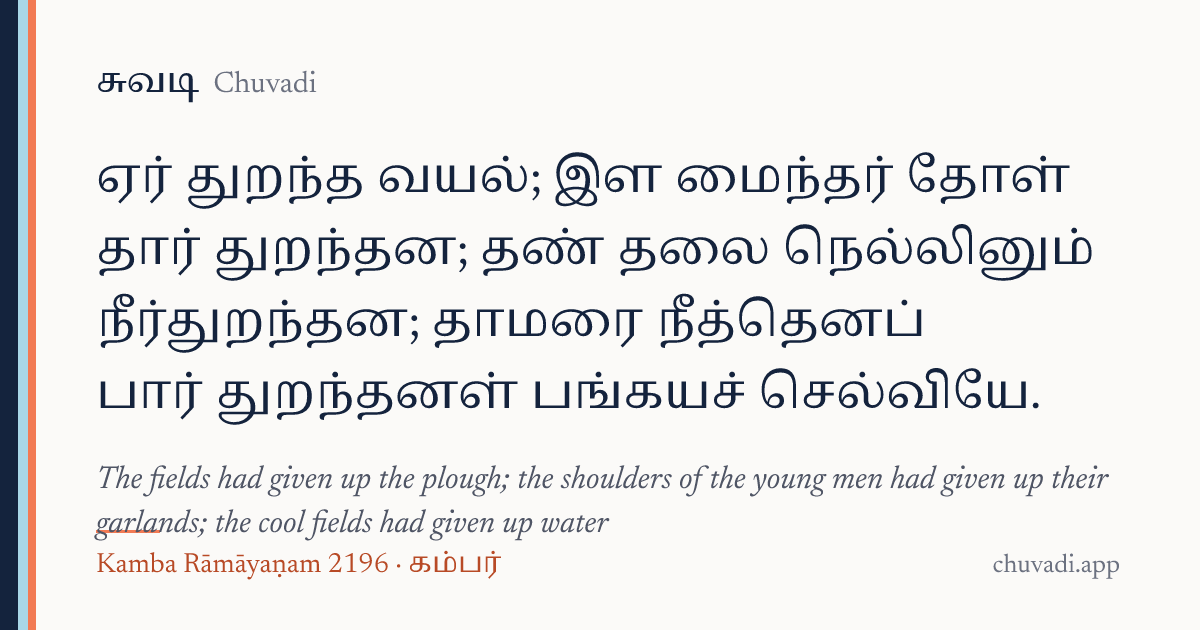
கம்பராமாயணம் 2196 · அயோத்தியா 9.19
பாடல் · The poem
Tap a word to see its gloss in the commentary and where else it occurs.
பொருள் · Meaning in Tamil
வயல் - வயல்கள்; ஏர் துறந்த - கலப்பையைத் துறந்திருந்தன; இள மைந்தர் தோள் - இளைய ஆடவர்களின் தோள்; தார்துறந்தன - (இன்பச்சிறப்பிற்குக் காரணமான) பூமாலைகளை நீங்கியிருந்தன; நீர்; தண் தலை - குளிர்ந்த இடமாகிய வயல்; நெல்லினும் - நெற்பயிரின்கண்ணும்; துறந்தன - இல்லாமல் இருந்தன; தாமரை நீத்தென - (நீர் இல்லாமையால்) தாமரை (அந்நாட்டில்) இல்லாமல் சென்றுவிட்டதாக; பங்கயச் செல்வி - தாமரையில் வீற்றிருக்கின்ற திருமகள்; பார் துறந்தனள் - (தான் வாழ்கின்ற மனையாகிய) தாமரை இல்லாமையால் கோசலநாட்டை விட்டு நீங்கினாள்.
வயலை உழுவார் இன்மையால் ஏர்துறந்தன. ஏர் - அழகு என்றும் கொள்ளலாம். சோகம் நாட்டைக் கவ்வுதலின் ஆடவர் தார் அணியவில்லை. நெற்பயிரும், தாமரையும் இன்றி வயல்கள் பொலிவழிந்தன. மன்னன் இறப்பவும், இராமன் காடு செல்லவும் நாடு பொலிவிழந்ததாம். “எவ்வழி நல்லவர் ஆடவர் அவ்வழி நல்லை வாழிய நிலனே” (புறநா. 187) என்றது ஒப்புநோக்கத்தக்கது.
ஆங்கிலம் · English translationAI
Translation
- The fields had given up the plough; the shoulders of the young men
- had given up their garlands; the cool fields had given up water
- even for the rice; and as though the lotus had gone away,
- the lady of the lotus had given up the land.
What the poem says
Entering Kōcalam, Paratan finds the once-rich country stricken. No one ploughs the fields, the young men wear no garlands, the paddies have no water.
With the lotuses gone, Tirumakaḷ, goddess of prosperity, who lives in the lotus, has left the land. The king's death and Irāmaṉ's exile have drained the kingdom of its life. The commentary recalls the Puṟanāṉūṟu line that a land is good only where its men are good.