



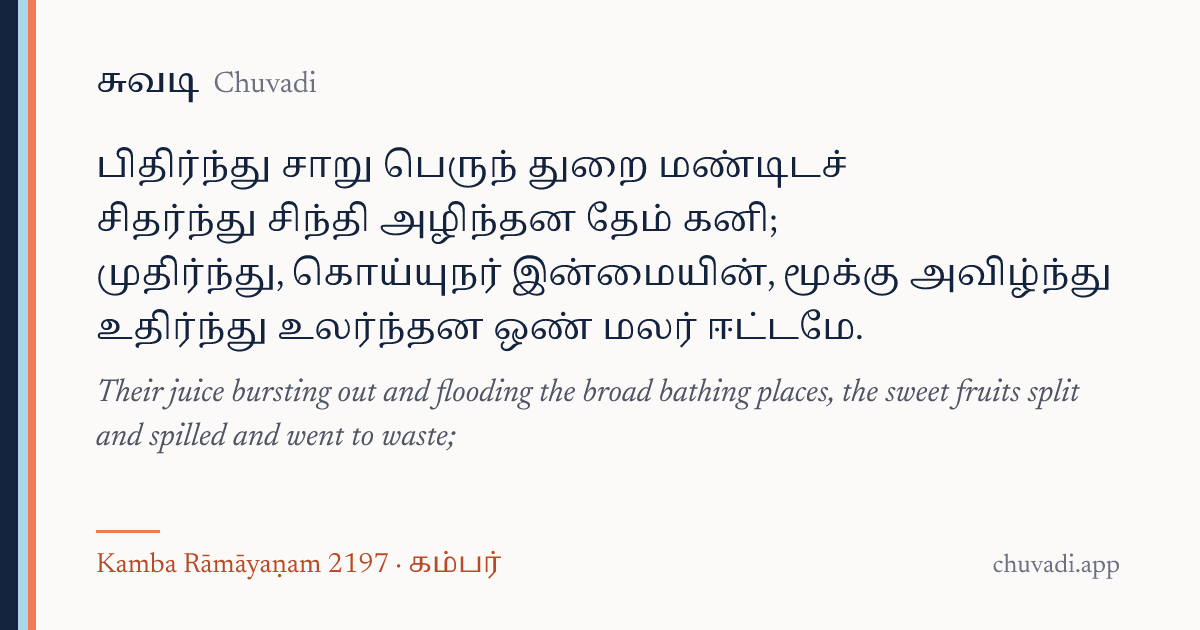
கம்பராமாயணம் 2197 · அயோத்தியா 9.20
பாடல் · The poem
Tap a word to see its gloss in the commentary and where else it occurs.
பொருள் · Meaning in Tamil
தேம் கனி - இனிய பழங்கள்; (கொய்யுநர் இன்மையின்) சாறு பிதிர்ந்து - பறித்துண்பார் இல்லாமையால் சாறு வெளிப்பட்டு; பெருந்துறை மண்டிட - பெரிய நீர்த்துறைகளில் நெருங்கிப் பாய; சிதர்ந்து சிந்தி அழிந்தன - சிதறிக் கெட்டு வீணான; ஒள் மலர் ஈட்டம் - ஒளி படைத்த (அழகிய) மலர்த்தொகுதி; கொய்யுநர் இன்மையின் - பறித்துச் சூடுவார் இல்லாமையால்; மூக்கு அவிழ்ந்து - தம் காம்பு கழலப்பெற்று; உதிர்ந்து உலர்ந்தன - (கீழே) உதிர்ந்து காய்ந்து போயின.
நாட்டில் உள்ளார் துயர மிகுதியால் கனி உண்ணுதலையும், மலர் சூடுதலையும் துறந்தனர். இப்பாடலில் “கொய்யுநர் இன்மையின்” என்பதனை இடைநிலைத் தீவகவணி எனக் கொண்டு 'தேம்கனி' “மலர் ஈட்டம்” என்ற இரண்டனோடும் முன்னும் பின்னும் கூட்டுக. இது ஊசற் பொருள்கோள் எனவும் பெறும். “ஏ' ஈற்றசை.
ஆங்கிலம் · English translationAI
Translation
- Their juice bursting out and flooding the broad bathing places,
- the sweet fruits split and spilled and went to waste;
- overripe, with no one to pick them, loosened at the stalk,
- the masses of bright flowers fell and withered.
What the poem says
The desolation of Kōcalam continues. Grief-stricken, no one picks fruit or wears flowers any more.
Ripe fruit bursts on the trees and its juice runs to waste down to the river steps, and flowers wither on the stem and drop. The phrase "with no one to pick them" in the middle of the verse applies to both the fruit and the flowers, a construction the commentary calls a "lamp in the middle" (iṭainilait tīvakam).