



கம்பராமாயணம் 2200 · அயோத்தியா 9.23
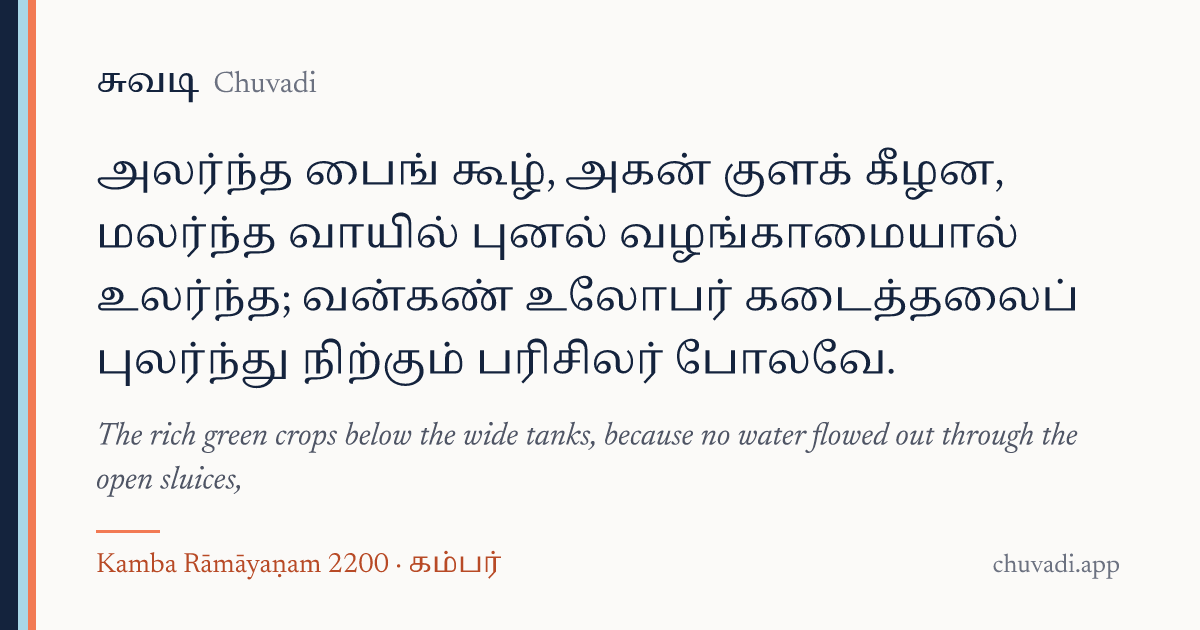
பாடல் · The poem
Tap a word to see its gloss in the commentary and where else it occurs.
பொருள் · Meaning in Tamil
அகன் குளக் கீழன - அகன்ற குளத்தின் தலை மடைக்கீழ் உள்ளனவாகிய; அலர்ந்த பைங்கூழ் - வளமான பசிய நெற்பயிர்; மலர்ந்த வாயில் - விரிந்துள்ள மதகு வழியாக; புனல் வழங்காமையால் - ஓடி வந்து விழும் நீர் வராதபடியால்; வன்கண் - (இரப்போர்க்குச் சிறிதும் கொடாத) கொடுமையுடைய; உலோபர் - கருமிகள்; கடைத்தலை - வாயில் முகப்பிலே; புலர்ந்து நிற்கும் பரிசிலர் போல - (ஒன்றும் பெறாமையால்) வாடி நிற்கும் இரவலர்களைப் போல; உலர்ந்த - காய்ந்துபோயின.
பெரும் பொருள் இருந்தும் கருமிகள் மனம் இன்மையால் பொருள் தராமையால் இரவலர் அவர் வாயில்முன் வாடிக் கிடப்பர். அது குளத்தில் நீர் நிறைய இருந்தும் மதகு வழியே நீர் பாய்ச்சுவார் இல்லாமையால் தலைமடைப் பயிர்கள் காய்ந்து கிடத்தலுக்கு உவமையாயிற்று. தலைக்கடை என்பதனைக் கடைத்தலை எனல் இலக்கணப்போலி; அஃதாவது சொற்கள் முன்பின்னாக மாறி நிற்றலாதலின். “ஏ' ஈற்றசை.
ஆங்கிலம் · English translationAI
Translation
- The rich green crops below the wide tanks,
- because no water flowed out through the open sluices,
- withered, like suppliants who stand wilting
- at the gates of hard-hearted misers.
What the poem says
The tanks are full, but no one opens the sluices, so the paddy just below them dries up and dies.
The poet compares the crops to beggars who waste away at a rich miser's gate: the wealth is there, but nothing is given out.