



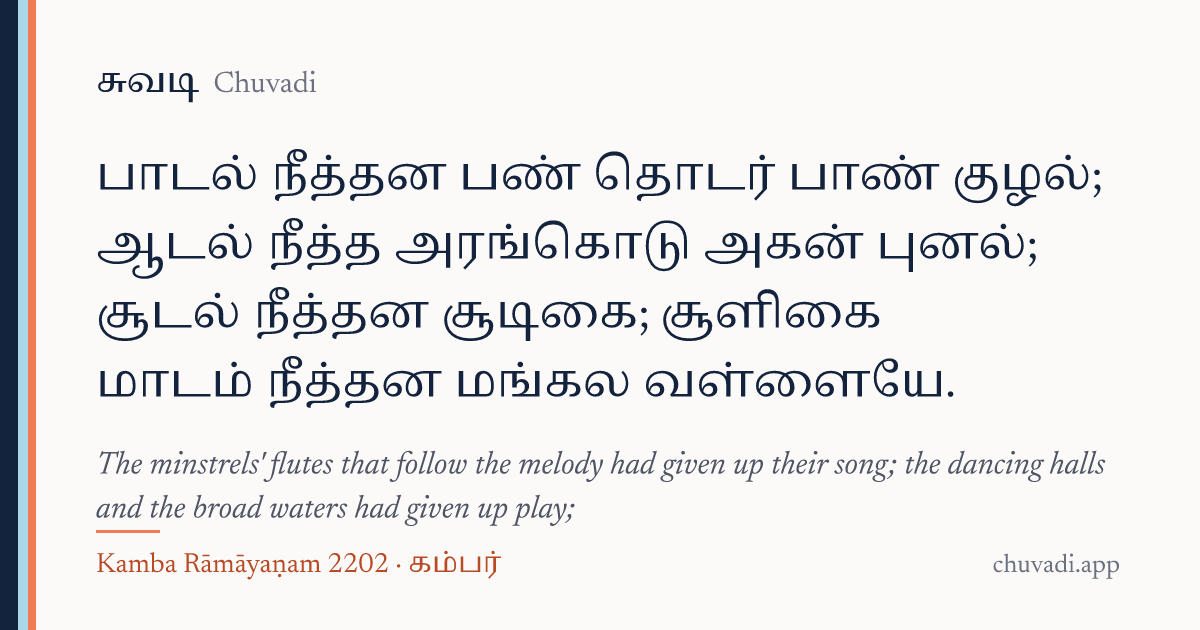
கம்பராமாயணம் 2202 · அயோத்தியா 9.25
பாடல் · The poem
Tap a word to see its gloss in the commentary and where else it occurs.
பொருள் · Meaning in Tamil
பண் தொடர் - இசையொடு தொடர்ந்த; பாண் குழல் - இசைக்கின்ற வேய்ங்குழல்கள்; பாடல் நீத்தன - இசை பாடுதலை ஒழிந்தன; அரங்கொடு அகன் புனல் - நாட்டிய அரங்குகளோடு அகன்ற நீர்நிலைகள்; ஆடல் நீத்த - ஆடுதலை ஒழிந்தன; சூடிகை - தலை உச்சி; சூடல் நீத்தன - மலர் சூடுதலை ஒழிந்தன, சூளிகை மாடம் - நிலாமுற்றத்தை உடைய மாளிகைகள்; மங்கல வள்ளை நீத்தன - மங்கலப் பாடல்கள் பாடப் பெறுதலை ஒழிந்தன.
ஆடல் - சிலேடையால் இருபொருள் தந்தது. நடனமாடல், நீராடல் என்பன முறையே அரங்கிற்கும் நீர்நிலைக்கும் ஆயின. புனல் என்பது யாற்று நீரைக் குறிக்கும். சூடிகை - உச்சி, 'சூடா' என்னும் வடசொல் சூடி” என்றாகி “க” ப்ரத்யயம் பெற்று 'சூடிகை' என்றாகியது. வள்ளைப்பாட்டு - உரற்பாட்டு. தம் தலைவனைப் புகழ்ந்தும் மற்றவரைக் குறைத்தும் பாடுதலின் ஏற்றிழிவுடைய உரற்பாட்டாகும். “கொற்ற வள்ளை' என்று புறத்திணையில் வரும் துறையும் இக்கருத்தினதே. குறைத்துப்படாது புகழ்ந்து பாடுதல் மட்டும் வருதலின் மங்கள வள்ளை” என்பர். இப்பெயரில் ஒரு சிறு பிரபந்தம் உண்டு. “ஏ' ஈற்றசை.
ஆங்கிலம் · English translationAI
Translation
- The minstrels' flutes that follow the melody had given up their song;
- the dancing halls and the broad waters had given up play;
- heads had given up the wearing of flowers; the terraced
- mansions had given up their auspicious songs.
What the poem says
More silence. The flutes no longer play; neither dancing in the halls nor bathing in the rivers goes on (āṭal, "play", means both dancing and bathing, a pun the commentary points out); no one wears flowers in their hair.
The great houses no longer echo with the auspicious vaḷḷai songs. The vaḷḷai was a pounding song sung over the mortar in praise of one's lord; its "auspicious" form praises without disparaging anyone.