



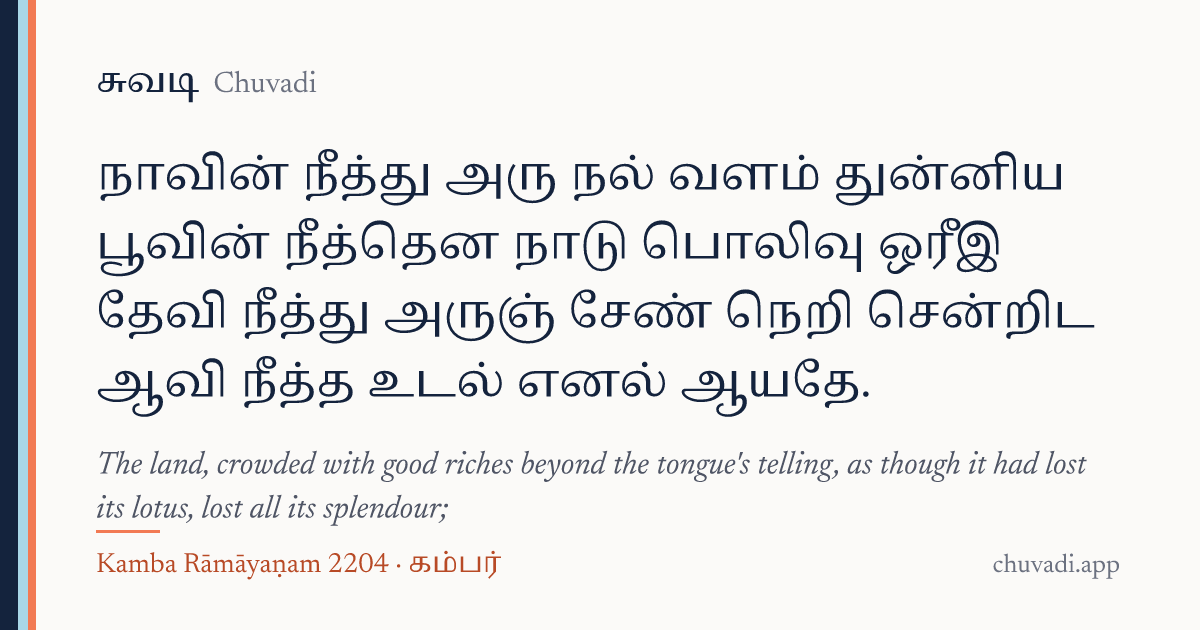
கம்பராமாயணம் 2204 · அயோத்தியா 9.27
பாடல் · The poem
Tap a word to see its gloss in the commentary and where else it occurs.
பாட வேறுபாடு · Project Madurai reads
பொருள் · Meaning in Tamil
நாவின் நீத்து அரு நல் வளம் துன்னிய - நாவினால் சொல்ல இயலாத நல்ல வளங்கள் நெருங்கியிருக்கப்பெற்ற; நாடு - கோசலநாடு; பூவின் நீத்தென - தாமரைப்பூவை இழந்ததாக; தேவி - அத்தாமரைப் பூவில் உறைபவளாகிய திருமகள்; நீத்து - (அந்நாட்டை விட்டு) நீங்கி; அருஞ்சேண் நெறி - பின்பற்றிச் செல்லுதற்கரிய நெடுந்தொலைவாகிய வழியிலே; சென்றிட - சென்றிடுதலான்; பொலிவு ஒரீஇ - தன் அழகும் கவர்ச்சியும் நீங்கி; ஆவி நீத்த உடல் - உயிர் போன உடல்; எனல் - என்று சொல்லுமாறு; ஆயது - ஆகிவிட்டது.
“தாமரை நீத்தெனப் பார்துறந்தனள் பங்கயச் செல்வியே ” (2120) என்பதை ஒப்புநோக்குக. “உயிர் போன உடல் சுற்றியிருப்பார்க்கு அச்சம் தருதல் போல இந்நாடும் காண்பார் அஞ்சுமாறு பொலிவிழந்ததாம். “மன்னன் உயிர்த்தே மலர்தலை உலகம்” (புறநா. 180) என்பவாதலின் மன்னனை இழந்த நாடு உயிரற்ற உடல் போல ஆயிற்று என்றார். 'ஏ' ஈற்றசை.
ஆங்கிலம் · English translationAI
Translation
- The land, crowded with good riches beyond the tongue's telling,
- as though it had lost its lotus, lost all its splendour;
- as the goddess left it and went far away by a hard road,
- it became like a body that life has left.
What the poem says
The summing-up of the scene. Kōcalam, once rich beyond words, has lost its splendour as if its lotus were gone.
Tirumakaḷ, the goddess of fortune who lives in the lotus, has left it for a distant road; she has gone with Cītai, her incarnation, into the forest. The country is now like a corpse from which life has fled. The Puṟanāṉūṟu says the king is the life of the world, so a land that has lost its king is a body without life.