



கம்பராமாயணம் 2212 · அயோத்தியா 9.35
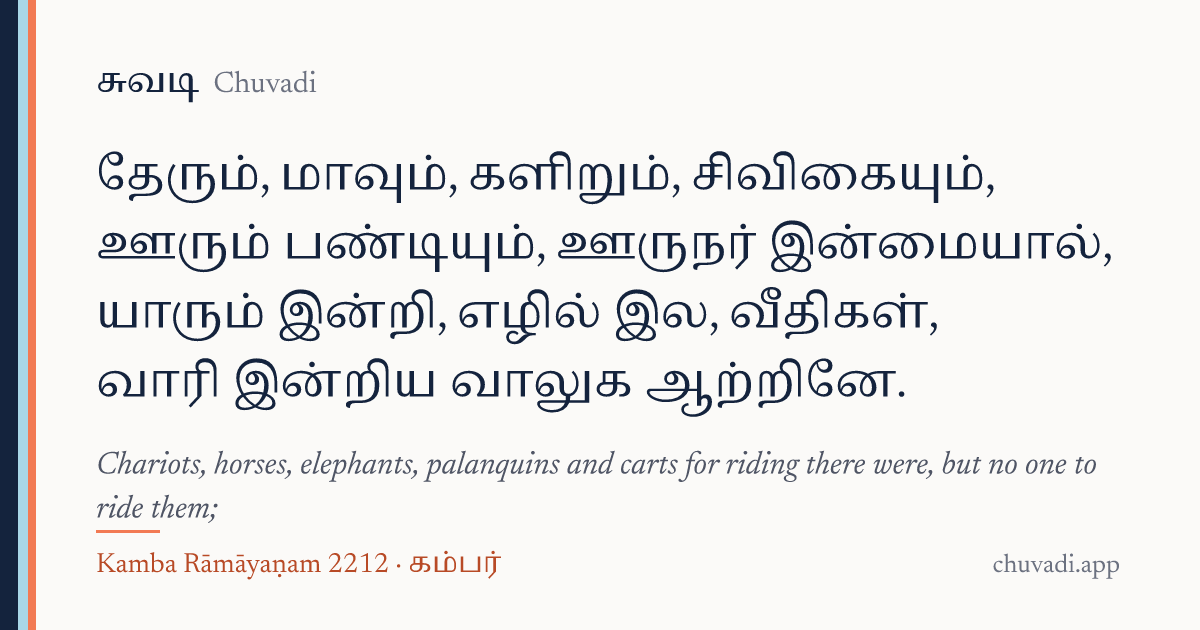
பாடல் · The poem
Tap a word to see its gloss in the commentary and where else it occurs.
பொருள் · Meaning in Tamil
தேரும் - தேர்களும்; மாவும் - குதிரைகளும்; களிறும் - யானைகளும்; சிவிகையும் - பல்லக்குகளும்; ஊரும் பண்டியும் - (மக்கள்) ஏறிச்செல்லுகின்ற வண்டிகளும்; ஊருநர் இன்மையால் - ஏறிச் செல்பவரும் செலுத்துபவரும் இன்மையால்; வீதிகள் - (அயோத்திநகரின்) தெருக்கள்; வாரி இன்றிய - நீர்வருவாய் இல்லாது போன; வாலுக ஆற்றினே - வெண்மணற் பரப்பையுடைய ஆற்றைப் போல; யாரும் இன்றி - இயங்குபவர் எவரும் இல்லாமல், எழில் இல - அழகு இழந்தன.
நீரற்ற வெறுமணல் பரவிய நதி - இயக்கம் அற்ற வீதிகளுக்கு உவமை ஆயிற்று; உவமையணி. வாலுகம் - வெண்மணல். வாரி - வருவாய். யாற்றுக்கு வருவாய் நீர் ஆதலின் நீர் எனப் பொருள் உரைத்தாம். வீதிக்கு அழகு மக்கள் இயங்குதல் ஆகலின் யாரும் இயங்காத வீதிகள் அழகிழந்தன என்றார். 'ஏ' ஈற்றசை.
ஆங்கிலம் · English translationAI
Translation
- Chariots, horses, elephants, palanquins
- and carts for riding there were, but no one to ride them;
- the streets, with no one in them, had lost their beauty,
- like rivers of white sand into which no water flows.
What the poem says
The streets of Ayōtti are deserted. Chariots, horses, elephants, palanquins and carts stand idle, with no one riding or driving them.
The empty streets look like dry riverbeds, broad stretches of white sand with no water in them. A street's beauty, like a river's, lies in what flows along it.