



கம்பராமாயணம் 2214 · அயோத்தியா 9.37
பாடல் · The poem
Tap a word to see its gloss in the commentary and where else it occurs.
பொருள் · Meaning in Tamil
“பார் - அயோத்தி; வேற்று அடங்கலர் ஊர் என மெல்லிதால் - மனம் வேறுபட்ட பகைவரது ஊர் போல அற்பமாக அழகிழந்துள்ளது; சூல் தடங் கருங்கார்புரை - சூல்கொண்ட பெரிய கரிய மேகம் போன்ற; தோற்றத்தான் - வடிவம் உடைய திருமால்; சேல் தடங்கண் திருவொடும் - கயல்மீன் போன்ற அகன்ற கண்களை உடைய திருமகளொடும்; நீங்கிய - நீங்கிச் செல்லுதலால்; (வறிதாகிப் போன) பால் தடங்கடல் ஒத்தது” - பெரிய திருப்பாற்கடலை ஒத்ததாக ஆயிற்று; என்றான் -.
அடங்கலர் - பகைவர் 'அடங்கார்' என அழைப்பது இலக்கிய வழக்கு. “மெல்லிது ' - அற்பமானது என்பது பொருள். அழகிழந்து அவலம் உறுதலின் அற்பமாயிற்று. திருமால் திருமகளொடும் நீங்கிய திருப்பாற்கடலை அயோத்தி நகர்க்கு உவமையாக்கினான். அவனை அறியாமலே அவன் உள்ளுணர்வு இராமனும் சீதையும் நீங்கிய அயோத்தியை நினைந்து கூறினாற் போலத் 'திருவொடும்' என்ற உடனிகழ்ச்சிக்குப் பிறிதொரு பொருள் (திருமால்) வேண்டுதலின் 'கார்புரை தோற்றத்தான்' திருமால் எனல் பொருந்துவதாயிற்று. பார் என்பது உலகம் என்னும் பொதுப்பொருள் உடையது ஆயினும் இடம் நோக்கி அயோத்தியைக் குறித்ததாம்.
ஆங்கிலம் · English translationAI
Translation
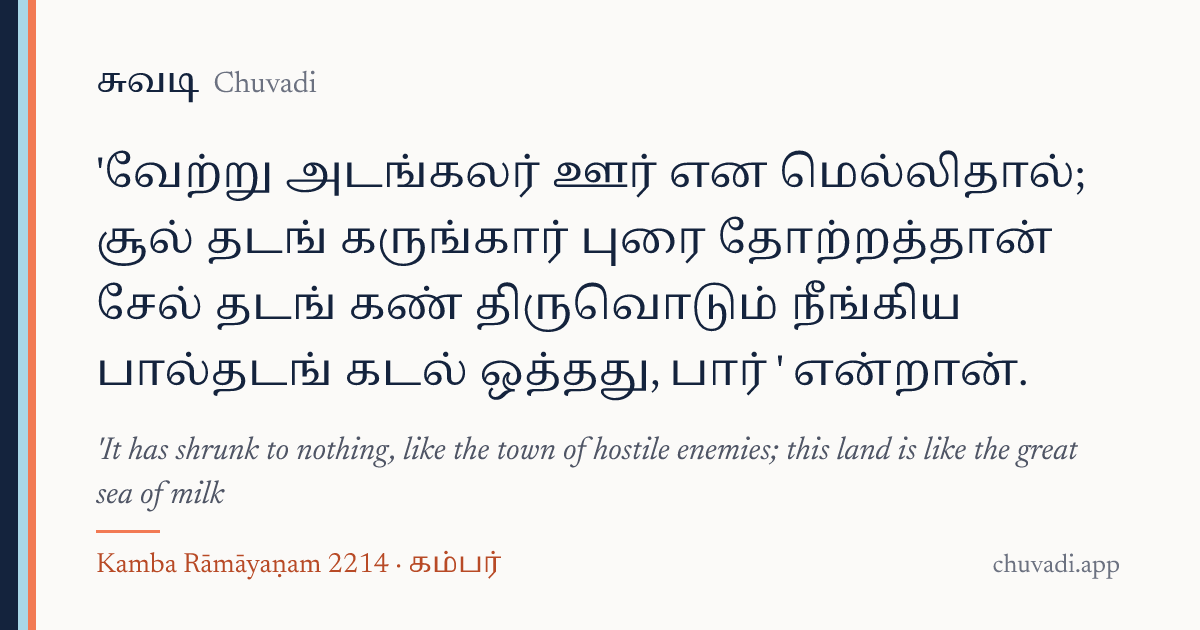
- 'It has shrunk to nothing, like the town of hostile enemies;
- this land is like the great sea of milk
- when he whose form is like the dark, rain-heavy cloud
- has gone from it, together with Tiru of the wide, carp-like eyes,' he said.
What the poem says
Paratan says the city looks as mean and shrunken as an enemy's town. It is like the ocean of milk after Viṣṇu, dark as a rain cloud, has left it together with his consort Tirumakaḷ.
The commentary points out the irony. Without knowing it, Paratan has described exactly what has happened: Irāmaṉ, who is Viṣṇu, has left Ayōtti with Cītai, who is Tirumakaḷ.