



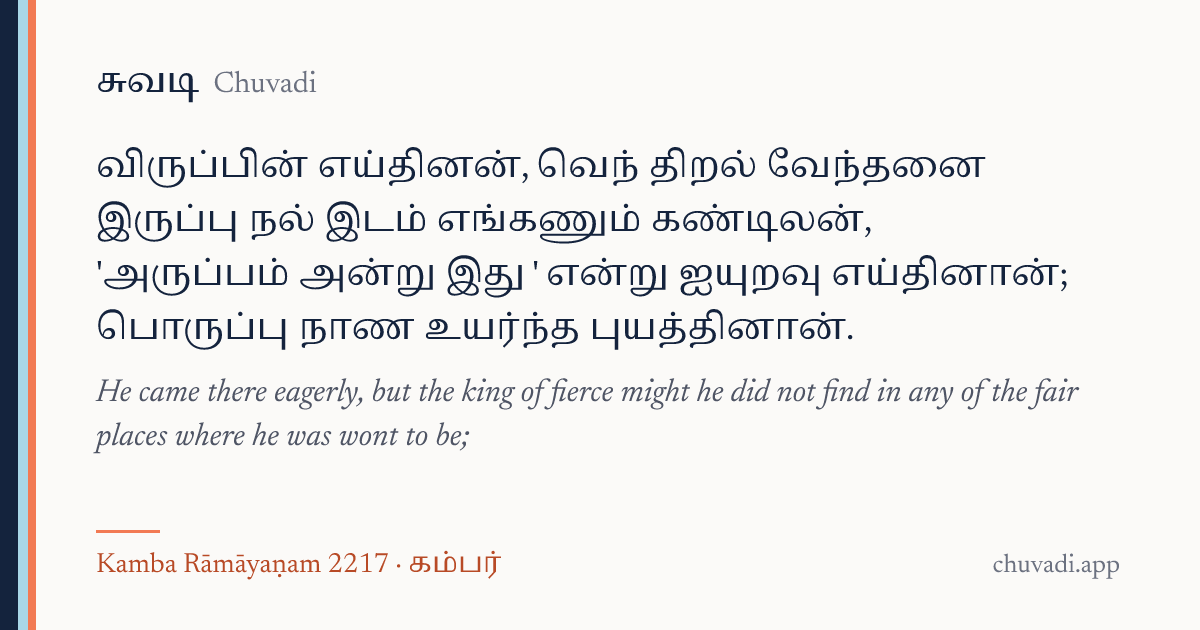
கம்பராமாயணம் 2217 · அயோத்தியா 9.40
பாடல் · The poem
Tap a word to see its gloss in the commentary and where else it occurs.
பொருள் · Meaning in Tamil
பொருப்பு - மலைகள்; நாண - வெட்கம் உறும்படி; உயர்ந்த - உயர்ந்திருக்கின்ற; புயத்தினான் - தோள்களையுடைய பரதன்; விருப்பின் எய்தினன் - (தந்தையாகிய தயரத வேந்தனைக் காண வேண்டும் என்னும்) ஆசையால் (விரைந்து) அடைந்து; வெந்திறல் - பெருவலி படைத்த; வேந்தனை - தயரத மன்னனை; இருப்பு நல் இடம் எங்கணும் - அவன் வாழக் கூடிய நல்ல இடங்கள் எல்லாவற்றினும்; கண்டிலன் - தேடிக் காணாது; அருப்பம் அன்று இது - அற்பமான செய்தி அன்று இது; என்று ஐயுறவு எய்தினான் - என்று ஐயமுற்று மனத்துன்பம் அடைந்தான்.
அரசனைப் பற்றிய கவலையோடு அரண்மனைக்குள் வந்து எங்கும் தேடிக் காணாமையால் அரசன் பாதுகாப்பற்றவனாகத் துன்புற்றானோ என்ற ஐயம் பரதன் மனத்தில் நிகழ்ந்ததாகவும் கூறலாம். அருப்பம் - அரண் - அருப்பம் அன்று - அரண் அன்று - பாதுகாப்பு அற்றது எனவும் பொருள்படும். அல்பம்” என்னும் வடசொல்லின் திரிபாகக் கொண்டு “இது அற்பமான காரணம் உடையது அன்று' இவ்வாறு இருப்பதற்கு ஏதோ பெரிய காரணம் இருக்க வேண்டும் என்று பரதன் நினைத்தான். இப்பொருளில் அருப்பம் என்பது “அருப்பம் என்று பகையையும் ஆர் அழல், நெருப்பையும் இகழ்ந்தால் ரு நீதியோ” (7108) என்று பின்னும் வந்துள்ளமை காண்க.
ஆங்கிலம் · English translationAI
Translation
- He came there eagerly, but the king of fierce might
- he did not find in any of the fair places where he was wont to be;
- 'This is no small matter,' he thought, and doubt seized him,
- he whose shoulders rise so high that mountains are put to shame.
What the poem says
Paratan searches all the rooms of the palace where the king usually stays, and cannot find him anywhere.
He realises that something serious has happened. The word aruppam can mean "a small thing" (from Sanskrit alpa) or "a fortress", so the line may also mean he feared the king had been left without protection.