



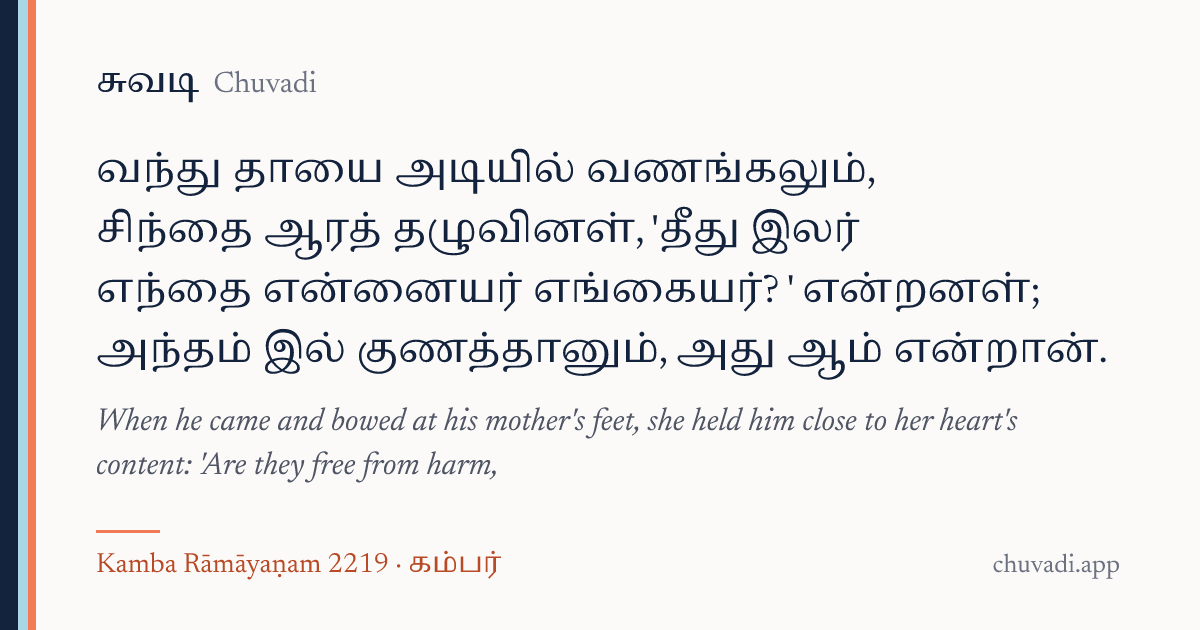
கம்பராமாயணம் 2219 · அயோத்தியா 9.42
பாடல் · The poem
Tap a word to see its gloss in the commentary and where else it occurs.
பொருள் · Meaning in Tamil
(பரதன்) வந்து - (தாய் இருக்குமிடம்) வந்து; தாயை - கைகேயியை; அடியில் - திருவடிகளில்; வணங்கலும் - வணங்கிய உடனே; (அவள்) சிந்தை ஆரத் தழுவினள் - மனத்திற் பொருந்த அணைத்து நின்று; “எந்தை என்னையர், எங்கையர் தீது இலர்” என்றனள் - என் தந்தையும், என் தமயன்மாரும், என் தங்கையரும் தீமையின்றி நலமாக உள்ளனரோ என்று விசாரித்தாள்; அந்தம் இல் குணத்தானும் - அளவுபடாத நற்குண நிலையமாகிய பரதனும், “அது ஆம்” என்றான் - நலமாக உள்ள அத்தன்மை அவ்வாறே உளதாம் என்று மறுமொழி கூறினான்.
அயோத்தியில் நிகழ்ந்த தீய நிகழ்ச்சிகளின் பாதிப்பு கைகேயியின் உள்ளத்திலும் உண்டாதலின் நெஞ்சுமிக்கது வாய் சோர்ந்து நலமாக உள்ளனரோ' என்ற விசாரிப்பைத் 'தீது இலர்' என்று விசாரிக்கச் செய்தது எனலாம். சூழலைப் பொறுத்துச் சொல்வரவு அமைதல் இதனால் விளங்கும். அந்தம் இல் குணம் - அளவுபடாத குணம். எல்லை இல்லாத (கணக்கிட முடியாத) குணம் “எல்லையில் குணங்களும் பரதற்கு எய்திய” (/468) என்றார் முன்னும். பரதனைக் குணங்களாற் சிறப்பித்தல் யாண்டும் கம்பர்க்கு இயல்பு.
ஆங்கிலம் · English translationAI
Translation
- When he came and bowed at his mother's feet,
- she held him close to her heart's content: 'Are they free from harm,
- my father, my brothers, my sisters?' she asked;
- and he of boundless virtues said, 'They are.'
What the poem says
Paratan goes to Kaikēyi and bows at her feet. She embraces him warmly and asks after her own family in Kēkayam, and Paratan replies that all is well.
The commentary notes that she, like Paratan earlier, asks whether they are "free from harm" rather than "well". The evil done in Ayōtti weighs on her too, and shapes her words. Paratan's "boundless virtues" are a theme the poet returns to again and again.