



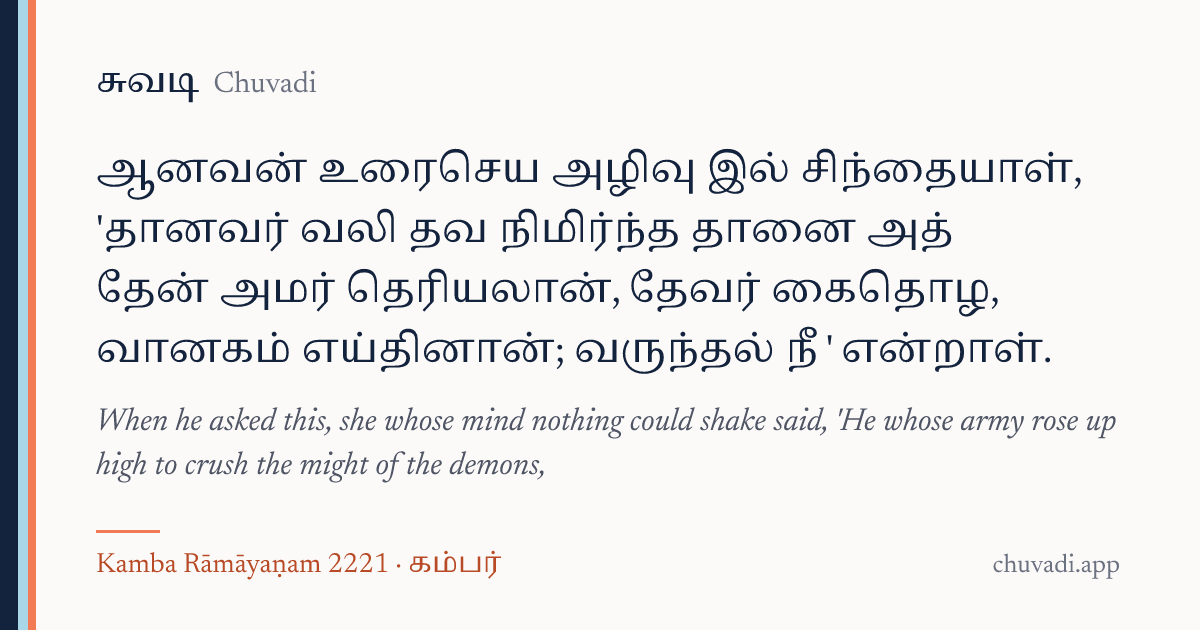
கம்பராமாயணம் 2221 · அயோத்தியா 9.44
பாடல் · The poem
Tap a word to see its gloss in the commentary and where else it occurs.
பொருள் · Meaning in Tamil
ஆனவன் - அப்பரதன்; உரைசெய - வினாவ; அழிவு இல் சிந்தையாள் - எதற்கும் கலங்காத திட சித்தம் உடைய கைகேயி; “தானவர் வலி தவ நிமிர்ந்த தானை - அசுரரது வலிமை கெடும்படி அவர்மேற் சென்ற சேனையை உடைய; அத் தேன் அமர் தெரியலான் - அந்தத் தேன் பொருந்திய மலர்மாலையை அணிந்த தயரதன்; தேவர் கைதொழ - (தமக்கு வாழ்வளித்தவன் வருகின்றான் என்று கருதி) தேவர்கள் கைகூப்பி வணங்க; வானகம் எய்தினான் - விண்ணுலகத்தை அடைந்தான்; நீ வருந்தல்” - நீ துன்புறாதே; ' என்றாள் -.
மன்னர் மன்னனாகிய தன் கணவன் இறப்பவும் மனங்கலங்காது அச்செய்தியைத் தானே தன் மகனிடமே சொல்லும் துணிவும் உடையளாய்ப் பின்னும் மகனை நோக்கி “நீ வருந்தாதே' என்றுரைக்கும் நெஞ்சுரமும் பெற்றவளாதலின் “அழிவு இல் சிந்தையாள்' என்றார். கணவன் இறந்த செய்தியைச் சொல்லும் போது “தானவர் வலிதவ நிமிர்ந்த தானைத் தெரியலான்' எனத் தன் கணவனைப் பற்றிய பெருமிதம் கைகேயியின் சொற்களில் இருத்தல் அறிந்து இன்புறுக. இனி தன் மகனுக்கு அரசு பெறுதற்கு உதவிய இருவரங்களைத் தான் பெற ஏதுவாகிய சம்பராசுரப் போரை நினைவுகூர்ந்து “தானவர் வலிதவ நிமிர்ந்த தானை என்றாள் என்றுமாம்.
ஆங்கிலம் · English translationAI
Translation
- When he asked this, she whose mind nothing could shake said,
- 'He whose army rose up high to crush the might of the demons,
- he of the honey-laden garland, has gone to heaven,
- while the gods worshipped him with folded hands; do not grieve.'
What the poem says
Kaikēyi breaks the news of Tacarataṉ's death with chilling composure: the king has gone to heaven, welcomed by the gods, and Paratan should not grieve.
The poet calls her "she whose mind nothing could shake". She tells her own son of her husband's death without faltering and even tells him not to mourn. Her mention of the king's war against the demons may recall the battle with Campara (Śambara), in which she won the two boons she has just used to banish Irāmaṉ.