



கம்பராமாயணம் 2230 · அயோத்தியா 9.53
பாடல் · The poem
Tap a word to see its gloss in the commentary and where else it occurs.
பாட வேறுபாடு · Project Madurai reads
பொருள் · Meaning in Tamil
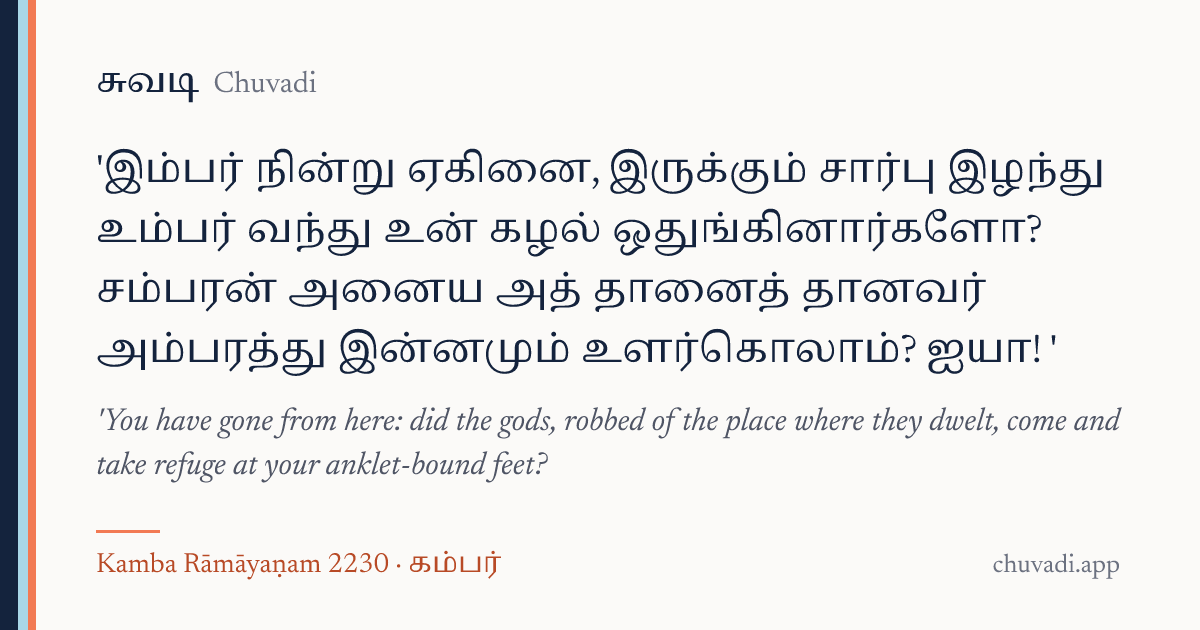
ஐயா! - ஐயனே!; சம்பரன் அனைய - சம்பராசுரனைப் போன்ற அத்தகைய; தானைத் தானவர் - சேனையை உடைய அசுரர்கள்; அம்பரத்து - விண்ணுலகத்து; இன்னமும் உளர் கொலாம் - இப்போதும் இருக்கின்றார்கள் போலும்; (அதனால்) உம்பர் - தேவர்கள்; இருக்கும் சார்பு இழந்து - (அசுரர்கள் தொல்லையால்) தாம் இருக்கும் விண்ணுலக இடத்தை அவர்கள்பால் இழந்து; வந்து - மண்ணுலகத்தில் அயோத்திக்கு வந்து; உன் கழல் - உன்னுடைய கழல் அணிந்த திருவடிக் கீழ்; ஒதுங்கினார்கொல் - சரணடைந்து தங்கினார்களோ?; (அதனால்தான்) இம்பர் நின்று - இவ்வுலகத்திருந்து; ஏகினை - விண்ணுலகம் சென்றனையோ?
தேவர்களுக்குப் பகைவர் அசுரர்; அசுரர்கள் வலியுடையராயின் அவர்களை அழிக்க வலியுடையாரைச் சரணடைதல் தேவர் வழக்கம். முன்னம் சம்பராசுரனை ஒழித்துத் தேவருலகை இந்திரனுக்கு மீட்டுக் கொடுத்தான் தயரதன். இப்போதும் விண்ணுலகம் சென்றது அப்படித் தேவர்களுக்கு உதவி செய்தற்காகப் போலும் என்று சொல்லிப் புலம்பினான் பரதன்.
ஆங்கிலம் · English translationAI
Translation
- 'You have gone from here: did the gods, robbed of the place where they dwelt,
- come and take refuge at your anklet-bound feet?
- Are there demons, with armies like Campara's,
- still left in the heavens, my lord?'
What the poem says
Paratan imagines another reason for his father's going. Long ago Tacarataṉ defeated the demon Campara and restored heaven to Intiraṉ (Indra).
Perhaps, Paratan wonders, the gods have again been driven out by demons as mighty as Campara and have come to beg his help, and so he has gone up to fight for them once more.