



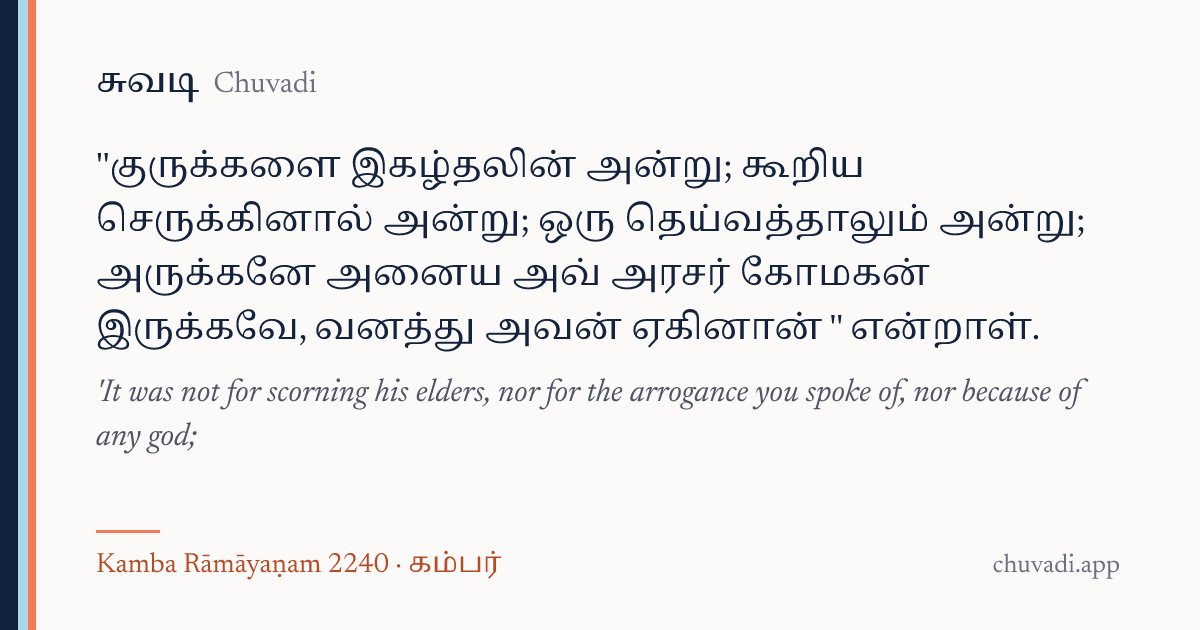
கம்பராமாயணம் 2240 · அயோத்தியா 9.63
பாடல் · The poem
Tap a word to see its gloss in the commentary and where else it occurs.
பாட வேறுபாடு · Project Madurai reads
பொருள் · Meaning in Tamil
பெரியோரை; இகழ்தலின் அன்று - பழித்ததனால் அன்று; கூறிய - முன்பு நீ கூறிய; செருக்கினால் - அளவின்மிக்க கர்வச் செயலாலும் அன்று; ஒரு தெய்வத்தானும் அன்று - ஓர் தெய்வக்குற்றத்தால் அத்தெய்வம் சீறியதாலும் அன்று; அருக்கனே அனைய - சூரியனையே ஒத்த (நேர்மை தவறாத); அவ் அரசர் கோமகன் - அந்தச் சக்கரவர்த்தியாகிய தயரதன்; இருக்கவே - உயிருடன் இருக்கின்ற போதே; அவன் வனத்து ஏகினான் - இராமன் காட்டுக்குச் சென்றான்;” என்றாள்.
முன்பு பரதன் வினாவில் வந்த மூன்று காரணங்களையும் அன்று என மறுத்தாள் கைகேயி. ‘குருக்களை இகழ்தல்’ - ‘தீங்கு இழைத்த அதனினோ’ என்பதுடனும், ‘ஒரு தெய்வத்தால்’ என்பது ‘தெய்வம் சீறியோ’ என்பதுடனும், ‘செருக்கினால்’ என்பது ‘ஓங்கிய விதியினோ’ என்பதுடனும் பொருந்துமாறு அறிக.
வாய்மை தவறாதவன் தயரதன்; தன் உயிர் போய்விடும் என்பது தெரிந்தும் கைகேயிக்கு வாக்குத் தவறாமல் வரம் கொடுத்தவன் ஆதலால், ‘அருக்கனே அனைய’ என்று தயரதனை இங்குக் கூறினாள். பரதன் கேட்ட வினாக்களின் அளவே கைகேயி பதில் உரைக்கிறாள்; மேற்கொண்டு தானாக எதுவும் சொல்லாதில்லை; ஏன்? பரதன்பால் தான் செய்த செயலை உடன் தெரிவிப்பதில் எழுந்த அச்சமே ஆகும்.
ஆங்கிலம் · English translationAI
Translation
- 'It was not for scorning his elders, nor for the arrogance
- you spoke of, nor because of any god;
- while that king of kings, who was like the sun,
- was still alive, he went to the forest,' she said.
What the poem says
Kaikēyi answers each of Paratan's questions in turn and denies all three causes: Irāmaṉ did not insult his elders, was not guilty of arrogance, and did not anger any god. He left while Tacarataṉ, as unswerving as the sun, was still alive.
She calls the king sun-like because he kept his word to her even knowing it would cost him his life. She answers only what she is asked and volunteers nothing, betraying her fear of telling Paratan what she has done.