



கம்பராமாயணம் 2245 · அயோத்தியா 9.68
பாடல் · The poem
Tap a word to see its gloss in the commentary and where else it occurs.
பொருள் · Meaning in Tamil
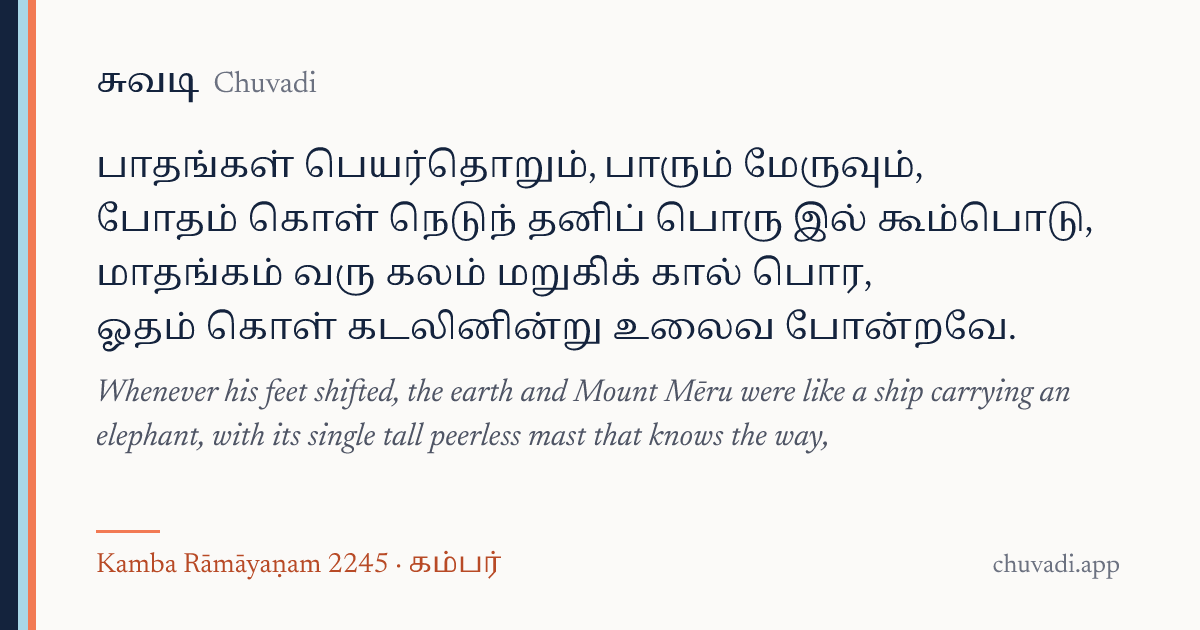
பாதங்கள் - (சினங்கொண்ட பரதனது) கால்கள்; பெயர்தொறும் - தரையில் மாறிமாறி வைக்கப்படுந்தோறும்; பாரும் மேருவும் - மண்ணும் மேரு மலையும்; மாதங்கம் வரு கலம் - யானையை ஏற்றிவருகிற மரக்கலம்; கால் பொர - (கழற)காற்று மோத; போதம் கொள் - கலத்தைச் செலுத்தும் அறிவைத் தன்பாற் கொண்ட; தனி நெடும் பொரு இல் கூம்பொடு - தனித்த நீண்ட ஒப்பற்ற பாய்மரத்துடனே; மறுகி - சுழன்று; ஓதம் கொள் கடலினின்று - நீர்ப்பெருக்கைக் கொண்ட கடலிலிருந்து; உலைவ போன்ற - தடுமாறி வருந்துவ போன்ற.
யானை யேற்றிய கலம் பாய்மரத்தோடு காற்றால் கடலில் நிலைதடுமாறல், மேருமலையோடும் கூடிய பூமி பரதன் பாதம் பெயர நிலைதடுமாறலுக்கு உவமை ஆயிற்று. யானை - மேரு, மரக்கலம் - பூமி, பரதன் பாதம் - பாய்மரம் என ஒப்புரைக்க. திசையறிந்து காற்றின் போக்கறிந்து செலுத்துவது பாய்மரம் ஆதலின் ‘போதம் கொள் கூம்பு’ என்றார்.
ஆங்கிலம் · English translationAI
Translation
- Whenever his feet shifted, the earth and Mount Mēru
- were like a ship carrying an elephant, with its single tall peerless mast that knows the way,
- spinning as the wind strikes it,
- reeling in the surging sea.
What the poem says
Each time the enraged Paratan shifts his feet, the earth and Mount Mēru sway like a ship carrying an elephant, its tall mast tossing as the wind whirls it about on a heaving sea.
The comparison maps the elephant to Mēru and the ship to the earth. The mast is said to 'have knowledge' because it is what steers a ship by the direction of the wind.