



கம்பராமாயணம் 2248 · அயோத்தியா 9.71
பாடல் · The poem
Tap a word to see its gloss in the commentary and where else it occurs.
பாட வேறுபாடு · Project Madurai reads
பொருள் · Meaning in Tamil
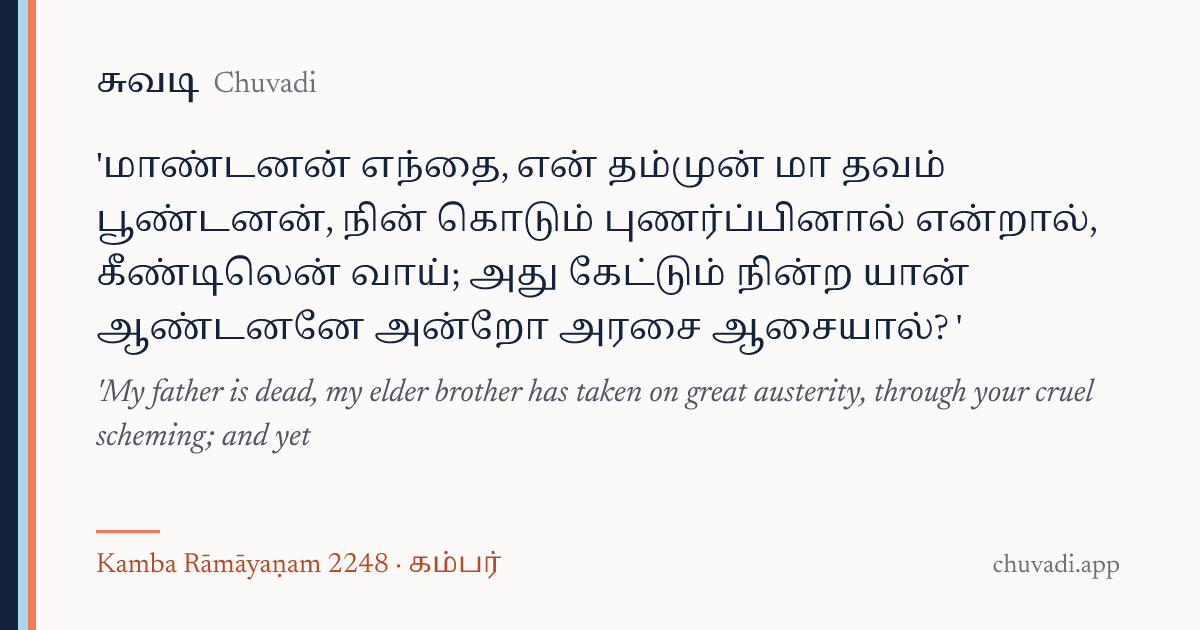
“நின் கொடும் புணர்ப்பினால் - உன்னுடைய கொடிய சூழ்ச்சியால்; எந்தை மாண்டனன் - என் தந்தை தயரதன் இறந்தான்; என் தம்முன் மாதவம் பூண்டனன் - என் தமையன் பெருந்தவத்தை மேற்கொண்டான் (காட்டுக்குச் சென்றான்); என்றால் - (இத்தகைய கொடிய நிகழ்ச்சிகள் நின் வாயால் விளைந்தன) என்றால்; வாய் கீண்டிலென் - (கொடி வரம் கேட்ட உன்னுடைய) வாயைக் கிழித்தேனில்லை; அது கேட்டும் - (வரம்பெற்றேன் என்ற) உன் சொல் கேட்டும்; நின்ற - இறவாது நின்ற; யான் - அரசை - (நீ வாங்கிய) இராச்சியத்தை; ஆசையால் ஆண்டனெனே அன்றோ - பேராசையால் ஆட்சிபுரிந்தவன் ஆவனே யல்லவா?”
மறுக்காதது உடன்பட்டதாகும் என்னும் வழக்குப்படி வரம் கேட்ட தாயின் வாயைக் கிழிக்காமையால் தானும் அதற்கு உடன்பட்டதாக உலகம் நினைக்க இடம்தரும் என்பதால், ‘ஆண்டனெனே அன்றோ அரசை’ என்றான். தான் உடன்பட்டதாக உலகம் கருத நின்றதாகத் தன்னைப் பழித்துக் கூறிக்கொண்டு தாயைப் பழித்தான். டவ பு சூழ்ச்சி. ‘ஆண்டனெனே’ என்பதில் உள்ள ‘ஏ’ தெளிவுப் பொருட்டு.
ஆங்கிலம் · English translationAI
Translation
- 'My father is dead, my elder brother has taken on
- great austerity, through your cruel scheming; and yet
- I have not torn your mouth; I who stood and heard it
- have as good as ruled the kingdom out of greed, have I not?'
What the poem says
Paratan's first words to Kaikēyi turn the blame partly on himself. Her scheme has killed his father and sent his brother into an ascetic's life, and he has stood there listening without tearing open the mouth that asked for those boons.
Since failing to refuse counts as consent, the world could now say he wanted the throne. By condemning himself for that, he condemns her all the more.