



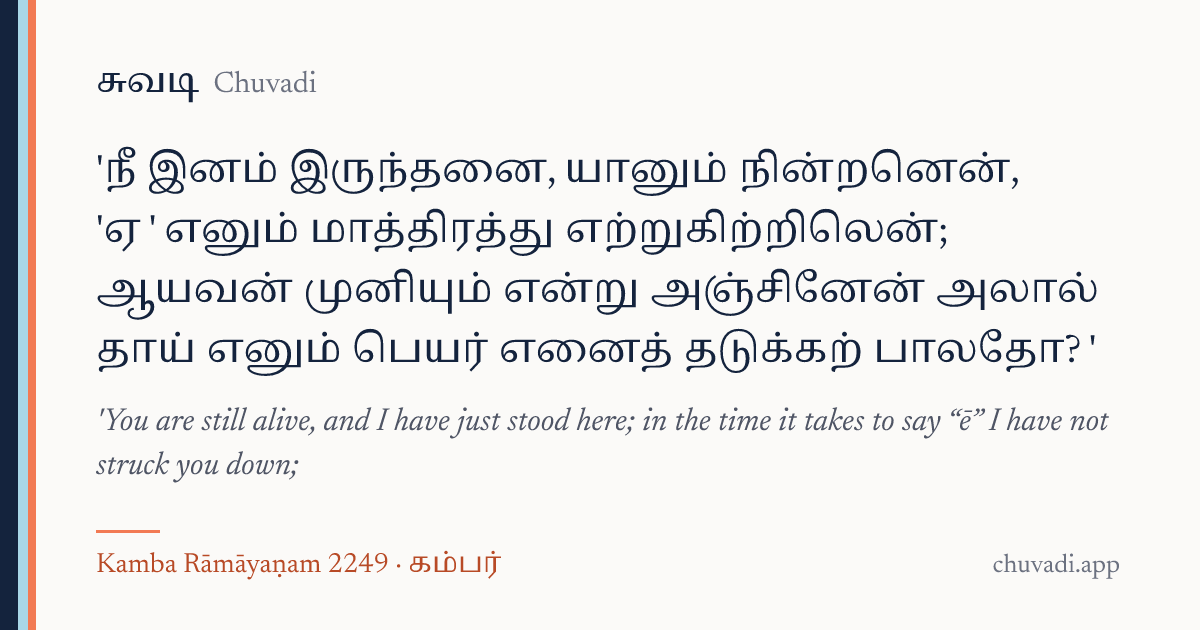
கம்பராமாயணம் 2249 · அயோத்தியா 9.72
பாடல் · The poem
Tap a word to see its gloss in the commentary and where else it occurs.
பொருள் · Meaning in Tamil
நீ - (வரம் கொண்ட) நீயும்; இனம் இருந்தனை - இன்னமும் உயிரோடு இருந்தாய்; யானும் நின்றனென் - யானும் உன்னெதிரில் சும்மா நின்று கொண்டுள்ளேன்; ஏ எனும் மாத்திரத்து - ‘ஏ’ என்று சொல்லக்கூடிய கால அளவுக்குள்; எற்றுகிற்றிலென் - (உன்னை) அடித்து வீழ்த்தவில்லை; (இதற்குக் காரணம்) ஆயவன் முனியும் என்று அஞ்சினேன் - (உலகுக்கெல்லாம்) தாய் போன்ற இராமன் கோபிப்பான் என்று கருதிப் பயந்தேன்; அலால் - அல்லாமல்; “தாய்” எனும் பெயர் - உனக்கு என்னுடைய தாய் என்று ஒரு பெயர் உள்ளதே அது; எனைத் தடுக்கற் பாலதோ - என்னை (உன்னை அடித்து வீழ்த்தாமல்) தடுக்க வல்லமை உடையதோ?”
நீ பிழை செய்தாய்; உன்னைத் தண்டிக்க வேண்டியவன் யான்; அப்படியிருந்தும் உன்னைத் தண்டியாதது ‘தாய்’ என்பதால் அன்று, இராமனுக்கு அஞ்சியே ஆகும்; ஆகவே, எந்த இராமனைக் காட்டிற்கு அனுப்பினாயோ அவனால் தான் இன்று நீ உயிரோடிருக்கின்றாய் என்றான் பரதன். ‘தாய் எனும் பெயர்’ என்றது தாய் என்பது உனக்குப் பெயரளவில்தான் பொருந்தும்; பொருள் அளவில் அச்சொல்லுக்கு நீ சிறிதும் தகுதியற்றவள். சொற்கள் பொருள் உணர்த்தும் வழிதான் ஆற்றல் உடையன; பொருள் உணர்த்தாத வழி ஆற்றல் அற்றன. எனவே, உனக்குரிய ய் என்பதும் எனைத் தடுக்கும் ஆற்றல் உடையதன்று என்பதும் ஒரு கருத்து. ‘ஓ’ வினாப்பொருட்டு.
ஆங்கிலம் · English translationAI
Translation
- 'You are still alive, and I have just stood here;
- in the time it takes to say “ē” I have not struck you down;
- except that I feared he who is a mother to all would be angry,
- could the name “mother” have held me back?'
What the poem says
Paratan tells Kaikēyi that she owes her life not to being his mother but to Irāmaṉ. He could have struck her down in an instant; only the fear of displeasing Irāmaṉ, who is like a mother to the whole world, stopped him.
The irony is pointed: the very son she exiled is the one who now keeps her alive. 'Mother' is hers in name only, and an empty name has no power to restrain him.