



கம்பராமாயணம் 2250 · அயோத்தியா 9.73
பாடல் · The poem
Tap a word to see its gloss in the commentary and where else it occurs.
பாட வேறுபாடு · Project Madurai reads
பொருள் · Meaning in Tamil
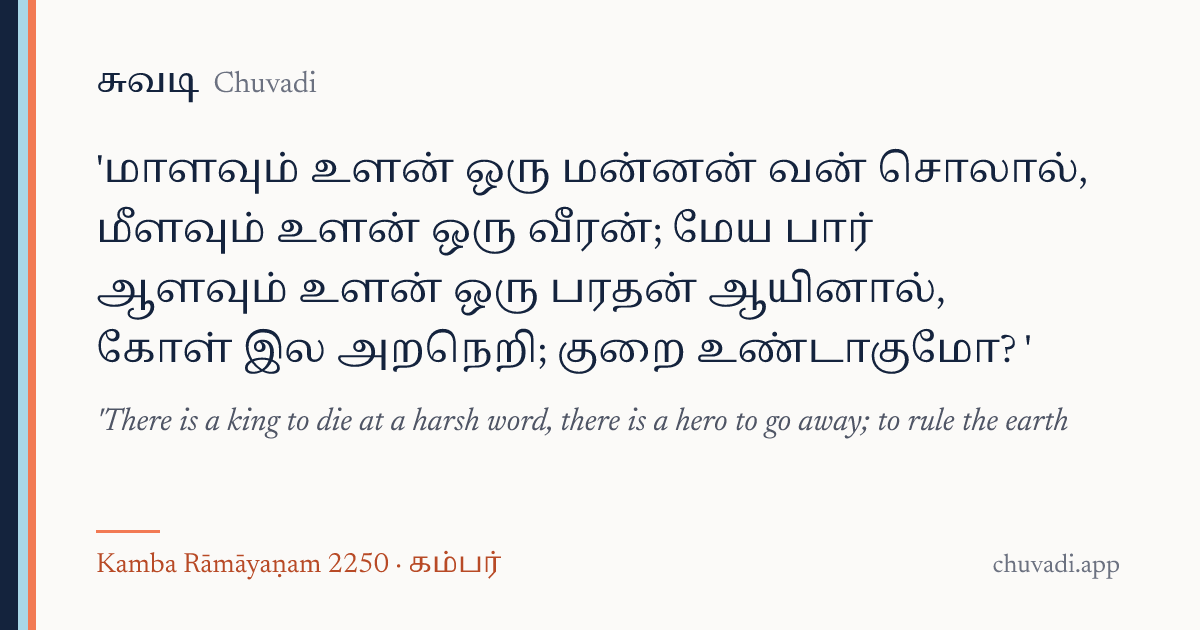
“ஒரு மன்னன் - ஓர் அரசன் (தயரதன்); வன் சொலால் - (கைகேயியின் வரம் என்ற) கொடுஞ்சொல்லால்; மாளவும் உளன் - தன் உயிரை விடவும் இருக்கிறான்; ஒரு வீரன் - ஓர் ஆண்மகன் (இராமன்); மீளவும் உளன் - (தான் ஆள வேண்டிய அரசைவிட்டுக் காடு) செல்லவும் இருக்கிறான்; மேய பார் - (இவ்வாறு வந்து சேர்ந்த) பூமியை; ஆளவும் - ஆட்சிபுரியவும்; ஒரு பரதன் - பரதன் என்ற ஒருவன்; உளன் - இருக்கிறான்; ஆயினால் - இவ்வாறானால்; அறநெறி கோள் இல - தரும வழி குற்றம் உடையதன்று; சிறந்ததே; குறை உண்டாகுமோ - ஒரு குறையும் உடையதாகுமா?”
இகழ்ச்சிக் குறிப்பாகக் கொள்க. நடந்தவற்றைக் கூறி நன்று! நன்று! என்று தன்னைத்தானே நகையாடிக்கொண்டான் பரதன். “கைகேயி! தாயே! அம்மா உன் ஏற்பாடு அறநெறிக்குக் கோளே இல்லாத ஏற்பாடு; இனி அறநெறிக்குக் குறை உண்டாகுமோ” என்று கேட்டானாம்.
ஆங்கிலம் · English translationAI
Translation
- 'There is a king to die at a harsh word,
- there is a hero to go away; to rule the earth
- that has thus come, there is one Paratan; if so,
- the path of dharma is without flaw; could it lack anything?'
What the poem says
Paratan speaks with bitter sarcasm. One man, a king, dies because of a cruel word; another, a hero, leaves for the forest; and a third, Paratan, is there to rule the land that has fallen into his hands.
'If that is how things are,' he says, 'then righteousness is perfectly served and nothing is missing.' He is mocking himself as much as his mother: her arrangement, he says, is a flawless piece of justice.