



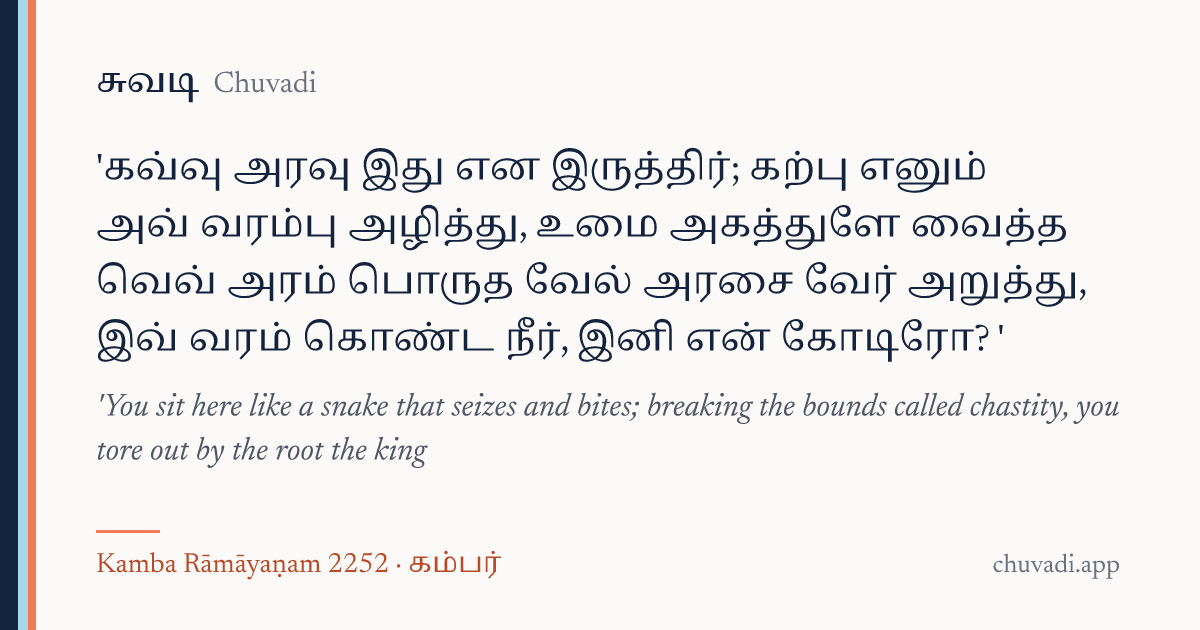
கம்பராமாயணம் 2252 · அயோத்தியா 9.75
பாடல் · The poem
Tap a word to see its gloss in the commentary and where else it occurs.
பொருள் · Meaning in Tamil
“கற்பு எனும் அவ் வரம்பு அழித்து - கற்பு என்று சொல்லப்படுகின்ற பெண்களுக்குரிய அறநெறியின் வரம்பை அழித்து; உமை அகத்துளே வைத்த - உம்மை (காதலியாகத்) தன் நெஞ்சத்துள்ளே நிலை நிறுத்திக்கொண்ட; வெவ் அரம் பொருத வேல் அரசை - கொடிய அரத்தால் அராவப் பெற்ற வேற்படையை உடைய அரசனை; வேர் அறுத்து - அடியோடு கெடுத்து; இவ்வரம் கொண்ட நீர் - இந்த வரங்களைப் பெற்றுக்கொண்ட நீர்; கவ்வு அரவு இது என இருத்திர் - அகப்பட்டவரைக் கவ்வி அடியோடு அழிக்கும் பாம்பு இது எனச் சொல்லும்படியாக இருந்துகொண்டுள்ளீர்!; இனி என் கோடிரோ - இனிமேல் எதைக் கொள்ளப் போகிறீரோ?”
கணவன் உரைக்கு மாறுபடலின் கற்பை அழித்தாள் என்றான். அன்புடைய கணவன் உயிர்போதற்குக் காரணம் ஆகி, பின்னர் வரும் பிள்ளைக்கும் பெருந் துன்பம் செய்தாள் ஆதலின் ‘கவ்வு அரவு’ என்றான். அகப்பட்டோரை எல்லாம் பற்றிக் கொல்லும் அரவு என்றான் - தயரதன், இராமன், அயோத்திவாழ்வார், பரதன் என்று அனைவர்க்கும் தீங்கு செய்தலின்.
ஆங்கிலம் · English translationAI
Translation
- 'You sit here like a snake that seizes and bites; breaking
- the bounds called chastity, you tore out by the root the king
- who kept you within his heart, he of the spear honed by a cruel file;
- you who took these boons, what will you take next?'
What the poem says
Paratan now addresses Kaikēyi with the formal plural, a mark of cold distance. By opposing her husband's will she has broken the bounds of a wife's virtue, and she has destroyed the king who held her in his heart.
He calls her a snake that seizes whatever comes near and kills it, since she has harmed everyone: Tacarataṉ, Irāmaṉ, the people of Ayōttī and Paratan himself. Having already taken these boons, what more does she mean to take?