



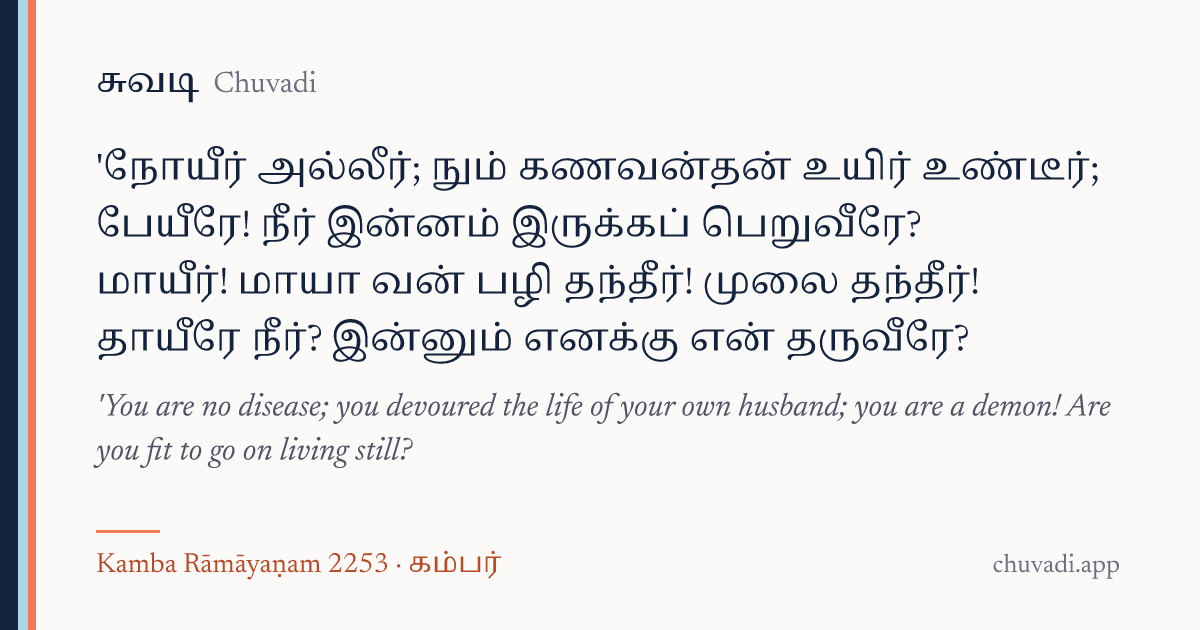
கம்பராமாயணம் 2253 · அயோத்தியா 9.76
பாடல் · The poem
Tap a word to see its gloss in the commentary and where else it occurs.
பொருள் · Meaning in Tamil
“நும் கணவன் தன் உயிர் உண்டீர் - உம் கணவனது உயிரைக் குடித்தீர்; (ஆயினும்) நோயீர் அல்லீர் - நோய் போன்றவர் அல்லர்; நீர் பேயீரே - நீர் பேய் போன்றவரே; (இத்தகைய நீர்) இன்னம் இருக்கப் பெறுவீரே - (கணவன் இறந்த பிறகும்) இன்னமும் உயிருடன் வாழ்வதற்குரியவர் ஆவீரே? (உரியரல்லீர்); மாயீர் - இறந்து போக மாட்டீர்; முலை தந்தீர் - (குழந்தையாய் இருந்தபொழுது) பால் கொடுத்து வளர்த்தீர்; தாயீரே நீர் - (ஆகையால்) நீர் என் தாயார்தான்; மாயா வன்பழி தந்தீர் - (இளைஞனாய் இருக்கும்பொழுது) அழியாத கொடும்பழி கொடுத்து என்னைக் கெடுத்தீர்; இன்னம் - எதிர்காலத்தில்; எனக்கு -; என் தருவீர் - என்ன தரப்போகின்றீர்?”
நோய் சிலநாள், இருந்து உயிர் கொல்லும், கணவன் உயிரை உடனே கொன்றாள் ஆதலின் பேய் போன்றாள் என்றான். பழி தந்தீர் முலை தந்தீர்; இன்னம் என் தருவீர்! என்பது இகழ்ச்சி செய்து வினாயது. ‘மாயீர்’ என்பதற்குச் சாகமாட்டீர்: மற்றவர்கள் எல்லாம் சாவைத் தழுவ நீர்மட்டும் சாகாமல் இருப்பீர் என்று அவளது கொடுமையின் மிகுதியைக் காட்டினான். ‘ஏ’ ஈற்றசை.
ஆங்கிலம் · English translationAI
Translation
- 'You are no disease; you devoured the life of your own husband;
- you are a demon! Are you fit to go on living still?
- You will not die! You gave me undying disgrace! You gave me the breast!
- Are you a mother? What more will you give me yet?'
What the poem says
The metre changes here, and Paratan's speech becomes sharper and more broken. A disease takes some days to kill, but Kaikēyi took her husband's life at once, so she is not a disease but a demon.
She will not die, he says, while everyone else around her does. She gave him her milk as a child and now has given him a disgrace that will never fade. With savage irony he asks whether such a woman is a mother, and what gift she has left for him.