



கம்பராமாயணம் 2257 · அயோத்தியா 9.80
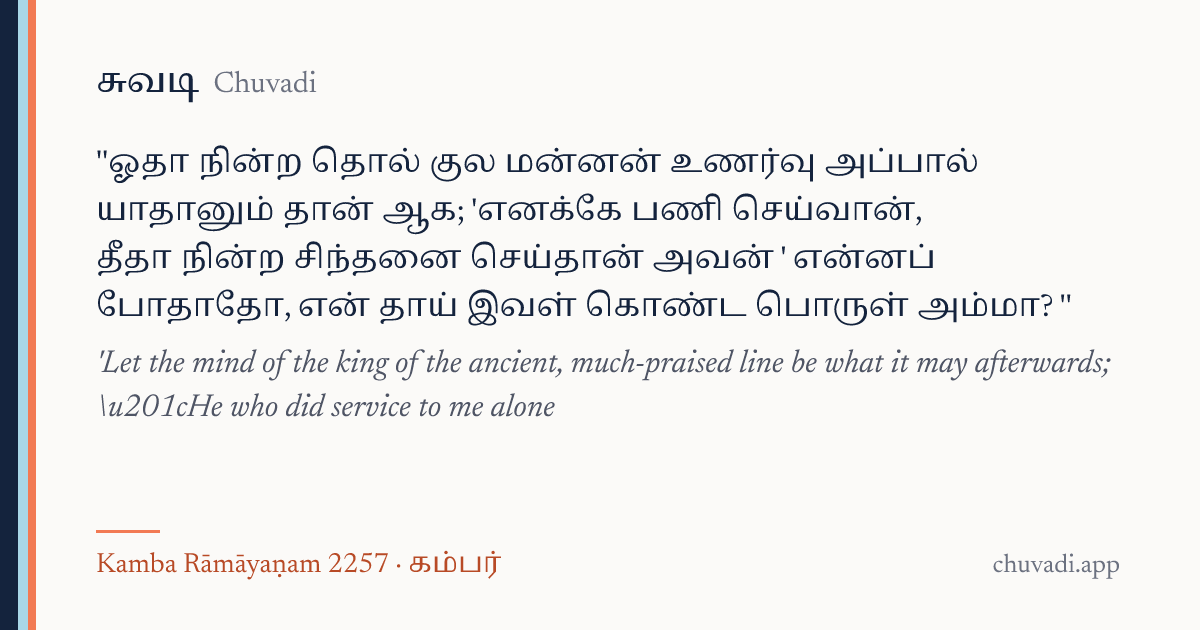
பாடல் · The poem
Tap a word to see its gloss in the commentary and where else it occurs.
பொருள் · Meaning in Tamil
“ஓதா நின்ற தொல்குல மன்னன் - (யாவராலும்) பாராட்டிப் பேசப்படாநின்ற பழமையான சூரியகுல மன்னனாகிய தயரதன்; உணர்வு - எண்ணம்; அப்பால் - பிறகு; யாதானும் தான் ஆக - எதுவாகவாவது இருக்கட்டும், (அது நிற்க); “எனக்கே பணி செய்வான் அவன் - எனக்கே தொண்டுகள் செய்துகொண்டிருப்பவனாகிய பரதன்; தீதா நின்ற சிந்தனை செய்தான் - (என்னை வனம் அனுப்பித் தான் அரசு ஆளும்) கொடியதான எண்ணத்தைக் கொண்டான்; என்ன - என்று அந்த இராமன் கருதுதற்கு; என் தாய் இவள் கொண்ட பொருள் - என் தாயாகிய இக்கைகேயி வரத்தின் மூலம் பெற்ற பொருளாகிய இவ்வரசு; போதாதோ -;”
கைகேயி பரதனுக்காக அரசு பெற்றபடியால், அதுவே பரதனை இராமன் தவறாகக் கருதுதற்குக் காரணம் ஆகிவிடும். அது ஒன்றே போதும் பரதன் மேல் இராமன் வருத்தம் கொள்ளக் காரணம். ‘தந்தை எவ்வாறிருப்பினும் நம் தொண்டனாக இருந்த இந்தப் பரதன் தீய எண்ணம் கொண்டிருப்பவனாக இருந்திருக்கிறானே’ என்று இராமன் நினைத்துவிடப் போதிய காரணம் இந்த அரசே என்றான் பரதன். அம்மா - ஐயோ பாவம் என்றார்போல் இரக்கக் குறிப்பு.
ஆங்கிலம் · English translationAI
Translation
- 'Let the mind of the king of the ancient, much-praised line
- be what it may afterwards; \u201cHe who did service to me alone
- has harboured an evil thought\u201d: for him to think so,
- is not the prize this mother of mine has won enough, alas?'
What the poem says
Whatever their father, the famed king of the ancient line, may have intended, Paratan says, the kingdom his mother has won for him is enough by itself to make Irāmaṉ think ill of him.
Irāmaṉ might well say: 'Paratan, who was always my devoted servant, has turned out to harbour this wicked design.' The closing 'ammā' is a cry of pity, like 'alas'.