



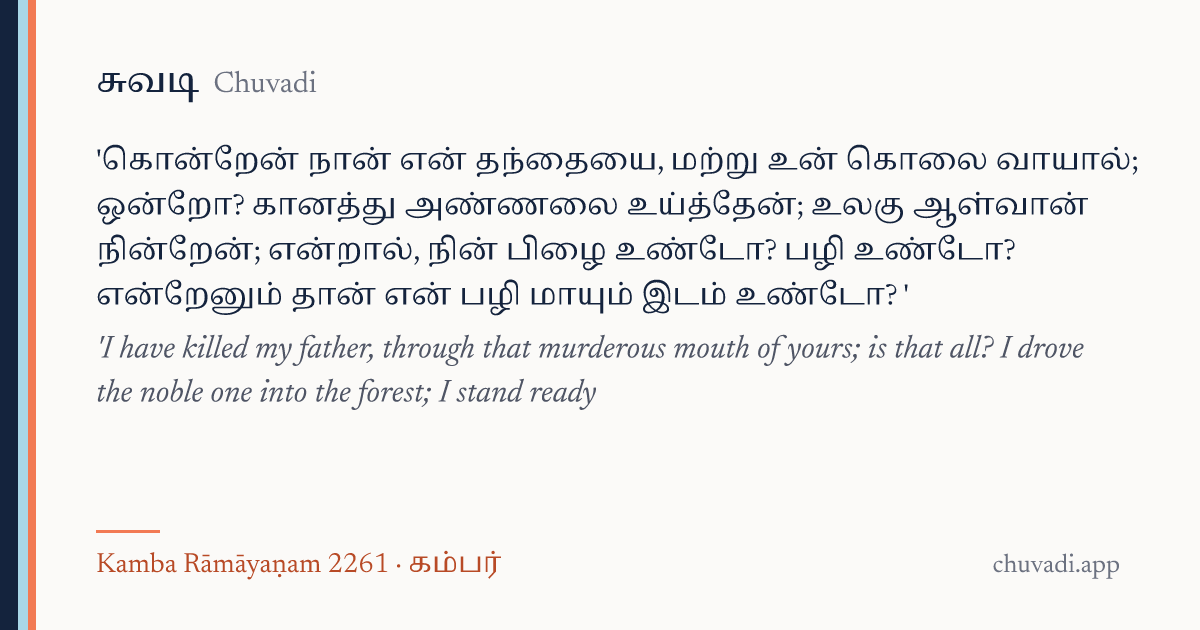
கம்பராமாயணம் 2261 · அயோத்தியா 9.84
பாடல் · The poem
Tap a word to see its gloss in the commentary and where else it occurs.
பொருள் · Meaning in Tamil
“நான், உன் கொலை வாயால் - உன்னுடைய கொலைத் தன்மை படைத்த வாய்ச் சொல்லைக் கொண்டு; என் தந்தையைக் கொன்றேன் - என் தந்தையாகிய தயரதனைக் கொன்றுவிட்டேன்; ஒன்றோ? - அம்மட்டோ; மற்று - மேலும்; அண்ணலை - தலைமையும் பெருமையும் சிறந்த இராமனை; கானத்து உய்த்தேன் - காட்டின் கண் அனுப்பிவிட்டேன், (இவ்வளவையும் உன் வாய்ச்சொல் மூலம் செய்துவிட்டு); உலகு ஆள்வான் நின்றேன் - இவ்வயோத்தி அரசை ஆள்வதற்குத் தயாராக இருக்கின்றேன்; என்றால் -; நின் பிழை உண்டோ - உன் குற்றம் ஏதேனும் உள்ளதோ?; பழி உண்டோ - உன்மேல் பழி ஏதேனும் உள்ளதோ? (எல்லாக் குற்றமும், எல்லாப் பிழையும் என்மேல்தான்); என் பழி மாயும் இடம் - என் பழி அழிந்து போகுமிடம்; என்றேனும் தான் உண்டோ? - என்றைக்காவது உண்டா? (என்றும் இல்லை.)”
கைகேயி செய்தன அனைத்தும் தான் செய்தனவாகக் கூறினான்; செய்ததால் விளைந்த பயனாய அரசை இவன் ஏற்பவனாக இருக்கும் நிலைபற்றி, தன்னை நோக்கித்தான் இவ்வளவும் நடந்ததாக உலகம் அறிந்து தூற்றும் என்று பரதன் வருந்துவது இப்பாட்டில் கூறியவற்றின் கருத்தாகும். ‘என் பழி’ என்றது ‘என் பிழை’ என்பதற்கும் பொருந்தும்.
ஆங்கிலம் · English translationAI
Translation
- 'I have killed my father, through that murderous mouth of yours;
- is that all? I drove the noble one into the forest; I stand ready
- to rule the world; if so, is there any fault of yours? Any blame?
- Will there ever be a place where my disgrace can die?'
What the poem says
Paratan takes everything Kaikēyi did upon himself. Through her deadly words, he says, it is he who killed his father and he who sent Irāmaṉ to the forest, and he who now stands ready to rule.
Since the kingdom is the fruit of the crime and he is the one meant to receive it, the world will say it was all done for him. In that light, he asks bitterly, where is her fault or her blame, and where could his own disgrace ever be laid to rest?